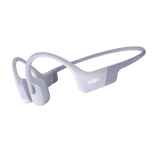
Best Headphones for Cycling: A Shokz Buying Guide for Every Rider

Finding the best headphones for cycling is less about chasing the biggest sound, and more about choosing a design that can keep up with the realities of riding. On a bike, you’re managing traffic, wind, changing road surfaces, rider communication, sweat, and helmet fit — all at once. A headphone that feels perfectly fine on the couch can become frustrating very quickly once you’re 20 miles into a ride.
That’s why most cyclists end up caring about a few practical things more than anything else: awareness, comfort, battery life, and stability. This guide focuses on those real riding needs, and matches them to the Shokz models that make the most sense for different types of riders.
What Cyclists Need From Cycling Headphones
The Open-Ear Imperative: Why Situational Awareness Isn’t Optional
For cycling, the biggest issue with many headphones is simple: they seal off too much of the outside world. That can be fine in a quiet room. On the road or trail, it’s a real tradeoff. You need to hear cars approaching, another rider calling out, a pedestrian stepping into a bike lane, or the sound of your tires changing over rough pavement.
Open-ear bone conduction headphones solve this differently. Instead of sitting in the ear canal, they leave your ears open, which helps preserve situational awareness. That doesn’t mean every ride becomes effortless or risk-free. And it doesn’t mean audio will sound identical to sealed earbuds. But for cycling specifically, that tradeoff is often the right one. Shokz’s open-ear designs take situational awareness into consideration, allowing riders to listen to audio while still hearing sounds from their surroundings.
The Four Non-Negotiables: Fit, IP Rating, Battery, and Weight
When cyclists say a headphone is “good,” they usually mean it disappears during the ride. That comes down to four things:
-
Fit: It should stay secure over bumps and when looking over your shoulder.
-
Water resistance: Sweat and light rain shouldn’t become a concern.
-
Battery life: It should cover your actual ride time, not just a casual listening session.
-
Weight: Lighter designs tend to interfere less with helmets and feel better over time.
For example, a lightweight wraparound frame in the mid-20-gram to low-30-gram range is much easier to live with than a bulky design. Shokz OpenRun weighs about 26.4g, while OpenRun Pro 2 comes in at about 30.3g. Neither is heavy in practical use, but riders doing shorter city rides may appreciate the lighter feel of OpenRun, while endurance riders may accept a few extra grams for longer battery life and upgraded audio.
How to Read the Spec Sheet for Cycling
Cyclists should read specs differently than general shoppers. A claimed battery number matters only if it fits your riding pattern.
-
If your rides are usually 45 to 90 minutes, an 8-hour battery is already more than enough.
-
If you regularly do 3- to 6-hour rides, or stack multiple training days without charging, a 12-hour battery becomes more useful.
-
If you often forget to charge, quick-charge support matters almost as much as total battery.
It’s also worth checking charging convenience and button controls. On the bike, physical buttons are often easier than touch surfaces, especially with gloves or sweaty hands. Both OpenRun and OpenRun Pro 2 use physical controls, which is one of those small features that becomes more valuable in actual riding than it looks on paper.
Best for Road Cycling and High-Mileage Training: Shokz OpenRun Pro 2
For road cyclists putting in serious weekly mileage, Shokz OpenRun Pro 2 is the strongest fit.
The Endurance Rider’s Pain Point: Ear Fatigue Over 3+ Hours
Long rides change what “comfortable” means. After a few hours, even minor pressure or harsh audio can become distracting. Traditional in-ear designs can create that closed-in feeling, especially when sweat and heat build up.Open-ear bone conduction avoids the need for an in-ear seal, which may feel more comfortable during longer rides.
OpenRun Pro 2 also brings Shokz’s latest audio platform, listed in product specs as 10th-gen bone conduction technology (DualPitch™). In practical terms, this is the model to choose if you care not just about hearing your audio, but about keeping it listenable over long sessions. It’s not about turning a bike ride into a studio session. It’s about making podcasts, route prompts, and playlists sound fuller and less tiring over time.
Why It Won’t Let You Down on Long Climbs and Century Rides
OpenRun Pro 2 offers 12 hours of battery life, which is one of its clearest advantages for cyclists. For riders doing century rides, all-day fondos, or back-to-back training days, that extra battery matters more than a small spec bump usually would.
Its nickel-titanium alloy frame also helps with stability and durability. On long climbs, rough pavement, and repeated training use, a secure wraparound fit matters because constant readjustment quickly becomes annoying. The frame is designed to stay put without needing an in-ear anchor.
Quick charging helps too: 5 minutes for up to 2.5 hours of use can rescue a ride if you realize the battery is low just before heading out.
The Acoustic Edge: Better Audio Without Blocking Wind and Traffic Cues
Cycling is one of the few sports where hearing the environment is part of performance and safety. OpenRun Pro 2 keeps ears open so you can still judge wind, road buzz, and traffic noise while listening. Audio still competes with outdoor conditions, of course, especially in heavy wind, but that is often preferable to shutting everything else out. The benefit isn’t isolation. It’s balance.
Ideal For: The Dedicated Road Cyclist and Gran Fondo Rider
Choose OpenRun Pro 2 if you:
-
Routinely ride for several hours
-
Want the longest battery in this comparison
-
Care about a more refined audio experience
-
Need a stable fit for frequent, high-volume training
Best for Commuter Cycling and Urban Riding: Shokz OpenRun
For many riders — especially daily commuters — Shokz OpenRun is the more sensible choice.
The Urban Rider’s Pain Point: Unpredictable Traffic and Stop-Start Riding
City riding is full of interruptions: traffic lights, buses, pedestrians, turns, and sudden braking. In that environment, awareness matters even more than immersion. OpenRun uses the same open-ear concept, which lets you listen without sealing yourself off from what’s happening around you.
Its Bluetooth 5.1 connection is well suited to everyday use, and the straightforward physical controls are easy to manage on short rides. You’re not buying it for complicated features. You’re buying it because it handles the basics cleanly.
Why It Won’t Let You Down in Mixed-Use Traffic
OpenRun is rated IP67, which actually gives it stronger water protection than many riders may expect from a lightweight sports headphone. That makes it a practical option for commuting through sweat, drizzle, and inconsistent weather. It’s still not for swimming, but for cycling use, that level of protection is reassuring.
If there’s a limitation here, it’s simply that OpenRun doesn’t offer the longer battery or upgraded sound architecture of OpenRun Pro 2. For commuter rides, though, that is often not a major loss. Most urban cyclists are riding well under the point where those upgrades become necessary. Riders who find themselves wanting more from their audio over time may want to explore OpenRun Pro 2 for its upgraded DualPitch™ platform.
The Lightweight Advantage: Less Helmet Interference, Less Fuss
At 26.4g, OpenRun is notably light. That can make a real difference for riders wearing a helmet for shorter trips or repeated errands throughout the day. Less weight usually means less awareness of the headphone itself, which is exactly what most commuters want.
Ideal For: The Daily Commuter and City Cyclist
Choose OpenRun if you:
-
Ride mainly in urban or suburban traffic
-
Want a lighter frame
-
Prefer a more budget-conscious option
-
Usually ride for under 90 minutes at a time
Best for Mountain Biking and Technical Trail Riding: Shokz OpenRun Pro 2
For trail and technical riding, OpenRun Pro 2 gets the edge again.
The Trail Rider’s Pain Point: Wanting Audio Without Losing Feedback
On trails, riders often want background audio without losing the sounds that help them react: tire slip, freehub noise, braking cues, other riders calling out, or the sharp crack of a branch nearby. This is where open-ear design makes more sense than closed listening.
Mountain biking also tends to involve more head movement, more vibration, and more abrupt body position changes than casual road riding. A stable wraparound frame is useful here because a loose fit becomes obvious fast on descents and rough sections.
Why It Won’t Let You Down on Technical Descents
OpenRun Pro 2’s nickel-titanium alloy frame is built for secure wear during movement-heavy activity. For trail riders using half-shell or even some full-face helmets, that secure frame design is often more important than pure weight savings.
No headphone should distract you on a technical descent, and if you know you prefer total silence for your hardest lines, that’s a reasonable choice. Many riders choose open-ear headphones primarily for all-day wearing comfort and situational awareness rather than pursuing maximum audio immersion. But if you do ride with audio, OpenRun Pro 2 is the one better suited to rougher terrain and longer days out.
The Durability Case: Sweat, Mud Splatter, and Repeated Use
With an IP55 rating, OpenRun Pro 2 is resistant to dust, sweat, and water. That is suitable for normal mountain biking conditions like sweat, light rain, and trail splatter. If your riding regularly involves very wet conditions, OpenRun’s higher IP67 rating is worth noting, but for most off-road use, Pro 2 still covers the realistic need while offering better battery life and upgraded audio.
Ideal For: The Trail Enthusiast and Weekend Enduro Rider
Choose OpenRun Pro 2 if you:
-
Ride trails and want to keep ears open
-
Need stable fit during rough movement
-
Want longer battery for extended outdoor sessions
-
Prefer the flagship model’s audio improvements
Best for Indoor Cycling and Trainer Sessions: Shokz OpenRun
Indoor riding has different demands, and OpenRun fits them well.
The Indoor Rider’s Pain Point: Heat Buildup and Sweat Saturation
Trainer rides create a lot of heat and sweat. In-ear headphones can feel stuffy during hard intervals, and anything that seals the ear tends to make that sensation worse. OpenRun’s open-frame design helps avoid that.
Its IP67 protection is also a practical advantage indoors, where sweat can be more constant than on some outdoor rides. This is one area where a simpler model can actually be the smarter pick.
Why It Won’t Let You Down Through Interval Blocks
With 8 hours of battery life, OpenRun easily covers most indoor sessions, even long weekend trainer rides. It also supports 10-minute quick charge for up to 1.5 hours of use, which is helpful if you forgot to plug it in before a planned workout.
The Practical Edge: Quick On, Quick Off
Indoor riders often pause audio to hear a coach, answer a quick call, or switch between entertainment and training prompts. OpenRun’s physical button controls and open-ear fit make that easy without needing to remove the headphone.
Ideal For: The Zwift Rider and Structured Training Follower
Choose OpenRun if you:
-
Primarily ride indoors
-
Sweat heavily during intervals
-
Want something light and uncomplicated
-
Don’t need the extra battery of Pro 2
OpenRun vs. OpenRun Pro 2: Where They Diverge
Shared DNA: What Both Models Deliver
Both models give cyclists the essentials:
-
Open-ear bone conduction design
-
Wraparound sport fit
-
Physical button controls
-
Multipoint pairing
-
Sweat-resistant construction
That shared foundation is why both belong in any conversation about the best headphones for cycling. The bigger question isn’t whether one is “good” and the other is not. It’s which one matches your riding pattern better.
When to Upgrade to OpenRun Pro 2
Upgrade to OpenRun Pro 2 if your riding regularly exposes the limits of a standard model:
-
You ride long enough to benefit from 12-hour battery life
-
You want Shokz’s newer audio platform
-
You spend more time on all-day road or trail rides
-
You value USB-C charging and app support
When OpenRun Is the Smarter Buy
Choose OpenRun if your use is simpler:
-
Most rides are short to medium length
-
You want the lighter headset
-
You care more about practicality than premium audio gains
-
You want to spend less without giving up the core open-ear cycling benefit
In other words, OpenRun Pro 2 is the better tool for endurance and demanding outdoor use, while OpenRun is the better-value choice for commuting, indoor training, and shorter daily rides.
FAQ
Are bone conduction headphones good for cycling?
Yes. They’re especially well suited to cycling because they leave your ears open to traffic, rider communication, and environmental sounds. That awareness benefit is a major reason cyclists choose them over in-ear options.
Is OpenRun or OpenRun Pro 2 better for long rides?
OpenRun Pro 2 is better for long rides thanks to its 12-hour battery and more advanced audio setup.
Which Shokz model is better for commuting?
OpenRun is usually the better commuter choice because it is lighter, simpler, and more cost-effective for shorter rides.
Are these Shokz headphones waterproof?
OpenRun has an IP67 rating, while OpenRun Pro 2 is rated IP55. Both are designed to handle sweat and typical cycling conditions such as light rain, but neither should be treated as completely waterproof or intended for prolonged water immersion. OpenRun’s IP67 rating provides a higher level of water protection on paper, while both models are better suited to cycling than activities that involve sustained submersion.
Do Shokz headphones work with helmets?
Both OpenRun and OpenRun Pro 2 feature a lightweight wraparound design that can be worn with many cycling helmets. Actual compatibility may vary depending on the helmet’s shape, fit, and how the headphones sit around the ears and head.
Conclusion
If you’re choosing strictly for cycling, the best answer is usually this: pick OpenRun Pro 2 for long outdoor rides, and OpenRun for commuting or indoor training. It keeps the decision practical — which is exactly how most cyclists shop once the miles start adding up.