2025 Chicago Marathon Recap: Results, Course Highlights, and Key Takeaways

The 2025 Chicago Marathon brought fast racing and a strong elite field to Chicago on October 12, 2025, as the 47th Bank of America Chicago Marathon made its way through 29 neighborhoods.
The times were historic, but not every record fell. Jacob Kiplimo won the men’s race in 2:02:23, the second-fastest time in Chicago Marathon history, while Conner Mantz set an American marathon record of 2:04:43. In the women’s race, five athletes finished under 2:20 in the same race, marking the first time that had happened in Chicago Marathon history.

Shokz X Bank of America Chicago Marathon 2026
Subscribe to our emails to get updates on our next campaign.
Explore Now →
Shokz X TCS New York City Marathon 2026
Enter to win the Co-branded Edition OpenRun Pro 2. (Limited-time event: Oct 15 – Nov 1)
Explore Now →Race Day Snapshot: Winners, Times, and Weather
For anyone checking splits all morning or catching up on the results after the finish, the short version is straightforward. Jacob Kiplimo won the men’s race in 2:02:23, the second-fastest time in Chicago Marathon history. Hawi Feysa won the women’s race in 2:14:56.
The race began in cool conditions that official race coverage described as ideal for racing.
The men’s race started at a fast pace, with the lead group running close to world-record tempo in the early stages. That pace eased later in the race, but Kiplimo still finished in 2:02:23, putting his name near the top of the Chicago Marathon record books. It was not a course record or a world record, but it was one of the fastest performances in the event’s history.
One of the day’s biggest storylines belonged to Conner Mantz, who broke the American marathon record with a 2:04:43 finish. His performance added another major result to a race already led by Kiplimo’s historic time.
On the women’s side, the front of the field produced another notable result. For the first time in race history, five women broke 2:20 in the same race. Defending men’s champion John Korir also dropped out before the 20-mile mark, removing one of the leading contenders from the late stages of the race.
Course Highlights Revisited: How the Route Played Out in 2025
Chicago’s course is flat, with a route that passes through 29 neighborhoods. In 2025, runners also raced in cool, mild conditions with spectators along the course.Together, the size of the field and the crowd helped create the atmosphere around race day.
The Loop to Lincoln Park
The opening miles through The Loop brought runners through the downtown core, with tall buildings and spectators lining the streets. The cool conditions provided a comfortable setting for the early part of the race.
In warmer years, the opening 5K can require runners to balance pace with rising temperatures. In 2025, the cooler weather meant that temperature was less of a concern during the early miles.
As the field moved north toward Lincoln Park, the surroundings became less concentrated around the downtown core. The route continued through different parts of the city, with spectators present along the course.
For first-time runners, the early part of a marathon can feel manageable before the distance begins to accumulate. That is one reason pacing matters even on a flat course: an easy-feeling start can make it tempting to run faster than planned.
BoysTown, Pilsen, and Chinatown
By BoysTown, the race had settled into its middle miles. For many marathon runners, this is the point where maintaining pace and effort becomes increasingly important.
The route continued through different neighborhoods in 2025, with spectators along the course. On a flat course, these changes in surroundings provide a different setting as runners work through the middle portion of the race.
The route through Pilsen is one of the recognizable neighborhood sections of the course, with its own streetscape and local character. For runners, moving through a different neighborhood can provide a change of surroundings during a long stretch of the race.
Chinatown came later, as runners moved deeper into the second half of the marathon. The conditions remained mild, but the distance itself continued to make the later miles demanding. For runners between roughly miles 18 and 21, maintaining pace and effort remained part of the challenge.
The Final Stretch to the Finish
The final miles of Chicago bring a different kind of challenge. The course remains flat, but by this point, runners have already covered most of the 26.2-mile distance.
By mile 22, even with spectators still along the route, the focus shifts toward maintaining pace and reaching the finish. Long straight sections can feel different late in a marathon than they do earlier in the race.
The finish-line atmosphere in 2025 brought runners back to Grant Park after 26.2 miles on the course. It marked the end of an exciting day of racing in Chicago.
Chicago’s flat course removes major climbs from the equation, but it does not remove the need for patience. The challenge is to manage effort over the full distance and still have enough left for the final miles.
Logistics and Expo Recap: What Actually Happened This Year
Race weekend logistics followed the established format for an event of this size. The Abbott Health & Fitness Expo was where participants picked up their race packets before race day.
Race morning came down to timing and knowing your assigned start corral. With more than 54,000 participants, start corrals helped organize runners for the beginning of the race. Corral assignments can take into account qualifying standards, submitted qualifying or estimated finish times, previous Chicago Marathon results, and available capacity.
The weather also shaped the pre-start experience. Standing in a corral in cool conditions is different from waiting in heat or extreme cold, making race-morning temperature one of the practical details runners notice before the start.
By the Numbers: 2025 Stats and Records
The numbers help put the scale of the 2025 Chicago Marathon into perspective, from the size of the field to the reach of the event across the city.
The official Chicago Marathon results page provides the 2025 race results, while the event’s official materials highlight the major performances from the day.
Men's Top 5
Place |
Runner |
Time |
1 |
Jacob Kiplimo |
2:02:23 |
2 |
Amos Kipruto |
2:03:54 |
3 |
Alex Masai |
2:04:37 |
4 |
Conner Mantz |
2:04:43 |
5 |
Huseydin Mohamed Esa |
2:04:49 |
Women's Top 5
Place |
Runner |
Time |
1 |
Hawi Feysa |
2:14:56 |
2 |
Megertu Alemu |
2:17:18 |
3 |
Magdalena Shauri |
2:18:03 |
4 |
Loice Chemnung |
2:18:23 |
5 |
Mary Ngugi-Cooper |
2:19:25 |
Men's Wheelchair
Place |
Athlete |
Time |
1 |
Marcel Hug |
1:23:20 |
2 |
David Weir |
1:27:26 |
3 |
Tomoki Suzuki |
1:27:29 |
4 |
Aaron Pike |
1:29:07 |
5 |
Jetze Plat |
1:29:10 |
Women's Wheelchair
Place |
Athlete |
Time |
1 |
Susannah Scaroni |
1:38:14 |
2 |
Manuela Schär |
1:39:03 |
3 |
Tatyana McFadden |
1:39:04 |
4 |
Eden Rainbow-Cooper |
1:41:59 |
5 |
Jade Hill |
1:42:35 |
The 2025 wheelchair races were won by Marcel Hug and Susannah Scaroni. Hug earned his sixth Chicago Marathon victory.
Jacob Kiplimo ran the second-fastest men's time in Chicago history.
Conner Mantz set an American marathon record in 2:04:43.
The women's race produced five sub-2:20 performances, a first for the event.
John Korir was listed as DNF.
Galen Rupp finished 16th in 2:09:41. For the Chicago Marathon, the Masters classification applies to athletes who are 40 and over, so Rupp, who was 39 at the time of the race, was not in that category. While his 2025 result was not a Masters record, a 2:09:41 finish was still a strong performance.
This was not a race in which every major record fell. Instead, it produced several significant performances across the men's, women's, and wheelchair divisions.
For pacing, the lesson is straightforward. Chicago’s flat profile can support a consistent rhythm, but runners still need to manage the early miles carefully. The final 10K can be demanding regardless of whether a course has major climbs.
Takeaways for Future Runners and Spectators
Now that the results are in, the most useful part of any 2025 Chicago Marathon recap may be what future runners and spectators can carry forward.
Post-Race Recovery Tips
If you finished this race, the first recovery priorities are simple: keep moving for a few minutes, change into dry clothes, drink fluids, and eat something with carbohydrates and sodium when you can.
Marathon fatigue can be masked by the excitement of finishing. Once that wears off, stiffness and heaviness can become more noticeable, even after a mild-weather race.
The next 24 to 48 hours should stay light. Walk, loosen up gently, and resist the urge to test your legs with a hard shakeout. If your quads feel more tired than expected, that is not unusual after 26.2 miles. A flat course removes major climbs, but the repeated impact of running the full distance still places demands on the legs.
Spectator Viewing Areas
Spectator viewing areas include:
-
The Loop offers an early-race location with access to the downtown area.
-
Lincoln Park provides an opportunity to see runners before the field becomes more spread out.
-
Pilsen is one of the neighborhood sections along the course and offers a different setting from the downtown portions of the route.
-
Chinatown comes later in the race and can be useful for spectators who want to see runners during the second half.
For anyone hoping to catch a runner more than once, the simplest strategy is to plan around transit and walking distance. On race day, moving between viewing points can take longer than it appears on a map.
Gear That Worked on Race Day
For marathon runners, practical gear considerations include a secure fit, sweat resistance, and enough battery life to last through a long race morning and the race itself.
That applies to nearly everything — watches, layers, and audio gear included. If something shifts when you peel off sleeves or starts feeling slippery after two hours, you are likely to notice it much more during a marathon than during a shorter training run.
For runners who like audio but still want awareness of their surroundings, open-ear designs can be an option because they leave the ear canal unobstructed. They can also be a comfortable choice for runners who prefer not to have in-ear pressure over several hours.
If all-race stability matters most, a sport-focused pair of open ear headphones with an ear-hook design is worth considering, since the ear-hook can help keep the headphones in place over long mileage.
Battery life is another practical consideration on marathon day. Audio may be used from the warm-up through the finish-line area and post-race meetups, so shorter playback time can become inconvenient even if the battery lasts through the race itself.
Some runners also value being able to hear announcements, volunteers, and nearby runners, which is one reason open-ear audio can be useful in race settings.
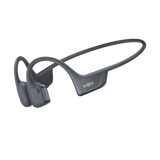
For example, Shokz OpenRun Pro 2 combines an open-ear fit with a 30.3 g design and up to 12 hours of battery life, making it an option for runners who want audio without fully blocking the ear canal. Its IP55 water resistance can also help with sweat and light moisture during training or a race.
One important point for future races is that headphone rules can change from year to year. Under the 2026 Chicago Marathon policy, music devices with headphones are permitted on the course as long as participants remain alert to their surroundings and pay attention to important announcements in Grant Park and along the course. Music devices with headphones are not permitted for athletes in the High Performance Program. Runners should check the rules for their specific race year before race day.
Final Thoughts on the 2025 Chicago Marathon Recap
What defined this race was not just speed, although there was plenty of it. The 2025 Chicago Marathon combined cool weather, several major elite performances, and a course that continues to be known for its flat profile.
Chicago delivered what its course and format are built to support: fast racing on a flat route through 29 neighborhoods, with a large field and spectators along the way.
That is the clearest takeaway from this 2025 Chicago Marathon recap: the day produced fast times, meaningful records, and a demanding 26.2-mile race. Across the field, the race highlighted the importance of patience, pacing, and preparation on a flat marathon course.
The course may not have major climbs, but the distance still asks plenty of runners. Year after year, that combination of course, city, and competition is what keeps Chicago on the marathon calendar for runners from around the world.