Is Cycling With Headphones Safe? What to Consider on the Road

Is cycling with headphones safe? Cycling with headphones brings audio into an environment that already includes traffic, road noise, pedestrians, other riders, and changing road conditions. How much that audio affects what you notice around you can vary with the volume, headphone design, fit, riding speed, and route.
For cyclists, the surrounding environment can change quickly. A car approaching from behind, a horn at an intersection, or another rider passing nearby may all become part of the sounds you need to notice while riding.
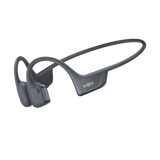
Open-ear headphones are one option for listening without sealing the ear canal. Models such as Shokz leave the ear canal open, so surrounding sounds may remain audible while audio is playing. This can suit cyclists who prefer to keep some access to the sounds around them, although it does not mean every environmental sound will always be heard.
This guide covers the practical factors that come with cycling while listening to audio, including volume, wind, helmet fit, weather, Bluetooth, and different types of rides.
How Audio Affects Awareness While Cycling
The central question behind is cycling with headphones safe is how audio interacts with the sounds around you. Sealed in-ear headphones can physically block some external sound, while the audio itself can also mask environmental sounds when played at higher volumes.
Open-ear headphones take a different approach by leaving the ear canal open. Surrounding sounds may remain audible while you listen, rather than being physically sealed out by the earbud.
That does not guarantee that every sound will be noticeable. Wind, traffic noise, audio volume, road conditions, and the listening environment can all affect what a rider hears.
Open-ear listening also does not remove the distraction that audio can create. If music, podcasts, or navigation becomes too demanding to follow while riding, keeping the ear canal open does not change that. Hearing surrounding sounds also does not replace looking around, checking traffic, or following local cycling rules.
Tune for the Road, Not the Living Room
Keep Volume Lower Than You Think
When people ask is cycling with headphones safe, volume is an important part of the equation regardless of headphone type. Audio played too loudly can mask horns, sirens, tire noise, or other changes in the surrounding environment.
A practical approach is to start with a moderate volume and adjust it only as needed for the content you’re listening to. Speech may need less volume than music with a wide dynamic range, while wind and traffic can make the same setting sound different from one road to another.
If you need to keep increasing the volume whenever the road gets louder, the environment may simply be too noisy for the type of audio you’re using. Lowering the volume, pausing the audio, or riding without headphones are options worth considering in those situations.
Open-ear designs such as Shokz do not seal the ear canal in the same way as many in-ear headphones, but volume still affects how much of the surrounding environment competes with the audio.
Manage Wind Before You Blame the Headphones
Wind is a major part of the listening environment when cycling, particularly at higher speeds. Turbulence around the ears, helmet straps, and sunglasses can affect how audio sounds, regardless of headphone design.
Fit can also affect the listening experience. With open-ear headphones, the position of the transducer relative to the ear is part of the intended fit, so following the manufacturer’s fitting instructions is a useful starting point.
For calls, wind and the position of the headset can also affect microphone performance. Helmet straps, clothing, and other equipment may change how the microphones pick up sound.
At higher speeds, adjusting the fit may change the listening experience, while reducing or pausing audio may be more practical when wind becomes dominant.
Choose Clarity Over Bass
Cycling audio does not always need the same tuning you might use at home.
A bass-heavy EQ can change how music and spoken content sound, while a clearer profile may make speech easier to follow. If you are listening to navigation prompts or podcasts, speech intelligibility can matter more than emphasizing low frequencies.
Different roads also produce different listening conditions. A quiet path and a busy road may require different volume or EQ settings simply because the surrounding sound changes.
If your Shokz model supports app-based sound settings, you can use those controls to adjust the listening profile for different situations. The goal is to make the audio easier to follow without relying on increasingly high volume.
Fit Is Not a Detail. It’s Part of the Setup.
Solve Helmet Strap Interference First
Cycling equipment occupies limited space around the head and ears. Helmet straps, sunglasses, caps, and other gear can all interact with a headset.
For open-ear models, start with the manufacturer’s recommended position and check how the headset sits with your helmet fully adjusted. If the headset shifts, presses against a strap, or needs frequent repositioning, the combination of equipment may need adjustment.
A headset that moves during a ride can also change the way audio reaches the ear. Frequent adjustments can become distracting, particularly when they are made while riding.
Shokz headphones use different open-ear structures depending on the model, so fit should be checked on a model-by-model basis rather than assuming that every headset will interact with a helmet in the same way.
Match Water Resistance to the Way You Ride
Cycling can expose electronics to moisture from weather, road spray, or perspiration. An IP rating provides information about a device’s tested resistance to dust and water under specified conditions, but it does not automatically define every real-world riding situation.
For example, IP55 and IP67 describe different levels and types of protection. The first digit relates to protection against solid particles, while the second relates to water exposure under the applicable test conditions.
That rating should not be treated as a general guarantee that a headset is waterproof, sweatproof, or suitable for every type of rain or riding condition. Check the specific product’s official specifications and usage guidance when moisture is an important part of your routine.
Shokz offers models with different IP ratings, so the relevant specification depends on the particular product rather than the brand as a whole.
Make Room for Sunglasses and Winter Layers
There can be a lot of equipment around a cyclist’s ears: helmet straps, sunglasses, caps, headbands, and winter layers all compete for space.
Check the complete setup before a longer ride. Sunglasses should sit naturally with the headset rather than pressing against it, and thicker winter layers may change how the headset sits around the ears.
Open-ear headphones do not rely on an in-ear seal, but that does not remove the need to check physical fit. Head shape, helmet design, glasses, and the specific headphone structure can all affect how the overall setup feels.
A Smarter Setup for Different Rides
High-Speed Road Cycling
At higher speeds, wind becomes a more significant part of the listening environment. Fast descents can also leave less opportunity to adjust settings or pay attention to anything beyond the road.
Increasing volume to overcome wind can make the audio more dominant. Keeping it low may make music or spoken content harder to follow.
For fast sections, some riders may prefer brief navigation prompts, low-volume audio, or no audio at all. The appropriate choice depends on the road, traffic, speed, and the rider’s ability to monitor the environment.
Open-ear headphones still leave the ear canal open, but they cannot remove wind noise or prevent audio from becoming a distraction. At higher speeds, those limitations become more relevant.
Urban Commuting With Frequent Stops
City riding involves constantly changing conditions: intersections, pedestrians, buses, turning vehicles, and frequent stops can all change what is happening around the bike.
Here, the question is not simply whether headphones are being used, but how much attention the audio demands. Navigation prompts or spoken content may be easier to follow at a lower volume than highly immersive music, but either can still become distracting if the rider focuses too heavily on the audio.
If traffic noise makes it difficult to hear the audio without turning up the volume, reducing or pausing the audio is an option. Open-ear headphones may leave surrounding sounds audible, but they do not guarantee that every traffic cue will be noticed.
Shokz is one example of an open-ear headphone design. Whether that format fits a particular commute depends on the rider, equipment, traffic conditions, and listening habits.
Long-Distance Endurance Riding
Long rides introduce a different set of considerations. Extended wearing time makes fit important, while battery capacity can matter when audio or navigation is used for several hours.
Helmet and glasses compatibility also becomes more relevant as the ride continues. A setup that feels fine for a short trip may need a different adjustment for a much longer session.
The amount and type of audio can also change over time. Some riders may prefer occasional navigation prompts or spoken content rather than continuous music, while others may choose to ride without audio for parts of the route.
Open-ear headphones leave the ear canal open, but that should not be treated as a guarantee of greater comfort over long periods. Comfort depends on the headphone design, fit, head shape, helmet, glasses, and how long the device is worn.
Keep the Connection Simple
Reduce Bluetooth Drop-Offs With Better Setup
Bluetooth connection issues can have several causes, including device settings, distance, physical obstructions, interference, or problems with the connected devices.
Keeping the phone and headphones within their normal operating range is a reasonable starting point. It can also help to disconnect devices that you do not need, particularly when a headset supports connections with multiple devices.
A simple setup with one primary device can make it easier to identify the source of a connection problem, but it does not guarantee that dropouts will disappear.
For Shokz headphones, connection behavior depends on the specific model and its Bluetooth features. If connection problems continue, checking the model’s official support information for firmware, pairing, and reset instructions is more useful than assuming the issue comes from the open-ear design itself.
Use App Presets for Easier Adjustments
If your headphones support app-based controls, setting up different EQ presets can make it easier to switch between listening environments or types of content.
A quiet path, busy road, and indoor training session can all create different listening conditions. You can choose a preset that suits the situation or adjust the sound to match your preferences. For example, the Shokz OpenRun Pro 2 offers 6 preset EQ modes and 2 customizable EQ profiles through the Shokz App.
Keep in mind that EQ presets only change how audio is presented; they are not a safety feature. No matter which sound setting you use, they do not replace paying attention to traffic, making visual checks, or deciding whether audio is appropriate for a particular section of a ride.
Final Answer: Is Cycling With Headphones Safe?
So, is cycling with headphones safe?
There is no single headphone setup that removes the considerations that come with listening to audio on a bike. Volume, headphone design, wind, fit, traffic, and the complexity of the route can all affect the experience.
Open-ear headphones leave the ear canal open, so surrounding sounds may remain audible while audio is playing. They do not eliminate audio-related distraction, and they do not guarantee that a rider will notice every sound around them.
If you use headphones while cycling, keep the volume at a level that does not unnecessarily dominate the surrounding environment, check the fit with your helmet and glasses, and adjust your listening habits to the conditions around you. Local cycling laws may also place specific restrictions on headphone use.
Open-ear headphones do not replace visual checks, traffic awareness, or local cycling laws. In complex traffic or fast descents, riding without audio may be the better choice.