Why Bone Conduction Headphones Become Uncomfortable: The Physical Causes of Pressure and Vibration

Taking off a pair of bone conduction headphones after a long run often reveals a subtle, lingering tension around the cheekbones or jaw. While the open-ear design is great for situational awareness, that sustained physical pressure can eventually turn into genuine discomfort. The culprit usually isn't the audio volume, but rather the contact mechanics required to deliver it. Let’s explore the physical forces behind this delayed wear fatigue.
How Do Bone Conduction Headphones Work?
Instead of pushing sound waves down your ear canal, bone conduction takes a different route. The device rests on your cheekbones, where transducers convert audio signals into mechanical vibrations. These vibrations travel through your facial bones directly to your inner ear (cochlea), bypassing the eardrum entirely.
This open-ear setup is highly practical for situational awareness on a run or commute. However, there is a fundamental physical trade-off. To deliver clear audio—and especially to transmit low-end bass—the transducers require a highly consistent physical connection to your head.
Think of it like knocking on a solid wood door rather than waving your hand in midair; the kinetic energy needs a firm surface to travel through efficiently. To maintain this "acoustic coupling," the headphones have to rely on a steady clamping force. And it is exactly this reliance on continuous, physical contact that sets the stage for wear fatigue over time.
The Physical Forces Behind Bone Conduction Headphones Discomfort
Why does a headset that feels feather-light in your living room suddenly feel annoying at mile three of a run? It usually comes down to how three dynamic factors—placement, vibration, and grip—interact with your face over time.
Transducer Placement: The "Hotspot" Problem
It all starts with how the headset distributes its weight. Because the pads rest on a very small area near your cheekbones, the device's clamping force is highly focused. If the frame doesn't match your exact head shape, one side will inevitably press harder than the other. What feels like a gentle, secure hug for the first 30 minutes can slowly turn into a dull, localized ache as that constant, focused pressure simply wears out your skin.
Tactile Fatigue: Physically Feeling the Bass
Pressure is only half the story; motion matters too. Since these headphones use mechanical vibrations, the soft tissue under the pads constantly feels that movement. Crank up the bass, and the transducers buzz harder against your face. Over time, this continuous vibration often causes tactile fatigue. Your ears aren't ringing, but the skin resting under the device might feel tingly, slightly numb, or just physically tired.
The Clamping Catch-22: Finding the Sweet Spot
Things get even trickier when you start moving. Every time your foot hits the pavement, the headset bounces slightly, forcing the pads to rub and reseat against your jaw. This creates a classic catch-22 for headphone designers. If the band is too loose, the pads shift around, and your music suddenly sounds hollow. If it’s tightened up to stop the bouncing, it digs aggressively into your face. True comfort is all about finding that sweet spot: a grip tight enough to sound great, but gentle enough to forget you're wearing it.
Head Shape and Accessories: Why Fit Is Personal
Finding that sweet spot is personal because head size is only one piece of the puzzle. Your cheekbone height, ear placement, and facial curves shape how the flexible titanium frame naturally settles. Factor in everyday workout gear—like sunglasses, cycling helmets, or a ponytail—and the resting angle subtly adapts. Simply aligning the pads flat against your skin and allowing for dynamic facial movements (like breathing hard or talking) ensures your headset stays balanced and comfortable from your desk to the trail.
How Modern Engineering Improves Bone Conduction Headphones Comfort
The good news is that wear fatigue is a mechanical challenge, not an unsolvable flaw. Making a headset comfortable for a three-hour marathon takes more than simply softening the silicone pads. It requires a holistic approach to weight distribution, vibration management, and material science.
Here is how modern design typically addresses these core physical pain points:
|
The Challenge |
The Engineering Solution |
The Real-World Benefit |
|
Inertial Bouncing |
Ultra-lightweight materials (e.g., titanium frames) |
Reduces the device's momentum, which typically minimizes bouncing against the cheekbones during high-impact activities. |
|
Uneven Pressure |
Optimized spring tension & ergonomic geometry |
Helps distribute force more evenly across the face, often reducing the "vise grip" sensation without sacrificing a stable fit. |
|
Tactile Buzzing |
Refined acoustic transducers |
Directs more energy toward the inner ear rather than the skin, generally softening that annoying surface tickle at higher volumes. |
|
Sweat & Friction |
Medical-grade silicone & high IP ratings |
Maintains a consistent friction level when wet, helping to prevent the device from sliding or chafing during heavy sweating. |
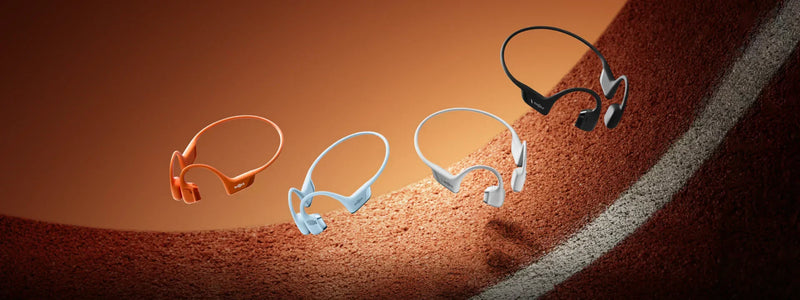
To see this balance in action, consider the Shokz OpenRun Pro 2. You feel less distracting bouncing during strides thanks to its light 30.3g titanium frame. It delivers rich audio without that annoying cheekbone tickle, as DualPitch™ technology smooths out tactile vibrations. Plus, the IP55-rated silicone stays soft and secure against your skin, helping prevent chafing even when you work up a sweat.

Conclusion: Comfort is Manageable, Not Inevitable
If your bone conduction headphones start to ache after a long run, the technology isn't broken. That delayed discomfort usually stems from objective mechanical forces like clamping pressure and tactile vibration. Fortunately, these physical challenges are highly manageable. By leveraging lighter materials, refined transducers, and balanced frame tension, modern designs can often minimize those familiar hotspots. Ready to upgrade your daily run? Look for headsets engineered for both acoustic performance and long-term wearability to find your perfect fit.