Why Do Headphones Hurt Your Ears?

Why do headphones hurt your ears, especially when they felt fine at first? The answer is often related to how the headphones fit against or inside the ear, but heat, friction, clamping force, and listening habits can also play a role.
Discomfort may show up as a tender ear canal after a long flight, sore outer ears after a full day of video calls, or aching temples after wearing headphones with glasses. Sometimes a small fit adjustment is enough to help. In other cases, the way a particular headphone design sits on your ears or head may simply not suit you for long listening sessions.
Understanding where the discomfort comes from can help you decide what to change before replacing your headphones.
Why Headphones Hurt Your Ears: Pressure, Fit, and More
Different headphone styles create contact in different places. In-ear models interact directly with the ear canal, while on-ear and over-ear headphones rely more on contact around the outer ear and head. Heat, moisture, and movement can add to the discomfort, particularly during workouts or in warm, humid conditions.
Ear Canal Pressure from In-Ear Tips
In-ear headphones use ear tips that sit inside the ear canal to create a seal. That seal can help with stability and sound isolation, but it also means the ear tip remains in contact with sensitive skin.
A tip that is too large may feel tight, while one that is too small may require deeper insertion to stay secure. The stiffness of the material and the shape of your ear canal can also affect how an earbud feels over time.
The discomfort may not appear immediately. An earbud can feel fine during a short commute but become irritating after two hours on a flight or a long work session. Sweat and heat may make the experience less comfortable as well, particularly when the ear canal remains sealed for an extended period.
Clamping Force from On-Ear and Over-Ear Headphones
On-ear and over-ear headphones create a different kind of pressure. Their headbands need enough tension to keep the headphones in position, but that inward force can become noticeable during several hours of wear.
The outer ear, temples, and area around the jaw can all be affected. Glasses can add another contact point where the headphone and eyewear meet.
This may become particularly noticeable during back-to-back meetings, a long flight, or an afternoon of studying. A headphone that feels secure after 15 minutes may feel considerably tighter after several hours.
Heat, Moisture, and Friction
Not all headphone discomfort comes from fit. Temperature and movement matter too.
During a run or gym session, sweat can collect around earcups, pads, or ear tips. Repeated movement can increase friction against the skin. In hot or humid weather, headphones that feel comfortable indoors may become less pleasant outside.
These factors do not necessarily mean the headphones are poorly designed. They can simply reveal that a particular combination of fit, material, environment, and wearing time is not working well for you.
When Ear Pain May Have Another Cause
Headphone discomfort is not always caused by the headphones themselves. Existing skin irritation, jaw-related problems, or an ear condition can make wearing any audio device uncomfortable.
Pay attention to whether the discomfort also occurs when you are not wearing headphones. Persistent or significant pain, swelling, discharge, fever, or other concerning symptoms are reasons to seek medical advice rather than simply changing headphone models.
What to Try Before Replacing Your Headphones
Changing headphones is not always the first step. A few practical adjustments may improve comfort, especially when the underlying issue is fit rather than the overall headphone style.
Try a Different Ear Tip or Position
For in-ear headphones, start with the ear tip size. A different size can change both stability and the amount of contact inside the ear canal.
You can also experiment with how deeply the earbuds sit. They should feel secure without requiring unnecessary insertion. During longer listening sessions, notice whether discomfort comes from one specific area. That can help you decide whether a small adjustment is enough.
Reduce Headband Pressure
For on-ear and over-ear headphones, positioning can make a noticeable difference. Adjust the headband so the earcups sit naturally around or over the ears rather than pressing excessively against one side.
If you wear glasses, small changes in earcup position may also reduce pressure around the temples. It is worth trying these adjustments before assuming the headphones themselves are unsuitable.
Give Your Ears Short Breaks
Even a comfortable headphone can become tiring during uninterrupted listening. Short breaks give your ears and the surrounding skin some time away from continuous contact.
This can be useful during long workdays, studying, travel, or extended calls. Breaks also make it easier to notice whether discomfort is building gradually or appears soon after putting the headphones on.
Check the Fit After Longer Listening
A five-minute test does not always tell you how a headphone will feel after two or three hours.
When evaluating comfort, pay attention to what happens later in the session. Does one ear become sore? Do your temples start aching? Does the ear canal feel irritated? Does the headphone become noticeably warmer?
These details can help you distinguish between a fit that needs adjustment and a wearing style that may not suit you for extended use.
Why Some Headphone Designs Feel Better for Long Wear
There is no single headphone shape that works equally well for everyone. Comfort depends partly on individual anatomy, but it also depends on where a headphone makes contact.
An in-ear model places part of the device inside the ear canal. An over-ear model surrounds the ear and uses a headband to maintain its position. An on-ear model rests directly against the outer ear.
For someone who repeatedly experiences discomfort in the same area, changing where the headphone makes contact may be more useful than continuing to fine-tune the same fit.
That does not make one category universally more comfortable. It simply gives you another option when the usual contact areas are not working well for your ears or head.
How Open-Ear Bone Conduction Changes Where Headphones Sit
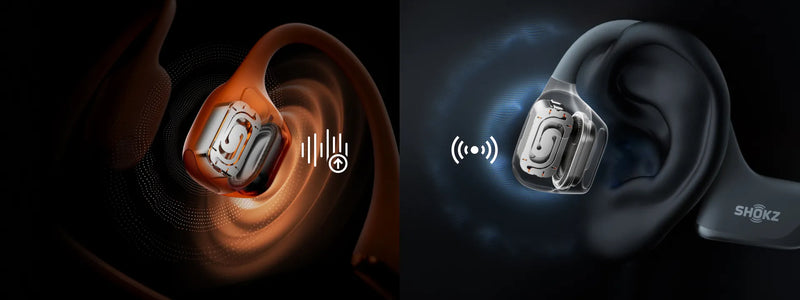
Open-ear bone conduction headphones take a different approach to sound delivery. Instead of placing an ear tip inside the ear canal, they use transducers positioned near the cheekbones to transmit sound vibrations through the skull to the inner ear.
The ear canal remains uncovered, so the headphone does not rely on an in-ear tip to create a seal.
This can be relevant for listeners who find in-ear pressure uncomfortable or who prefer not to have something sitting inside the ear canal during long periods of listening. It can also be useful for outdoor activities where staying aware of surrounding sounds is important.
The change is not a guarantee of comfort. Open-ear headphones still make contact with the head, and their fit can still create localized discomfort when positioned poorly. The main difference is where that contact occurs.
How Bone Conduction Technology Delivers Sound
With bone conduction, the transducers sit near the cheekbones and create vibrations that travel through the bones of the skull toward the inner ear. This allows sound to be perceived without placing an ear tip inside the ear canal.
That changes the wearing experience. There is no in-ear seal to maintain, and the ear canal remains open.
Bone conduction also has its own acoustic characteristics, so it should not be treated as identical to every in-ear, on-ear, or over-ear headphone. In this context, its relevance is primarily the combination of sound delivery and a different wearing position.
When an Open-Ear Design May Feel More Comfortable
Open-ear headphones may be worth considering when discomfort repeatedly comes from the ear canal, especially after long listening sessions.
They can also make sense for walking, running, commuting, or working while you want your ears uncovered and remain aware of your surroundings.
For glasses wearers, fit still needs attention because the frame and eyewear can occupy some of the same space around the ears. The goal is not to eliminate all contact, but to find a position where the headphones remain secure without creating a concentrated sore spot.
One example is the Shokz OpenRun Pro 2. It uses an open-ear bone conduction design with a flexible titanium frame, while the transducers sit near the cheekbones rather than inside the ear canal.
DualPitch™ Technology combines bone conduction and air conduction drivers, and its IP55 rating makes it suited to everyday workouts and outdoor activities.
For runners, walkers, or people who spend long periods listening while moving around, this type of wearing position may be worth considering when conventional earbuds or headphones become uncomfortable.

How to Adjust an Open-Ear Fit for Longer Listening
Open-ear headphones still need to be positioned correctly. Because the transducers sit outside the ear, small changes in placement can affect both comfort and sound.
Place the Transducers Near the Cheekbones
The transducers should sit near the cheekbones in front of the ears rather than directly on the temples. Start with the frame in its natural position, then make small adjustments until the contact feels balanced on both sides.
Moving the transducers too high or too far back can create an uncomfortable spot. It may also affect how clearly you hear the audio.
A good fit should feel secure without requiring you to press the frame tightly against your head.
Watch for New Pressure Points
Changing headphone styles does not make fit irrelevant. An open-ear frame can still create discomfort around the ears, temples, or behind the head when its position does not suit your head shape.
This is especially worth checking when wearing glasses, hats, or other accessories. Try the headphones for longer periods rather than judging the fit solely on how they feel during the first few minutes.
What Long Listening Sessions Can Mean for Ear Comfort
Long listening sessions can expose comfort issues that are easy to miss during a short test. Heat, moisture, friction, and repeated contact may become more noticeable after several hours.
An open-ear design keeps the ear canal uncovered, which may feel preferable for listeners who dislike the enclosed sensation of in-ear headphones. But the basic habits of comfortable listening still apply. Give yourself breaks, keep the equipment clean, and pay attention to irritation rather than pushing through persistent discomfort.
Volume Still Matters
Changing headphone design does not make listening at high volume risk-free. Bone conduction headphones still deliver sound to the inner ear, so responsible volume habits remain important.
Keep the volume at a level that allows you to listen comfortably without feeling the need to turn it up unnecessarily. During long sessions, taking periodic breaks can also help reduce listening fatigue.
In noisy environments, be especially careful about increasing the volume simply to compete with background sound. An open-ear design can keep the ears uncovered, but it does not remove the need for sensible listening levels.
When It May Be Time to Try a Different Headphone Design
Start with the simplest explanation. A different ear-tip size, a small repositioning, or a headband adjustment may be enough to improve comfort.
When the same type of discomfort keeps returning despite reasonable fit changes, however, it may be worth reconsidering how the headphones interact with your ears and head.
Someone whose main issue is ear-canal soreness may prefer a design that does not place anything inside the canal. Someone who experiences temple pressure from a headband may want to explore a different frame style. Someone who mainly struggles with heat and moisture may prefer a design that leaves the ears more open.
There is no need to treat this as a choice between a “good” and “bad” headphone design. The more useful question is which wearing style matches how, where, and how long you listen.
FAQ:
Can Open-Ear Headphones Help Relieve Ear Discomfort?
Yes, absolutely. Open-ear headphones like the Shokz models are highly effective at relieving discomfort. Open-Ear headphones don't enter or seal the ear canal. They avoid the pressure, moisture build-up, and deep canal pain associated with traditional sealed earbuds.
Is It Normal for Headphones to Hurt My Head?
Pain on the top of the head or around the temples is usually caused by the clamping force or weight of over-the-ear headphones. It is not normal to have pain. Look for models with lower clamping force and softer, thicker padding on the headband.
Conclusion
Headphones can hurt your ears for several reasons, including ear-tip pressure, clamping force, friction, heat, moisture, and simple fit issues. A few adjustments may improve comfort, especially when the problem comes from an imperfect fit.
When discomfort keeps returning despite those changes, the headphone's wearing style may simply not suit you for long sessions. Open-ear bone conduction offers another approach by placing the transducers near the cheekbones and leaving the ear canal uncovered.
That does not make open-ear headphones automatically more comfortable for everyone. Fit still matters, and listening habits still matter. But when conventional headphones repeatedly create discomfort in the same places, trying a different headphone design can be a practical next step.