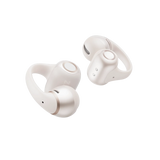
Types of Earbuds: How to Choose the Right Fit for You

When people search for types of earbuds, they’re often trying to answer two questions at once: how the earbuds fit around the ear and how they connect to a device.
That overlap can make the terminology confusing. Terms such as “in-ear,” “open-ear,” “wireless,” and “true wireless” can appear on the same product page even though they describe different parts of the design. One refers to fit. Another refers to how the earbuds connect.
There’s also a third dimension to consider: how the earbuds transmit sound. Bone conduction, for example, describes a sound transmission method rather than simply a physical fit.
Understanding these categories makes it easier to compare the different types of earbuds without getting caught up in overlapping labels. The right choice usually comes down to a few practical factors: comfort, stability, isolation, environmental awareness, and how you plan to use them.
What “Types of Earbuds” Actually Means
There are three useful ways to think about the types of earbuds and headphones you’ll see on the market.
1. Fit and Physical Placement
This describes where the earbuds sit in relation to your ear.
-
In-ear: Ear tips sit inside the ear canal and typically create a seal.
-
Semi-in-ear: The earbuds rest at or near the entrance of the ear canal without the same type of deep seal.
-
Open-ear: The ear canal remains open, with the speaker positioned near the ear.
These are fit and design categories. They tell you more about pressure, stability, isolation, and how enclosed the listening experience may feel.
2. Audio Transmission Technology
This describes how sound reaches your hearing system.
Most conventional earbuds use air conduction, with speakers sending sound through the air toward the ear. Bone conduction uses vibrations near the cheekbones or temples to transmit sound through the bones of the skull to the inner ear.
That means bone conduction should not be treated as simply another fit category alongside in-ear or semi-in-ear. A bone conduction product is typically worn with the ear canal open, but the term itself primarily describes the way sound is transmitted.
3. Connection Method
Connection type describes how the earbuds communicate with your device.
-
Wired: A cable connects the earbuds to the audio source.
-
Wireless: The earbuds connect to the device wirelessly, usually through Bluetooth. Some designs may still have a cable connecting the two sides.
-
True wireless: There is no cable connecting either earbud to the device or to each other.
These categories can overlap. You can have in-ear true wireless earbuds, in-ear wired earbuds, open-ear wireless earbuds, or bone conduction wireless headphones.
The simplest approach is to choose fit first, transmission technology second, and connection method based on your device and habits.
The Main Types of Earbuds by Fit and Design
In-Ear Earbuds
In-ear earbuds use soft ear tips that sit inside the ear canal and typically create a seal. That seal can reduce outside sound and help direct more of the audio toward the ear.
Because of this design, in-ear earbuds often provide stronger isolation than more open styles. They can be a practical option for commuting, travel, noisy offices, or focused listening where reducing background sound is important.
Fit plays a major role. The wrong ear-tip size can create too much pressure, while a poor seal can affect both stability and the listening experience. Some users also find that the enclosed feeling becomes noticeable during longer sessions.
The trade-off is therefore less about sound quality being inherently better or worse and more about what you want from the design. In-ear earbuds can work well when isolation is a priority, but they may feel more enclosed than other types.
Semi-In-Ear Earbuds
Semi-in-ear earbuds, sometimes described as traditional earbud-style designs, rest at or near the entrance of the ear canal rather than sitting deeply inside it.
Because they do not rely on the same type of deep seal as in-ear models, they generally allow more outside sound through and can feel less enclosed. Some listeners prefer that lighter, more open sensation for everyday use.
The main variable is fit. Without an ear tip anchoring the earbud inside the canal, stability can depend heavily on the shape of your outer ear. A design that feels secure for one person may move more easily for another.
Bass response and isolation can also differ from sealed in-ear earbuds because the acoustic seal is different.
Open-Ear Earbuds
Open-ear earbuds keep the ear canal open. Instead of placing a speaker inside the canal, the speaker sits near the ear and directs sound toward it. Many designs use ear hooks, clips, or another support structure to help keep the earbuds in position.
The open fit allows surrounding sounds to remain audible. That can be useful when you want to listen to music, podcasts, or calls while still hearing coworkers, announcements, traffic, or other activity around you.
Open-ear earbuds can also be useful for active users who do not want to rely on an in-ear seal for stability. Their open design may make audio harder to hear in louder surroundings, but newer models can use advanced audio optimization to help maintain clarity in these situations.
Bone Conduction: A Different Part of the Classification
Bone conduction belongs to a different part of the classification system: it describes how sound is transmitted, rather than simply where an earbud sits.
Bone conduction devices typically position transducers near the cheekbones or temples. Instead of relying primarily on a conventional speaker sending sound through the air into the ear canal, the transducers create vibrations that travel through the skull to the inner ear.
The ear canal remains open, which means surrounding sounds can still reach your ears naturally. The listening experience also differs from conventional air-conduction earbuds, particularly in how music and bass are perceived.
Bone conduction can be a practical option for runners, walkers, and cyclists who want open-ear listening while keeping the ear canal unobstructed. As with other designs, the experience depends on fit, listening environment, and personal preference.
Wired, Wireless, and True Wireless: A Separate Choice
Fit and connection are related to the overall product experience, but they are not the same category.
Wired earbuds connect to a phone, laptop, or other audio source with a cable. They do not require the earbuds themselves to be charged, although the cable can become inconvenient during movement or catch on clothing and equipment.
Wireless earbuds connect to the device without a cable, commonly through Bluetooth. Depending on the design, the two earpieces may still be connected to each other by a cable or neckband.
True wireless earbuds remove that connecting cable entirely. Each earbud operates independently, with no physical wire running between the earbuds.
This distinction is important when comparing wireless earbuds. “Wireless” does not tell you whether the earbuds sit inside your ear, rest at the ear entrance, or stay outside the ear canal.
For example:
-
In-ear + true wireless
-
In-ear + wired
-
Semi-in-ear + true wireless
-
Open-ear + wireless
-
Bone conduction + wireless
The connection method tells you how the product connects. The fit category tells you how it sits on or around your ear.
Open vs. Closed Earbuds: Isolation or Awareness?
Another useful way to compare the types of earbuds is to look at how much the design separates you from surrounding sound.
Closed or Sealed Designs
Sealed designs, particularly in-ear earbuds, can reduce the amount of outside sound reaching your ears.
They may be useful when you want to:
-
Reduce background noise
-
Focus on music, podcasts, or calls
-
Hear audio more clearly in noisy environments
-
Create a more enclosed listening experience
The trade-off is that they can feel more enclosed, particularly during extended wear.
Open Designs
Open designs leave the ear canal available for environmental sound.
They can:
-
Allow more surrounding sound to reach your ears
-
Make it easier to hear nearby activity
-
Feel less enclosed during longer listening sessions for some users
-
Suit situations where environmental awareness matters
The trade-off is reduced isolation. In a loud train, busy office, or other noisy environment, more outside sound can compete with your audio.
For outdoor activities, an open design may make it easier to hear surrounding sounds such as a passing cyclist, a vehicle, or someone speaking nearby. It should not, however, be treated as a guarantee of safety or awareness.
Quick Comparison: Different Types of Earbuds
|
Type |
Where It Sits |
Ear Canal |
Isolation |
Awareness of Surroundings |
Typical Strength |
Potential Trade-Off |
|
In-ear |
Inside the ear canal |
Sealed or partially sealed |
High |
Lower |
Isolation and focused listening |
Canal pressure or plugged-in feeling for some users |
|
Semi-in-ear |
At the outer-ear entrance |
Not deeply sealed |
Low–moderate |
Higher |
Lightweight, less enclosed feel |
Fit and stability can vary |
|
Open-ear |
Around or near the ear |
Fully open |
Low |
Higher |
Comfort and environmental awareness |
More outside noise reaches you |
|
Bone conduction |
Near cheekbones or temples |
Fully open |
Low |
Higher |
Open-ear listening without blocking the canal |
Sound presentation differs from conventional speakers |
The table is a starting point rather than a ranking. Your ear shape, listening environment, activity level, and preference for isolation can all change which design feels right.
Which Type of Earbuds Fits Your Lifestyle?
Running, Gym, and Workouts
Exercise puts more pressure on fit and stability than sitting at a desk.
Repeated movement can expose problems that are easy to miss during a short listening test. Earbuds may loosen, shift, or become uncomfortable as a workout continues.
When comparing different types of earbuds for exercise, consider:
-
How securely the design stays in place
-
Whether it relies on an ear-tip seal
-
How it handles sweat and moisture
-
Whether you want to hear surrounding sounds
-
Whether the fit remains comfortable during repeated movement
Open-ear and bone conduction designs can be useful for people who prefer an unobstructed ear canal during workouts. Hooked or otherwise anchored designs may also provide additional physical stability.
For example, Shokz OpenRun Pro 2 uses bone conduction technology to deliver sound while keeping the ear canal open, along with a flexible nickel-titanium alloy frame that helps keep the headphones securely positioned during running and other repeated movement.
There is no single fit that works for every workout or every ear shape, so stability should be evaluated alongside comfort.
Office and Calls
At work, long-wear comfort and call usability may matter more than maximum stability.
In-ear earbuds can be useful when you need to reduce distractions or concentrate in a noisy environment. Their sealed fit can also help keep voice audio more focused.
Open-ear and semi-in-ear designs allow more environmental sound through. That can be helpful when you need to hear coworkers, announcements, or conversations without repeatedly removing your earbuds. For example, Shokz OpenDots 2 are open-ear clip-on earbuds designed to sit outside the ear canal, making them a practical option for people who want to stay aware of their surroundings during the workday.
For calls, also consider microphone performance and how much background noise is present in your environment. A fit that feels comfortable for several hours may be more useful than one that only feels good during a short meeting.
Commuting
Commuting creates a different trade-off.
On a loud train or bus, in-ear earbuds can make it easier to hear your audio by reducing outside sound. On the other hand, some commuters may prefer an open design when hearing announcements or surrounding activity is more important.
Think about the environment you encounter most often rather than choosing based on the label alone.
If your commute is mostly noisy and enclosed, stronger isolation may be more useful. If you regularly move through quieter public spaces and want to remain aware of nearby sounds, an open design may be worth considering. Shokz OpenFit Pro, for example, uses an open-ear design that lets you stay connected to your audio without fully blocking your ears, making it an option for commuters who want to hear more of what is happening around them.
How to Choose the Right Earbuds for You
Start with fit.
Ask yourself whether you prefer something that sits inside the ear canal, rests near the ear entrance, or stays completely outside the canal. This is often the biggest factor in long-term comfort.
Next, consider isolation versus environmental awareness.
-
Choose an in-ear design when reducing outside sound is a major priority.
-
Consider semi-in-ear earbuds when you prefer a less enclosed fit but still want a conventional earbud shape.
-
Consider open-ear earbuds when hearing surrounding sounds is important and you prefer to keep the ear canal open.
-
Consider bone conduction when you want open-ear listening using a different sound transmission method.
Then think about stability.
For running and other high-movement activities, look for a design that matches your ear shape and stays secure as you move. Hooks, clips, or other support structures may help, but the actual fit still varies from person to person.
Finally, choose the connection method that matches your habits.
Wired earbuds can be straightforward when you do not want to manage battery charging. Wireless earbuds remove the cable to your device, while true wireless earbuds offer a completely cable-free setup.
The Bottom Line
Understanding the types of earbuds is less about memorizing product labels and more about knowing which part of the design each label describes.
In-ear, semi-in-ear, and open-ear describe physical fit. Air conduction and bone conduction describe how sound is transmitted. Wired, wireless, and true wireless describe how the earbuds connect to a device.
Once you separate those categories, choosing becomes much simpler.
Think about four things first: fit, isolation, environmental awareness, and stability. Then consider your listening environment and connection preferences. The right type is the one that matches those priorities—not necessarily the one with the most features or the most familiar label.