How Directional Audio Technology Works: The Science of Focused Sound

Have you ever struggled to enjoy music in a busy café or sharing a room without noisy roommates? Directional audio technology can help by focusing sound directly towards your ear. This reduces sound leakage and keeps audio more personal. This guide looks at how directional audio works, its potential benefits and real-life applications.
What Is Directional Audio Technology?
Directional audio is a system that sends sound specifically to the intended listener or area. By focusing the audio along a narrow path, it delivers a more personal and precise listening experience, reducing unwanted noise in shared environments.
Directional Audio Differs From Traditional Speakers
Traditional speakers radiate sound broadly, called sound spread. In most rooms, you’d hear audio from every direction at significant volume. Directional audio does the opposite, it focuses that energy narrowly so only people in the path of the sound hear it clearly. This not only reduces unwanted sound spread, but also lets devices create multiple independent audio zones within the same space.
|
Feature |
Traditional Speakers |
Directional Audio |
|
Sound Spread |
360° |
Focused beam |
|
Privacy |
Low |
High |
|
Environmental Awareness |
Low |
Can maintain ambient awareness |
|
Setup Complexity |
Simple |
More complex, may need arrays |
How Does Directional Audio Create Focused Sound?
Now let’s unpack how the focused sound is actually created using two core technologies.
1. Acoustic Beamforming for Sound Direction Control
Acoustic beamforming arranges many small speaker elements so sound waves reinforce each other only in certain directions. Think of it like synchronizing multiple ripples in a pond: where they line up, the wave is louder; where they cancel, it’s quieter.
This lets systems “steer” audio beams electronically without physical movement, similar to how radar steers signals. Integrated arrays can even move the direction of the sound beam dynamically.
2. Ultrasonic Audio Transmission Principles
Ultrasonic directional audio uses sound waves above human hearing (e.g., ~40 kHz). Since high‑frequency waves have very short wavelengths, they stay very narrow as they travel.
As these ultrasonic waves interact with air and objects, they demodulate — meaning the desired audio signal naturally leaks out of the beam path because of nonlinear acoustic effects in the air. Audibly, it sounds like a spotlight of sound.
What Are the Benefits and Limitations of Directional Audio for Everyday Listening?
Directional audio can make everyday listening feel more personal and less intrusive. Many people notice practical differences compared with traditional speakers, especially in shared environments or when staying aware of surroundings matters. Here are the key benefits users often report as well as some practical limitations.
1. Reduced Sound Leakage in Shared Spaces
One major appeal of directional systems is that sound stays in a relatively narrow path instead of radiating everywhere. That can help keep audio focused where it’s needed and reduce disturbances to others nearby.
“As you walk from painting to painting, in a small cone of sound in front of the painting you can hear information about that painting.” — Redditor describing how a directional audio setup delivered focused sound in a space.
This kind of “audio cone” effect is exactly what directional systems are designed to create. It’s a localized zone where sound is clear and audible without spreading widely.
2. Greater Awareness of Surrounding Sounds
While directional audio itself doesn’t create environmental awareness, many personal listening experiences built around it keep users connected to their surroundings. This is especially noticeable in devices that don’t fully block ambient noise.
Some users appreciate this balance — they get audio that feels personal without feeling isolated from the environment. This can be especially helpful when moving around or in busy public settings.
3. Improved Comfort for Long Listening Sessions
Directional setups tend to focus sound efficiently, which can reduce auditory fatigue compared with broad‑spreading audio that fills a whole room. Users describe this in different contexts, such as live installations or sound systems that seem less tiring over time.
“Directional audio at events had me feeling like the sound was moving around us without the speaker rigs actually moving. It was weird but less tiring on the ears.” — Redditor on a directional audio experience.
This kind of experience suggests that when sound is aimed more precisely, listeners perceive it as less overwhelming during longer sessions.
4. Limitations of Directional Audio
No technology is perfect, and directional audio is no exception. There are trade‑offs and practical limitations that users have noticed:
-
Narrow listening zones: If you step outside the focused path, audio clarity can drop off quickly.
-
Environmental sensitivity: Reflections, walls, wind, and background noise can weaken the perceived directionality.
-
Positioning requirement: Achieving best results often needs the listener to stay in a specific zone.
-
Compromised spatial cues in some contexts: In cases where precise 3D positioning or localization matters, directionality may not deliver the expected cues.
What Are the Common Applications of Directional Audio Technology?
From public installations to personal audio, directional technology has a lot of uses.
1. Public Applications of Directional Audio
Here are classic public uses:
Directional Speakers for Museum Exhibits
Museums use directional systems to let multiple visitors hear different narration tracks without interfering with each other.
Ultrasonic Audio Systems for Digital Signage
In retail or information kiosks, ultrasonic directional systems let people in the beam path hear announcements clearly while others nearby don’t hear it at full volume.
2. Personal Listening Applications of Directional Audio
Now the technology is branching into personal audio.
Open‑Ear and Wearable Directional Listening
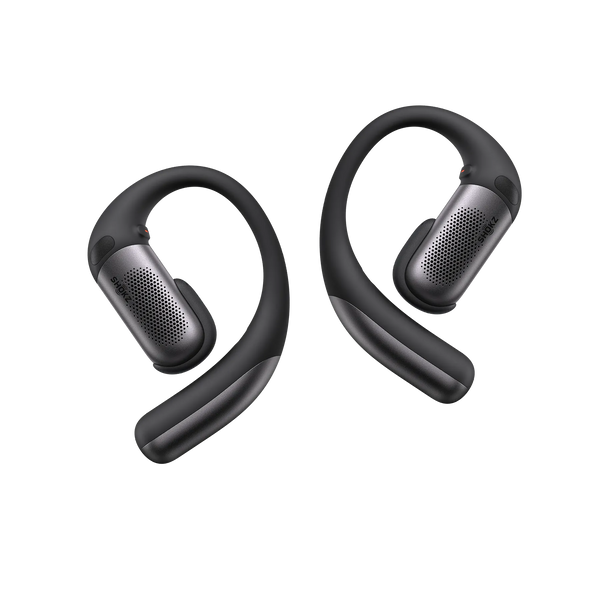
As directional audio technology becomes smaller and more energy-efficient, it is increasingly appearing in consumer audio devices designed for everyday use. Open-ear earbuds are one of the most notable examples of this trend.
The Shokz OpenFit Pro demonstrates this approach with DirectPitch™ 3.0, which directs sound toward the ears and reduces leakage. Its open-ear design allows users to maintain situational awareness while enjoying focused audio for music, calls, or podcasts.
Directional Audio Glasses and Wearable Devices
Emerging wearables like audio glasses are combining directional speakers with convenient form factors. These aim to put sound close to the ears without blocking ambient sound.
Personalized Audio Zones in Vehicles
Cars increasingly experiment with beamforming so each passenger can hear different audio without wireless headphones, creating a single system serving multiple listeners comfortably.
FAQ
1. Does Directional Audio Work Outdoors?
Yes. However, performance varies widely with distance, wind, and obstacles. Focused beams can still be effective, but the farther you go, the more environmental factors affect clarity.
2. What Is the Difference Between Directional Audio and Spatial Audio?
Directional audio focuses where a sound goes, while spatial audio creates the illusion of 3D sound location around the listener. Directional audio doesn’t necessarily provide immersive sound, it simply “points” the audio to a target.
3. Does Directional Audio Consume More Power?
It’s possible. Complex beamforming and processing do use more power than a simple speaker. But modern systems are optimized so the extra power draw is often negligible. It’s about the same as app processing or Bluetooth streaming.
4. How Far Can Directional Sound Travel?
-
Ultrasonic beams in open air can travel roughly 50 to 100 meters under ideal conditions.
-
Acoustic beamforming arrays typically reach about 30 to 60 meters, depending on array size and power.
Note that in real-world environments, the effective range is usually lower due to noise, wind, and obstacles.
Conclusion
Directional audio is a focused sound solution that provides privacy and area control in both public settings and personal listening. Its strengths include reduced audio leakage and more listening comfort. However, these come with limitations in sound quality, bass performance, environmental sensitivity, and cost. When deployed practically, it offers an attractive alternative to both traditional speakers and isolated headphones.