Ear Hook vs. Neckband Headphones: Which Form Factor Actually Fits Your Life?

When exploring open-ear headphones, the physical design often becomes the most noticeable difference. Both ear hooks and neckbands leave your ear canal unblocked to maintain ambient awareness, yet they create distinct wearing experiences.
A style that feels secure during a workout might interact differently with your glasses, just as a comfortable office design might catch on a winter collar. Choosing between these forms usually comes down to your daily habits, movement patterns, and personal comfort.
Earhook Earbuds vs. Neckbands: How Each Design Fits
The most noticeable difference between these styles is their physical structure and how they anchor to your body.
The Ear Hook
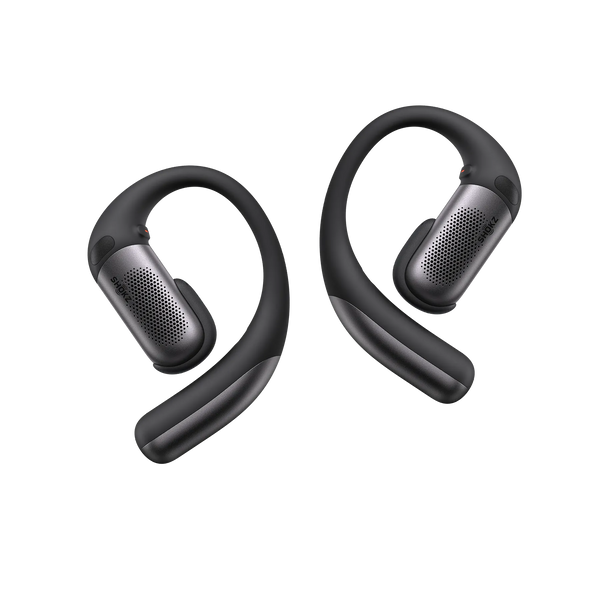
An ear hook wraps around the outer ear, positioning the speaker near the ear canal. Since the hook serves as the primary retention point, each earpiece operates as an independent unit. With nothing touching your neck or shoulders, ear hook open earbuds typically offer a minimal, lightweight presence that appeals to users looking for the least amount of physical contact.
The Neckband
A neckband rests across the back of the neck with arms extending forward to place the audio components near the cheekbones. Because both sides move as one connected frame, the design often feels more uniformly anchored.
It distributes its physical presence across the neck and shoulders rather than relying solely on the ear cartilage. Plus, there is a practical bonus: the band can easily rest around your neck when you take a break from listening.
Which Open Ear Headphones Offer Better Fit Stability?
For regular workouts, a secure fit is often the top priority. When headphones slip mid-run or during a stretch, even the best features quickly become an afterthought. Here is how each style handles movement.
Ear Hooks During Exercise
Ear hooks are generally the go-to for running, jumping, or intense gym sessions. By gripping the natural curve of your ear, they tend to stay put during bouncy movements while sitting flush to cut down on wind drag. Plus, since each side is independent, adjusting one won't shift the other.
The main catch? A secure fit relies heavily on your specific ear shape.
Neckbands During Exercise
Neckbands link both earpieces with a flexible band that wraps behind your head. For steady activities like cycling or hiking, this connected frame feels highly secure.
However, it introduces a different dynamic: quick head turns, looking up to stretch, or a bulky collar can sometimes bump the band out of place. During heavy sweat sessions, the band resting against your neck also tends to feel warmer than ear hooks.
The Stability Verdict
-
Running and HIIT: Ear hooks typically win. They stay snug and avoid the collar area.
-
Cycling, hiking, and steady training: Neckbands often feel more stable, anchoring everything as one unit.
-
Swimming: Neither style works. Water workouts require fully waterproof, purpose-built swimming headphones.
Which Open Ear Headphones Win on All-Day Comfort?
A pair of headphones might feel great at 9:00 AM, but how do they feel by 3:00 PM? When it comes to all-day wear, neither style is flawless—they simply trade one type of comfort for another. Choosing the right one depends on what your body tolerates best over a long shift.
Ear Hooks: Freedom vs. Ear Fatigue
With ear hooks, you get complete physical freedom around your neck. Since nothing wraps behind your head, you can lean back in a tall office chair, wear a thick winter collar, or tie a low ponytail without the headphones getting in your way.
However, the physical sensation often changes over time. Because the entire weight is concentrated on your outer ear, what feels weightless in the morning can gradually turn into a noticeable pinch or a dull cartilage ache by the afternoon. Your overall comfort relies heavily on how well your ears handle that continuous localized pressure.
Neckbands: Ear Relief vs. Environmental Friction
Instead of placing all the weight on your ear cartilage, neckbands distribute a portion of it across the back of your neck. For many people, reducing that localized pressure makes extended wear significantly more comfortable.
The trade-off is how the band interacts with your surroundings. If the band constantly rubs against a hoodie collar, fights with your ponytail, or gets pushed forward by a high-backed seat, it shifts the front earpieces into awkward angles on your cheekbones. That constant friction and the need to keep readjusting the fit can quickly turn a lightweight design into a frustrating physical annoyance.
Earhook vs. Neckband: Compatibility With Daily Gear
Comfort is not just about the headphones themselves—it is also about what else you wear on your head. Whether you rely on prescription glasses every day, strap on a cycling helmet for your commute, or bundle up in a beanie during the winter, your everyday accessories will quickly dictate which style works best for you.
Here is a quick breakdown of how each design interacts with your daily gear:
|
Gear / Accessory |
Ear Hooks |
Neckbands |
The Verdict |
|
Glasses |
Share space behind the ear. They can stack awkwardly or create pressure if your glasses have thick frames. |
Rest further forward on the cheekbones, typically running parallel to your glasses without fighting for the same space. |
Neckbands are generally much easier to live with for daily glasses wearers. |
|
Helmets |
The low-profile shape works nicely with standard cycling helmets that leave the outer ear area open. |
The lower anchor point avoids top-of-head pressure, which helps them pair better with fuller-coverage headgear. |
Tie. Both generally work well, though neckbands have a slight edge for full-coverage styles. |
|
Hats & Beanies |
While they stay clear of bulky winter collars, ear hooks are vulnerable to tight beanies. Headwear that covers your ears will press the hooks directly into your cartilage, potentially causing soreness. |
Because they sit lower, neckbands help minimize ear pressure under snug beanies. However, the rear band can still clash with heavy coats or thick scarves. |
Neckbands win if you frequently wear tight winter hats, but ear hooks remain the better choice if your winter gear involves tall collars. |
Earhook vs. Neckband: Portability and Daily Convenience
Instead of swapping between gym and office headphones, most people just want one pair that handles the entire day. How easily a design fits into your routine comes down to a few practical moments:
-
Putting On and Quick Breaks: Ear hooks require placing each side separately, which makes taking out just one side easy for quick conversations. Neckbands go on in a single motion and offer an effortless "standby mode"—when you pause your audio, the band simply rests around your neck without needing a case.
-
Storage: Ear hooks easily slip into a jacket pocket, running belt, or compact charging case. Neckbands require bag space due to their rigid frame, though keeping them on your shoulders means they rarely need to be packed away during the day.
-
Social Presence: Ear hooks look smaller and blend in like standard earbuds. Neckbands are more visible, which subtly signals to colleagues that you are listening while remaining open to conversation.
Earhook vs. Neckband: Which Style Fits Your Daily Routine?
The best way to choose between an earhook and a neckband is to focus on your primary daily routine rather than occasional use cases.
Choose Ear Hook If…
|
Your Situation |
Why Ear Hook Wins |
|
Primary use is running or HIIT training |
Ear-anchored fit minimizes bounce during vertical movement |
|
You wear a cycling helmet regularly |
Sits within the helmet’s open ear zone without structural conflict |
|
You want single-ear removal for quick conversations |
Remove one side without disturbing the other |
|
You wear hair up in a bun or high ponytail |
No neck-zone contact means zero hair conflict |
|
Pocketability matters |
Compact units store in any pocket or small case |
If your day revolves around active movement, the Shokz OpenFit Pro embodies this freedom. Its flexible silicone hooks and DirectPitch™ air conduction keep audio clear during HIIT workouts without interfering with helmets or high ponytails. Slipping into a pocket with its 50-hour charging case, it turns bouncy training and quick side-street chats into a weightless, distraction-free routine.
Choose Neckband If…
|
Your Situation |
Why Neckband Wins |
|
You wear prescription glasses daily |
Transducer arm runs parallel to glasses temples — minimal stacking conflict |
|
Extended all-day wear is the primary use case |
Distributed weight across neck reduces localized ear pressure |
|
You train in cold weather with hoods or hats |
Neck anchor point sits below the hat and hood interference zone |
|
You move between contexts and want a “standby” mode |
Rests passively around the neck — no bag or pocket required between uses |
|
You wear a low ponytail and can route it forward |
Connected frame stays anchored regardless of head movement |
If your day shifts between outdoor workouts and daily work, the Shokz OpenRun Pro 2 offers that continuous versatility. Its flexible nickel-titanium frame stays securely anchored during outdoor runs, while sitting neatly alongside glass temples at your desk. Offering 12 hours of battery life, it rests passively on your neck during breaks—effortlessly bridging morning miles, office calls, and evening walks.

FAQ
Are earbuds with ear hooks better?
Whether they are the better choice depends entirely on your primary activity. Ear hooks are the ultimate investment for fitness enthusiasts who prioritize a weightless, highly secure fit for intense workouts, running, or HIIT. Because they lack a rear band, they are also the preferred option if you frequently lean back in chairs or wear bulky winter gear.
Which type of open-ear headphone is the better choice for everyday use?
If you want a versatile "daily driver" that seamlessly transitions between different environments, a neckband is often the better purchase. It offers unmatched all-day battery life and an effortless "standby mode" around your neck when not in use. For hybrid workers or those who wear prescription glasses daily, a neckband design (like the Shokz OpenRun Pro 2) provides the most consistent, comfortable experience from morning commutes to evening walks.
The One-Line Summary
The ear hook is built for movement-first users who want minimal mass at the ear during exercise. The neckband is built for wear-first users who prioritize comfort, glasses compatibility, and all-day presence across mixed environments.
Neither is universally superior, as both offer distinct approaches to open ear security and comfort. The right answer is simply the one that matches how you actually live.
If an ear hook better fits your lifestyle, the OpenFit Air 2 lightweight open earhook earbuds are another option to consider.