How to Find Secure-Fit Earhook Earbuds for Sports

If you're shopping for earhook earbuds for sports, one of the first questions is whether they'll stay secure throughout your workout. From sweaty runs and rowing sessions to jump training and quick direction changes, a stable fit matters just as much as sound quality.
Unlike traditional earbuds that rely mainly on the ear canal for support, earhook earbuds use the outer ear as their anchor point. This helps reduce shifting during movement and maintain a more consistent fit as sweat builds up.
Since earhook designs vary in how they stay in place and distribute weight, the right choice depends on your ears and the way you train.
Why Earhook Earbuds Stay Secure
Traditional in-ear earbuds rely largely on friction inside the ear canal to stay in place. As sweat builds up, that seal may become less reliable, especially during high-movement workouts.
Earhook earbuds use the outer ear as the main support point instead, helping reduce shifting through repeated movement. Their stability comes from three key design elements:
-
External support. A hook around the ear helps keep the earbud positioned during activity.
-
Weight distribution. A balanced design can reduce unnecessary movement while running, lifting, or changing direction.
-
Sweat-friendly fit. Relying less on ear canal friction helps maintain a more consistent fit as moisture increases.
For sports, a secure fit matters just as much as features like sound quality or battery life. When earbuds stay in place, you can spend less time adjusting them and more time focusing on your workout.
How to Choose Secure-Fit Earhook Earbuds
A secure fit depends on more than simply adding an earhook. Looking at a few key design details can help you decide whether a pair is likely to stay comfortable and stable during your workouts.
Consider the earhook design
The earhook is the foundation of the fit. Some models use independent over-ear hooks for each earbud, while others combine the hooks with a connected neckband. Both approaches support the earbuds externally, but they create a different wearing experience depending on how you move.
Consider your ear shape
The way an earhook fits can vary depending on your ear shape. A design that feels secure for one person may feel different for another, since the hook needs to sit comfortably around the outer ear.
Before buying, consider whether the earhook position matches your ear and whether it creates any pressure points during longer wear. A good fit should feel secure without needing to squeeze tightly.
Look at how the weight is supported
Weight distribution influences how much an earbud shifts during exercise. Designs that avoid placing too much weight inside the ear often feel more balanced, particularly during longer workouts or activities with frequent movement.
Think about your workout routine
The most secure earhook earbuds for one activity may not be the best choice for another. Gym workouts often involve changing positions, while running and cycling rely on steady, repetitive movement. Choosing a design that matches your typical training routine usually leads to a more consistent fit.
Find a comfortable fit
When choosing earhook earbuds, consider the materials around the ear, especially if you have sensitive skin or wear them for longer workouts. Softer materials, a lighter feel, and balanced support can help reduce discomfort that may lead to frequent adjustments.
Comfort plays an important role in maintaining a consistent fit during extended training sessions.
Which Earhook Earbuds Fit You Best?
Earhook earbuds generally fall into two design styles, and each suits different preferences and training habits.
Independent over-ear hooks place a separate hook on each earbud. Many people prefer this design because each earbud feels light and unobtrusive, making it well suited to workouts that involve frequent changes in body position.
Connected neckband designs link both earbuds with a flexible frame that rests behind the head. The connected structure creates a more anchored feel during sustained movement and may appeal to users who prefer a consistent fit throughout longer training sessions.
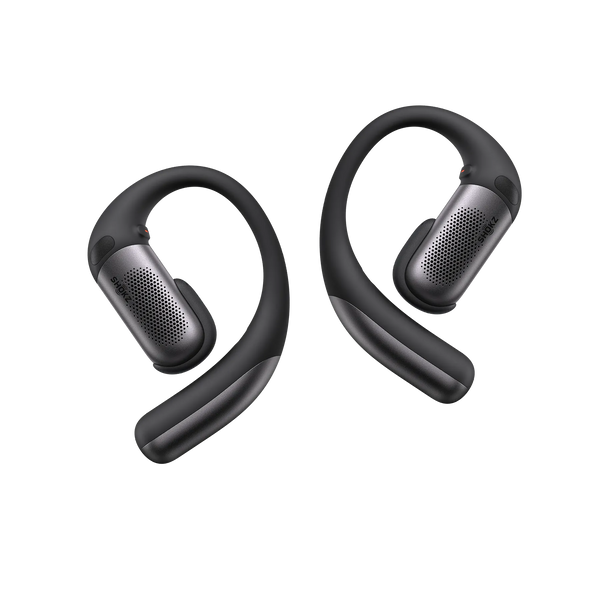
Shokz offers examples of both approaches. OpenFit Pro uses independent over-ear hooks, while OpenRun Pro 2 combines earhooks with a connected neckband. Both designs have their own strengths, and the better choice depends on how you train and what kind of movement you do most often.
Best Earhook Earbuds for Sports
OpenFit Pro — Sports Earbuds for Gym Training
For gym workouts, the OpenFit Pro is well suited to activities with frequent position changes, such as rowing, lifting, and floor exercises.
Its independent earhook design helps keep each earbud in place without relying on pressure inside the ear. The open-ear design also helps you stay aware of trainers, workout partners, and your surroundings during indoor training.
With up to 12 hours of playback, 50 hours with the charging case, and IP55 sweat resistance, it fits regular workout routines.
Core highlights
-
Independent earhook design — stays secure during dynamic workouts
-
DirectPitch™ open-ear listening — stay aware while training
-
Up to 12 hours of playback / 50 hours with charging case — less charging between workouts
-
IP55 sweat resistance — ready for sweat-heavy sessions
OpenRun Pro 2 — Open Ear Headphones for Outdoor Training
For running, cycling, and outdoor workouts, the OpenRun Pro 2 is designed around awareness and long-term movement.
Its DualPitch™ 10th-generation bone conduction technology keeps both ear canals open, while the earhooks and nickel-titanium neckband provide a connected fit for sustained activity.
With up to 12 hours of playback, quick charging, and IP55 sweat and light rain resistance, it is suited to regular outdoor training.
Core highlights
-
DualPitch™ 10th-generation bone conduction — keep ears open for outdoor awareness
-
Earhooks with nickel-titanium neckband — stable fit during long sessions
-
Physical push-button controls — easier operation during activity
-
Up to 12 hours of playback with quick charging — convenient for regular training
-
IP55 sweat and light rain resistance — suitable for outdoor workouts

Earhook Earbuds Buyer's Guide
Choosing between these two models comes down to your workout routine, not just the specifications.
If you mainly train indoors, such as lifting, rowing, fitness classes, or circuit workouts, the OpenFit Pro is likely the better match. Its independent earhook design suits activities with frequent position changes, while the charging case adds convenience for daily use.
If you spend more time running, cycling, or training outdoors, the OpenRun Pro 2 may fit your routine better. Its connected neckband provides a more anchored feel during continuous movement, while the open-ear design helps you stay aware of your surroundings.
Before choosing, consider:
-
Where you train: Indoor workouts and outdoor endurance activities require different types of fit.
-
Which design you prefer: Some users like the lighter feel of separate earbuds, while others prefer the consistency of a connected frame.
-
How you use your earbuds: A charging case may suit everyday use, while quick charging and a one-piece design may better match active routines.
Comfort also matters over longer sessions, especially for users who wear glasses or need time to adjust to an around-ear design.
As one Reddit user shared:
"Unlike most clips I actually really do forget that I'm wearing them and they just stay put. I hate that clogged ear feeling at the gym."
For many people, that is the appeal of earhook earbuds: a secure fit without the need for a deep in-ear seal.
FAQ
Why do some earhook earbuds still need adjusting during workouts?
No earbuds stay perfectly still in every situation. During high-impact exercise, repeated movement, heavy sweating, and quick changes in direction can all cause small shifts over time. The goal of a secure-fit design is to minimize movement rather than eliminate it completely, so occasional adjustments can still be normal depending on your activity.
How can I tell if my earhook earbuds fit properly?
A proper fit should feel secure without creating pressure around your ears. During your workout, the earbuds should stay comfortably in place through normal movement without needing frequent adjustments. If they shift repeatedly, pinch your ears, or become uncomfortable over time, the fit may not be well suited to your ear shape or training routine.
Conclusion
Finding secure-fit earhook earbuds isn't simply about choosing the model with the most features. It's about choosing a design that matches the way you move.
If your workouts center on gym training, rowing, classes, or everyday wear, the OpenFit Pro may be the better fit. If you spend more time running, cycling, or training outdoors where staying aware is important, the OpenRun Pro 2 may suit you better.
Both approaches address the common problem of earbuds shifting during exercise, while offering different approaches to open-ear security and comfort.
For those who prefer a lighter option for everyday wear, OpenFit Air 2 lightweight open earhook earbuds are another model to consider.
By considering your movement patterns, comfort preferences, and typical workout environment first, you'll be better positioned to choose the earhook earbuds that fit your training.