OpenDots 2 vs OpenFit Pro: Which Shokz Open-Ear Earbuds Should You Buy?

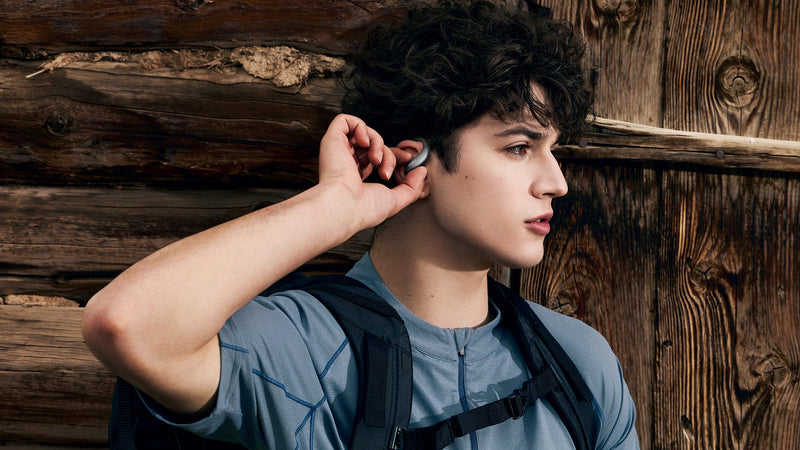
If you’re deciding between OpenDots 2 vs OpenFit Pro, both use an open-ear design that leaves the ear canal open, so surrounding sounds may remain audible while you listen. The main differences come down to fit, audio features, call performance, battery options, and how each model fits into your daily routine.
OpenDots 2 uses an ear-clip design, while OpenFit Pro uses an ear-hook design. The two models also take different approaches to audio technology and noise reduction, giving you different features to consider depending on how and where you use your earbuds.
For most buyers, the choice comes down to clip versus hook, lighter weight versus a more structured fit, and a simpler feature set versus additional audio and noise-reduction features.
Quick Comparison: OpenDots 2 vs OpenFit Pro
|
Spec |
||
|
Fit |
Ear-clip |
Ear-hook |
|
Price |
$199.95 |
$249.95 |
|
Battery |
Up to 10h / 40h |
Up to 12h / 50h with noise reduction off; up to 6h / 24h with noise reduction on |
|
Audio Tech |
Bassphere™ 2.0 + Dolby Audio + DirectPitch™ + MirrorPitch™ |
Shokz SuperBoost™ + Open-Ear Noise Reduction + Dolby Atmos-optimized + DirectPitch™ |
|
Water Resistance |
IP57 |
IP55 |
|
Weight |
6.4g ± 0.2g per earbud |
12.3g per earbud |
|
Microphones |
Triple AI Noise-Canceling Microphones |
Triple AI noise-canceling and wind-resistant microphone system |
|
Bluetooth |
6.1 |
6.1 |
Design and Fit: Ear-Clip or Ear-Hook?
For many people comparing OpenDots 2 vs OpenFit Pro, the first decision isn’t sound. It’s how the earbuds sit around the ear.
Both models keep the ear canal open, but their fit systems are quite different. OpenDots 2 uses an ear-clip structure, while OpenFit Pro uses an ear hook.
The OpenDots 2 design combines a flexible nickel-titanium JointArc™ with contoured silicone. Its lighter construction may suit users who prefer a less structured design for work, commuting, casual listening, and other everyday activities.
OpenFit Pro takes a more structured approach with titanium ear hooks and Ultra-Soft Silicone™ 2.0. This may suit users who prefer an ear-hook configuration for activities involving repeated movement, including running and gym workouts.
The distinction is less about one fit being universally better and more about which structure feels more natural for you.
For Glasses Wearers and Smaller Ears
Fit can become more noticeable during extended wear, particularly when earbuds and glasses occupy the same area around the ear.
Because OpenFit Pro uses an ear hook, users who wear glasses may want to consider how the hook and glasses arms interact. The result can vary depending on the shape of your ears and the design of your frames.
OpenDots 2 uses a clip-on structure rather than a full ear hook, which may work well for users who prefer less hardware around the area behind the ear. Its flexible construction is also designed to accommodate different ear shapes.
For smaller ears, the lighter, more compact design of OpenDots 2 may also be worth considering. Still, fit is personal, and ear shape can affect how either model feels over time.
Stability During Movement
The two designs approach movement differently.
OpenDots 2 combines the JointArc™ with contoured silicone, with the clip sitting around the ear rather than using a traditional ear hook. This may suit everyday movement such as walking, commuting, and general workouts.
OpenFit Pro's ear-hook design provides a more structured way of positioning the earbuds around the ear. For users who regularly run, do HIIT, or take part in other movement-heavy activities, that configuration may be worth considering.
Your choice ultimately comes down to whether you prefer the lighter clip-on approach or the more structured ear-hook design.
Sound Quality and Audio Technology: Bassphere vs SuperBoost
If your question is simply which one sounds better, the answer depends on your listening preferences and the features you want to use.
OpenDots 2 combines Bassphere™ 2.0, Dolby Audio, DirectPitch™, and MirrorPitch™. Its audio system is built around two 11.8mm drivers integrated into a spherical module, with Bassphere™ 2.0 designed to increase diaphragm excursion while maintaining the open-ear format.
That combination may appeal to users who want a range of audio features for music, podcasts, video, and other everyday content without moving to an ear-hook design.
OpenFit Pro uses Shokz SuperBoost™, DirectPitch™, Dolby Atmos-optimized audio, and Open-Ear Noise Reduction. It also supports head-tracked audio, adding another option for users who want a more spatial listening experience.
The two models therefore offer different audio approaches rather than a simple good-versus-bad comparison.
The Noise Reduction Tradeoff
One of OpenFit Pro's key features is Open-Ear Noise Reduction, which is designed to reduce surrounding noise while retaining the open-ear listening format. It can be useful in environments where you want more focused audio without switching to a sealed in-ear design.
The feature also changes battery life.
With noise reduction off, OpenFit Pro provides up to 12 hours per charge and up to 50 hours with the charging case. With noise reduction on, those figures become up to 6 hours per charge and up to 24 hours with the case.
This gives you the option to use the feature when the environment calls for it and turn it off when longer battery life is more important.
Call Quality and Mic Performance Outdoors
If you regularly take calls while walking, commuting, or working outside, the microphone setup is another useful point of comparison.
OpenDots 2 has three microphones per earbud: two air-conduction microphones and one bone-conduction microphone. Combined with adaptive beamforming and AI noise reduction, the system is designed to focus on your voice during calls.
OpenFit Pro uses a triple AI noise-canceling and wind-resistant microphone system. Its wind-control technology is designed to help maintain voice pickup when you're outside or moving through windy conditions.
Both models are built around multi-microphone voice pickup. If outdoor calling is a regular part of your routine, the wind-resistant microphone system on OpenFit Pro may be useful. For everyday calls, meetings, and voice messages, OpenDots 2 offers a three-microphone setup in its lighter clip-on format.
Battery Life and Charging Convenience
Battery life is another area where the two models take different approaches.
OpenDots 2 provides up to 10 hours on a single charge and up to 40 hours with the charging case. A 5-minute quick charge provides up to 2 hours of playback, and the case supports Qi-certified wireless charging.
OpenFit Pro provides up to 12 hours per charge and up to 50 hours with the case when noise reduction is off. With noise reduction on, the figures become up to 6 hours per charge and up to 24 hours with the case. A 10-minute quick charge provides up to 4 hours of playback, and the case supports wireless charging.
The main consideration is whether you want one straightforward battery profile or the option to trade some battery life for Open-Ear Noise Reduction.
What It Means Over a Typical Week
For office work, commuting, and everyday listening, OpenDots 2's up to 40 hours with the case provides substantial listening time between charges. Its 5-minute quick charge can also provide up to 2 hours of playback when you need a short top-up.
OpenFit Pro's up to 50 hours with the case applies with noise reduction off. When the feature is enabled, the stated total drops to up to 24 hours. Its 10-minute quick charge can provide up to 4 hours of playback, which may be useful when you have limited time to recharge.
If you normally keep noise reduction off, the longer stated battery figures of OpenFit Pro may be useful. If you prefer a simpler battery setup alongside a lightweight clip-on design, OpenDots 2 offers a more straightforward approach.
Price and Value: Is the Pro Premium Worth It?
OpenDots 2 is priced at $199.95, while OpenFit Pro is $249.95. The $50 difference comes alongside differences in fit, audio technology, noise reduction, microphone design, water resistance, Bluetooth, and battery options.
At $199.95, OpenDots 2 combines its clip-on design with Bassphere™ 2.0, Dolby Audio, DirectPitch™, MirrorPitch™, three microphones, IP57 water resistance, Bluetooth 6.1, and wireless charging.
At $249.95, OpenFit Pro adds its ear-hook design, Shokz SuperBoost™, Open-Ear Noise Reduction, Dolby Atmos optimization, a wind-resistant triple-microphone system, IP55 water resistance, Bluetooth 6.1, and two battery profiles depending on noise reduction use.
The price difference therefore comes down to the particular combination of features and design you expect to use.
Where the Extra Money Actually Goes
The additional $50 for OpenFit Pro corresponds to several specific features:
-
Ear-hook design
-
Open-Ear Noise Reduction
-
Triple AI noise-canceling and wind-resistant microphone system
-
Bluetooth 6.1
-
Up to 12 hours per charge and 50 hours total with noise reduction off
-
10-minute quick charge for up to 4 hours of playback
-
IP55 water resistance
OpenDots 2, meanwhile, offers a different feature mix at $199.95:
-
Ear-clip design
-
6.4g ± 0.2g per earbud
-
Bassphere™ 2.0
-
Dolby Audio
-
DirectPitch™ and MirrorPitch™
-
Triple AI Noise-Canceling Microphones
-
IP57 water resistance
-
5-minute quick charge for up to 2 hours of playback
-
Up to 10 hours per charge and 40 hours with the case
So the $50 difference is better viewed as a difference in design and feature set rather than a general measure of product quality.
Use Cases: OpenDots 2 vs OpenFit Pro
If you don't want to compare every specification, the following breakdown connects the main product differences with common use cases.
|
Use Case |
OpenDots 2 |
OpenFit Pro |
|
Running and Gym |
Lightweight clip-on design; IP57 water and dust resistance |
Ear-hook design; IP55 water and dust resistance; wind-resistant microphone system |
|
Office and Calls |
Clip-on design may work well with some glasses frames; triple-microphone system |
Ear-hook design; triple AI noise-canceling and wind-resistant microphone system |
|
Commuting and Everyday Comfort |
Lightweight clip-on design; up to 10 hours per charge |
Ear-hook design; optional Open-Ear Noise Reduction |
|
Long-Haul Travel |
Lightweight design; up to 10 hours per charge; 5-minute quick charge for up to 2 hours of playback |
Up to 12 hours per charge with noise reduction off, or up to 6 hours with it on |
Final Comparison: Which Open Ear Headphones Should You Buy?
If you're comparing OpenDots 2 vs OpenFit Pro, the main differences can be summarized around fit, weight, audio features, calls, water resistance, battery, and price:
-
For a lightweight clip-on design: OpenDots 2 weighs 6.4g ± 0.2g per earbud and uses an ear-clip format.
-
For an ear-hook design: OpenFit Pro weighs 12.3g per earbud and uses a structured ear-hook configuration.
-
For audio features: OpenDots 2 uses Bassphere™ 2.0 + Dolby Audio + DirectPitch™ + MirrorPitch™, while OpenFit Pro uses Shokz SuperBoost™ + Open-Ear Noise Reduction + Dolby Atmos-optimized + DirectPitch™.
-
For water resistance: OpenDots 2 is rated IP57, while OpenFit Pro is rated IP55. These are different stated ratings and should not be treated as a general measure of overall durability.
-
For calls: Both use three-microphone systems, while OpenFit Pro additionally uses a wind-resistant microphone system.
-
For battery: OpenDots 2 provides up to 10 hours per charge / 40 hours with the case. OpenFit Pro provides up to 12 hours / 50 hours with the case when noise reduction is off, or 6 hours / 24 hours when it is on.
-
For price: OpenDots 2 is $199.95, while OpenFit Pro is $249.95.
Both models use an open-ear design rather than sealing the ear canal, so surrounding sounds may remain audible. The more useful question is which combination of fit, weight, audio features, microphone design, water-resistance rating, battery behavior, and price fits your own listening habits.