How to Optimize Open-Ear Earbuds for Gym Noise — Fit, EQ, Volume Limits, and Real-World Trade offs

Open-ear earbuds are built to let ambient sound in, which is great for outdoor runs but often challenging for indoor lifting. With many commercial gyms hovering around 75 to 85 decibels, unsealed tech frequently struggles to compete with the overhead playlist.
Before tossing them back in your bag, it usually pays to troubleshoot. By dialing in the physical fit, making a few strategic EQ tweaks, and assessing the room's actual baseline volume, you can typically reclaim your audio. Let’s explore how to find that sweet spot, or determine if the gym is simply too loud for open-ear designs.
Before You Blame Your Earbuds: Quick Environment Check
If your audio sounds rich and clear at home but suddenly feels washed out by the squat rack, it’s usually the room acoustics fighting back, not a hardware failure. Open-ear tech has a practical volume ceiling. Before you start messing with EQ settings or shopping for replacements, take your earbuds off for a second and gauge the room's actual baseline volume using the "Speech Test."
How to run a quick reality check:
Put your earbuds on at a moderate volume, queue up a playlist or podcast you actually workout to, and walk through your usual spots—from the cardio deck to the free weights.
Then, use this practical guide to see where your gym falls on the spectrum:
|
Gym Environment |
The "Speech Test" Reality |
What It Means for Open-Ear Tech |
|
Standard Floor (Background playlist, occasional clanking plates) |
You can talk to a spotter at a normal, conversational volume. |
The Sweet Spot. Your audio should stay clear across all training zones without aggressive volume hikes. |
|
Loud Commercial (Hard floors, echo, pumped-up overhead music) |
You have to raise your voice or lean in to hear someone next to you. |
Pushing the Limits. You can usually make it work, but expect to lose some bass and finer audio details in the louder areas. |
|
Boutique / Class (Club-level speakers, heavy bass, spin classes) |
You have to practically shout just to be heard over the room. |
Past the Ceiling. Unsealed designs typically can't compete here. You might need to rely on active noise-canceling (ANC) options for this specific space. |
Why Loud Gym Music Defeats Standard Earbuds
1. The Bass-Bleed Battle (Low-Frequency Infiltration)
Gyms love heavy bass, but those low-frequency rumbles travel through concrete and mirrors differently than mids or highs. Even with a decent fit, that overhead thump punches right through unsealed earbuds. Cranking your volume won’t drown out a commercial subwoofer; it usually just makes your audio sound harsh while the gym's low-end rumble remains untouched.
2. The Volume Compensation Trap (Ear Fatigue)
When gym music bleeds in, our instinct is to hit the volume-up button. This is a trap. Forcing your earbuds to fight a noisy room doesn’t restore clarity—it just spikes ear fatigue. If your audio only becomes intelligible at levels that leave your ears ringing after a set, the volume isn’t solving the problem; it’s just masking an unsustainable setup.
How Open-Ear Earbuds Actually Work in a Loud Indoor Environment
On paper, taking an unsealed earbud into a booming fitness center sounds like a recipe for disaster. But in practice, these devices don't try to mute the gym; instead, they leverage how your brain processes sound. Here is how they actually pull it off in real-time.
The "Two-Channel" Brain Trick (Separation, Not Silence)
Open-ear earbuds don’t blend your music with the gym's playlist into a muddy mess. Because your ear canal remains open, the gym’s noise enters naturally, while the earbud drivers beam a highly directional audio stream straight toward your eardrum.
Think of it like having a conversation in a busy restaurant: your brain automatically partitions the background chatter to the periphery and locks onto the speaker right in front of you. You aren’t achieving total silence; you're just making your podcast much easier for your brain to prioritize than the gym's overhead speakers.
The Vocal Advantage Over Gym Bass
When a commercial fitness floor is vibrating from heavy bass, fighting fire with fire by cranking your own bass usually fails. Open-ear tech wins by dominating the mid-range frequencies—where vocals, speech, and guitar riffs live.
While the gym’s subwoofers might still create a low-end rumble in the background, your earbud's crisp mids and clear vocals cut right through the noise. If you're listening to a podcast or a melodic track, you'll frequently find that while you can still feel the gym's bass, you completely lose track of what actual song they are playing. That’s a realistic win.
Demystifying "Open-Ear Noise Reduction"
If your premium open-ear model features a "Noise Reduction" toggle, don't expect it to act like the active noise cancellation (ANC) on bulky over-ear headphones. It cannot erase the room.
Instead, this feature is typically tuned to shave the sharp edges off continuous, predictable gym drones—like the whirr of a dozen treadmills or the hum of the HVAC system. Turning it on won't make the weights area disappear, but it subtly drops the background static, making it noticeably easier to focus on your workout playlist without touching the volume rocker.
Practical Setup for Loud Gym Environments
Adjust Fit Over Hardware:
If audio fades on the gym floor, physical alignment is usually the first culprit. Try re-seating the earbuds to properly align the speaker areas with your ear canals. If your model features a hook or wraparound frame, ensure it is completely stable and not tilting outward. Shifting them slightly forward or back by a few millimeters can often help you find the precise angle where vocals suddenly clear up.
Ditch the Ceiling Speaker:
Sometimes the issue isn't your setup, but your exact patch of floor. If you work out directly underneath a gym speaker, the raw overhead volume can easily overwhelm an unsealed design. Try moving 10 to 20 feet away from the sound source and face away from it rather than staying underneath. A minor position change across the room frequently restores audio clarity.
Tune EQ for Speech:
Gym music often dominates the low and high ends, quickly masking your audio—especially spoken-word content like podcasts or coaching audio. Open your companion app or phone settings to slightly boost the mid-range frequencies where speech lives. Avoid adding extra bass reinforcement here, as competing with the room's existing low-end rumble typically just muddies the sound.
Optimize App Pass-Through:
Default settings are rarely optimized for loud indoor spaces. If your specific open-ear model includes an app with adjustable ambient or transparency sliders, try lowering the ambient pass-through level slightly. Reducing how much external sound the microphones actively emphasize can help you focus on your workout mix without pushing the volume past comfortable levels.
When Open-Ear Headphones Won’t Solve the Problem
Sometimes, even the best adjustments can't overcome extreme room acoustics. If you’ve dialed in your fit and EQ but the gym still overwhelms your audio, the environment has likely pushed past the physical limits of open-ear technology. Here is a practical breakdown of how to adapt:
|
The Environment |
The Reality |
Your Strategy & Next Steps |
|
Isolated High-Decibel Zones (Spin classes, specific HIIT rooms) |
Open-ear designs have a practical volume limit. Extreme decibels will overpower them, regardless of fit. |
Compartmentalize: Identify if this is just a single-room issue. If the extreme noise is limited to a class studio, keep using your open-ear buds on the main gym floor, but swap to a different solution specifically for that class. |
|
Instructor-Led Classes (Trying to hear live cues over room music) |
Unsealed earbuds cannot isolate an instructor's live voice from the chaotic mix of the room's overhead speakers. |
Pick a priority: Decide whether your own audio or the instructor is more important. If you need to hear class cues to keep up, you will likely need to keep your playback volume very low or pause it completely. |
|
Facility-Wide Washout (Audio stays buried everywhere, even after all troubleshooting) |
If you’ve optimized everything and still can’t hear clearly across the general floor, the baseline noise is simply beyond what this category is meant to handle. |
Pivot the category: If the entire gym is consistently excessive, consider switching to ANC earbuds for better isolation. Save your open-ear pair for environments where situational awareness actually matters more. Alternatively, politely ask gym staff to lower the overhead volume. |
FAQ
Should I switch to noise-canceling (ANC) earbuds for the gym?
It largely depends on your priorities. ANC is great for isolation, but sealed designs reduce situational awareness—like hearing a spotter. Many lifters also find the "plugged" feeling uncomfortable during heavy exertion. Open-ear tech usually relieves that pressure fatigue, making it a frequently preferred choice for longer sessions.
Is it safe to maximize my open-ear volume to drown out the gym?
Pushing volume above 80% to fight room noise often leads to ear fatigue. Health experts frequently cite 85 dB as a threshold for sustained exposure risk. If fit and EQ adjustments don’t restore clarity at moderate levels, the room is likely too loud. Competing with it usually isn't worth the strain.
Which specs matter, and how do I spot a bad fit versus a defect?
Look for an IP55+ rating for sweat protection and a secure physical design. If your earbuds consistently shift during cardio despite adjustments, the shape likely just mismatches your ears. If built-in features like noise reduction do nothing, it usually points to a hardware defect.
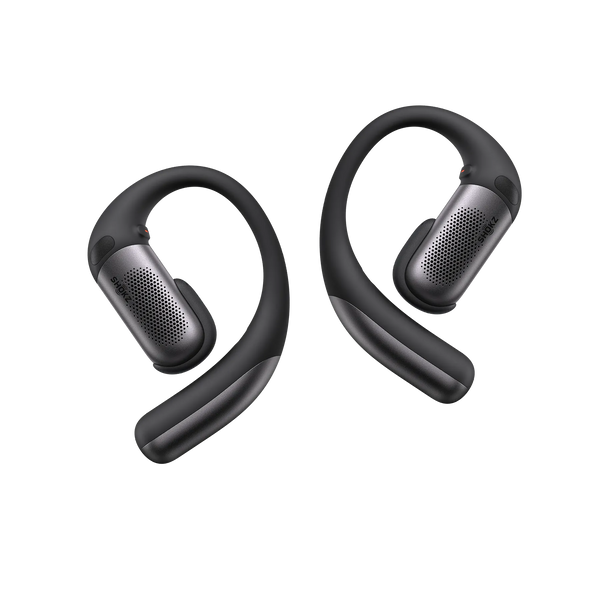
If you need a reliable benchmark, the Shokz OpenFit Pro is a prime example. It combines a robust IP55 sweat rating with a flexible Ni-Ti memory alloy frame, designed to stay comfortably anchored during your heaviest, most intense workout sessions.
Conclusion
Using open-ear tech in a loud gym doesn't have to be a battle against the overhead speakers. By dialing in your fit, making strategic EQ tweaks, and understanding the room's baseline volume, you can typically outsmart the noise without losing crucial situational awareness.
If your current gear struggles to survive heavy, sweaty sessions, exploring purpose-built options like Shokz open ear headphones is often a solid next step. Run that quick speech test before your next warm-up, apply these adjustments, and see firsthand how much better your floor time can sound.