Ear Hook vs Wing Tip Earbuds: Which Stays In at the Gym?

If your earbuds slip during burpees, shift on the treadmill, or need constant adjustment between sets, the problem may simply be fit.
When comparing ear hook vs wing tip earbuds for gym use, the key difference is how each design stays in place during movement. Ear hooks secure around the outer ear, while wing tips add support against the ear. Both can work well, but movement, sweat, and ear shape can affect how they perform.
This guide compares both styles for stability, comfort, sweat, and different workout scenarios to help you find the better fit for the way you train.
Ear Hook vs Wing Tip Earbuds: How Each Design Stays in Place
The two designs use different contact points to help keep an earbud positioned.
How Ear Hooks Hold Their Position
Ear hooks extend around the outer ear and use its shape as a retention point. Instead of relying mainly on contact inside the ear, the hook helps support the earbud from the outside.
That can be useful during workouts with repeated head movement because the main support point remains around the outer ear. The exact experience still depends on the hook shape, weight distribution, and your ear anatomy.
A hook that feels secure for one person may feel too tight or loose for another.
How Wing Tips Create Grip
Wing tips use a soft extension that rests against part of the ear. Depending on the design, the wing may work alongside an ear tip or canal seal, or provide most of the additional bracing on its own.
The extra contact point can make the earbud feel secure without requiring a large housing. However, how well it works depends heavily on how the wing fits the shape of your ear.
A wing tip that feels secure at the beginning of a workout may feel different later as movement and sweat build up. That does not make wing tips inherently unstable. It simply means their performance can depend more on contact pressure, ear shape, and the specific earbud design.
Ear Hook vs Wing Tip Earbuds for Gym: What Happens During Movement?
“Gym use” covers very different types of movement. A fit that works during incline walking may behave differently during box jumps or floor exercises.
|
Movement Type |
Main Fit Challenge |
Ear Hook |
Wing Tip |
|
Heavy lifting / overhead press |
Head movement and jaw motion |
Usually stays positioned through repeated movement |
Can remain secure when the wing matches the ear well |
|
HIIT / box jumps |
Repeated impact and head shake |
Often provides consistent outer-ear support |
Can work well, but may need adjustment if contact changes |
|
Treadmill / steady-state cardio |
Repetitive movement and increasing sweat |
Often remains consistent throughout the session |
May require repositioning as sweat and movement build |
|
Cycling |
Helmet pressure and forward head position |
Can work well if the hook clears the helmet strap |
May be easier when straps sit close to the outer ear |
|
Yoga / floor work |
Bending and inverted positions |
Outer-ear retention can help maintain position |
Performance depends heavily on contact with the ear |
For HIIT, jumping, and fast transitions, ear hooks often have an advantage because they provide an external retention point. That can be useful when your head and body are moving in different directions.
Wing tips can still perform well when their shape matches your ear. The important question is whether that contact remains comfortable and secure throughout the movement, rather than only during the first few minutes.
For steady-state cardio, differences may become more noticeable over time. A wing tip may feel secure at the beginning and require more adjustment later as the workout gets warmer and sweat accumulates. Ear hooks may provide a more consistent experience for users who prefer outer-ear retention.
For cycling, surrounding equipment can change the equation. A helmet strap that sits close to the ear may interfere with an ear hook. In that situation, a compact wing-tip design may be easier to position. The result depends on the specific helmet, earbud, and ear shape.
What Sweat Changes Over Time
Sweat does not automatically make one fit style better or worse, but it can change how the earbud feels against your skin.
Contact surfaces around the ear can feel different once they become wet. A wing that feels firmly braced when dry may require adjustment later during a long, sweaty workout. Silicone surfaces can also feel different as moisture builds up.
Ear hooks place their main retention point around the outer ear, which may make the fit feel more consistent for some users during sweat-heavy sessions.
The Shokz OpenFit Pro is well suited to sweat-heavy workouts, combining an ear-hook design, nickel-titanium frame, and soft, skin-friendly silicone for secure, comfortable contact during movement. Its IP55 rating also adds protection against dust and water exposure.
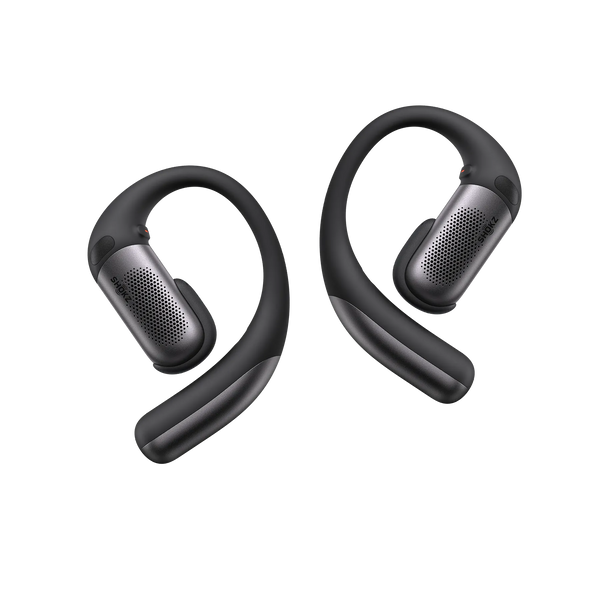
And for those looking for a lighter earhook design with a flexible fit, the OpenFit Air 2 lightweight open earhook earbuds use a durable 0.75mm Ni-Ti alloy frame and an ear hook that adapts to the shape of your ear for a secure, pressure-free hold.
Why Ear Anatomy Changes the Outcome
Two people can wear the same earbuds during the same workout and have completely different experiences. Ear shape is one reason.
Who May Prefer Ear Hooks?
Ear hooks may work well for users who have enough space around the outer ear for the hook to rest comfortably.
Try running a finger around the outer ridge of your ear. If the hook has a natural place to sit without creating pressure, the design may be a good match.
Glasses can also affect the fit. The arm of your glasses and the ear hook may occupy similar space, so a slimmer hook or slightly different position may work better.
The key is not whether your ears match a particular checklist. It is whether the hook can stay positioned without creating pressure or interfering with your glasses or other gear—a crucial factor when tracking down the best earhook earbuds for gym workouts and active routines.
Who May Prefer Wing Tips?
Wing tips may suit users who prefer a more traditional earbud fit or who have enough space in the concha for the wing to brace comfortably.
A shallow concha may give the wing less room to work, while a smaller ear may experience pressure from a wing that is too large. On the other hand, some users may find a wing-tip design more comfortable than an outer-ear hook.
This is one area where trying different sizes or shapes can make a bigger difference than choosing a category based on specifications alone.
Comfort Over a Full Workout
A secure fit is only useful if it remains comfortable after 60 or 90 minutes.
Ear Hook Comfort
Ear hooks generally place their main contact around the outer ear rather than inside the ear canal. On an open-ear design, this can also reduce the need for a traditional ear-canal seal.
That may appeal to users who dislike the plugged-up feeling of in-ear earbuds during heavy breathing or long cardio sessions.
The tradeoff is pressure around the hook. A hook that is too tight or poorly shaped can create a pressure point over time. Glasses and helmet straps can add another layer of contact.
Wing Tip Comfort
Wing tips often use soft silicone, which can feel comfortable at first. Depending on the design, however, pressure may be distributed across the ear canal, concha, and surrounding areas.
That pressure can become more noticeable during a long workout, especially when the earbud needs to maintain a close fit.
Some wing-tip earbuds also create a stronger sense of occlusion because they seal the ear canal. That can amplify internal sounds such as breathing, footsteps, or jaw movement. Some users prefer that more enclosed feel, while others prefer the openness of a non-sealing design.
The important distinction is simple: a secure fit is not necessarily a comfortable fit for an entire workout.
Choosing Between Ear Hook and Wing Tip Earbuds for the Gym
The easiest way to choose is to think about how you actually train, how your ears respond to pressure, and what other gear you wear.
A Practical Decision Matrix
|
Workout / Need |
More Likely Fit |
|
HIIT / jumping |
Ear Hook — often easier to keep positioned through repeated impact |
|
Heavy lifting |
Ear Hook — useful when frequent head movement makes repositioning annoying |
|
Long cardio |
Ear Hook — may offer more consistent outer-ear retention over time |
|
Frequent head movement |
Ear Hook — external support can help maintain position |
|
Helmet-heavy cycling |
Wing Tip may be easier — depending on strap placement and ear shape |
|
Strong preference for in-ear fit |
Wing Tip — familiar earbud feel may be preferable |
|
Sensitivity to outer-ear pressure |
Try Wing Tip — may avoid pressure from a hook |
|
Sensitivity to canal pressure |
Try Ear Hook — open-ear designs avoid traditional canal insertion |
These are starting points, not universal rules. The right choice depends on the specific earbud and how it fits your ears.
If your workouts include jumping, quick transitions, frequent bending, or long sweaty sessions, an ear hook is generally worth considering first. If you regularly wear a helmet, prefer an in-ear feel, or find outer-ear hooks uncomfortable, a wing tip may make more sense.
Before You Buy, Test Fit Like You Actually Train
Don't judge gym fit while standing still. Test the earbuds with the movements you actually perform.
-
Impact test: Do several jumps or simulate a few burpees. Check whether the earbuds shift immediately.
-
Tilt test: Move your head from side to side and toward each shoulder. Watch for rotation or pressure.
-
Bend test: Bend forward as you would during lifting or floor exercises. Check whether the earbuds stay positioned.
-
Duration test: Wear them through a longer session. Pressure that feels minor after five minutes can become noticeable after an hour.
-
Gear test: Put on your glasses, helmet, or other equipment if you normally train with them. Make sure the earbuds and gear do not compete for the same space.
The best fit is the one that remains stable while you move, not just the one that feels secure when you first put it on.
Conclusion
When comparing ear hook vs wing tip earbuds for gym use, ear hooks generally have an advantage for high-movement workouts such as HIIT, lifting, running, and jumping. Wing tips can still be a practical choice for users who prefer an in-ear feel, need more helmet clearance, or find outer-ear hooks uncomfortable.
For those leaning toward an ear-hook design, the Shokz OpenFit Pro is one example that combines ear-hook stability with open-ear security and comfort for workouts.
Ultimately, the best fit is the one that stays in place without creating pressure. Test your earbuds with the movements and gear you actually use to find what works best for you.


