Headphone Impedance Meaning: Effects on Sound and Compatibility

Ever plug a new pair of headphones into your phone and feel underwhelmed by the volume or bass? Or notice that certain headphones sound amazing on a laptop but flat on a smartphone? These experiences usually come down to one overlooked spec: impedance.
Understanding headphone impedance meaning makes it easier to choose headphones that actually match your devices and listening habits, whether streaming music, gaming, or enjoying detailed content like ASMR. This guide explains what impedance is, how it affects sound quality, and how to pick the right level for everyday use.
Headphone Impedance Explained
Before getting into volume and compatibility, it helps to understand what impedance represents and why manufacturers use different values.
1. What Does Impedance Mean in Headphones?
Headphone impedance describes how hard it is for an audio source to drive the headphones, and it is measured in ohms (Ω). Lower impedance headphones need less power to reach higher volumes, making them ideal for phones and laptops. Higher impedance headphones require more voltage and typically perform best with dedicated amplifiers. Most consumer models fall between 16Ω and 32Ω, while professional headphones often range from 80Ω to 300Ω or more.
2. How Impedance Influences Sound and Performance
Impedance doesn’t directly create sound quality, but it affects how well your device drives the headphone drivers. Higher impedance designs usually handle electrical noise better and offer more stable performance with proper amplification, while low impedance models prioritize efficiency and portability.
Impedance also affects how well an amplifier can control the headphone drivers. When impedance is well matched, bass sounds tighter and details feel cleaner. Poor matching can make the sound softer, especially in the low end.
Practical Effects of Impedance on Volume and Audio Quality
Once the basics are clear, it becomes easier to see how impedance affects real-world listening across different devices.
1. High Impedance Headphones: Lower Volume, Higher Power Needs
High impedance headphones often sound quieter on phones or basic laptops because these devices cannot provide enough voltage. With proper amplification, however, they tend to deliver cleaner dynamics, better separation, and more controlled bass, which is why they are commonly used in home or studio setups.
2. Low Impedance Headphones: Easier to Drive, More Sensitive
Low impedance headphones reach comfortable listening levels easily on portable devices, making them ideal for everyday and mobile use. Their higher sensitivity means sound quality depends more on the source, and weaker outputs may introduce noise or distortion at higher volumes.
3. Frequency Response and Audio Clarity Considerations
Impedance can influence how consistent headphones sound across different devices. High impedance models usually maintain more stable tuning, while low impedance headphones are more affected by the characteristics of the connected device, leading to subtle changes in sound balance, especially in the bass and lower midrange, which can affect perceived clarity.
4. Device Compatibility and Practical Usage
Smartphones and portable devices generally work best with low impedance headphones, while desktop setups can support higher impedance options more effectively. Understanding this helps avoid pairings that feel underpowered or unbalanced in daily use.
Low-Impedance vs High-Impedance Headphones: Key Differences
Both types serve different listening needs. Choosing between them depends on available equipment, listening environments, and sound expectations.
1. Power Requirements and Driving Ease
Low impedance headphones require less voltage and are designed to run efficiently on smartphones and laptops. High impedance headphones need stronger output and typically perform best when paired with headphone amplifiers or audio interfaces. This difference determines whether additional equipment is necessary.
2. Sound Accuracy and Detail
High impedance headphones are often preferred for critical listening because they offer more stable driver control with proper amplification, resulting in cleaner dynamics and more precise imaging. Low impedance headphones prioritize accessibility and portability. While they can sound excellent, they are tuned for convenience rather than studio-level accuracy.
3. Volume Control and Listening Experience
Low impedance designs reach high volume levels quickly, which suits mobile listening but offers less fine control at lower levels. High impedance headphones provide smoother volume scaling and more usable headroom when powered correctly, contributing to a more relaxed listening experience over long sessions.
4. Versatility and Everyday Compatibility
High impedance headphones shine in home or studio setups with proper amplification, but without external gear, much of their potential goes unused. Low impedance headphones offer everyday flexibility, with reliable volume, stable sound, and efficient battery use across phones, tablets, and laptops, making them more practical for most listeners.
Many models designed for active or mobile lifestyles intentionally use low impedance for maximum compatibility. Brands such as Shokz embrace this approach, with Shokz open ear headphones engineered for reliable performance during commuting, workouts, and everyday listening.
OpenRun Pro 2 (8.5Ω)
OpenRun Pro 2 is designed for running, cycling, and outdoor training, where hearing your surroundings is essential. Its ultra-low 8.5Ω impedance allows phones and smartwatches to drive it easily, delivering reliable volume even outdoors. This makes it a practical choice for active users who rely on portable devices.

OpenFit 2 (19Ω)
OpenFit 2 combines a soft earhook design with low-to-mid impedance drivers that work well directly from phones, tablets, and laptops. With a 19Ω impedance, it delivers stable volume without requiring extra amplification, making it suitable for all-day wear in work and commuting scenarios.
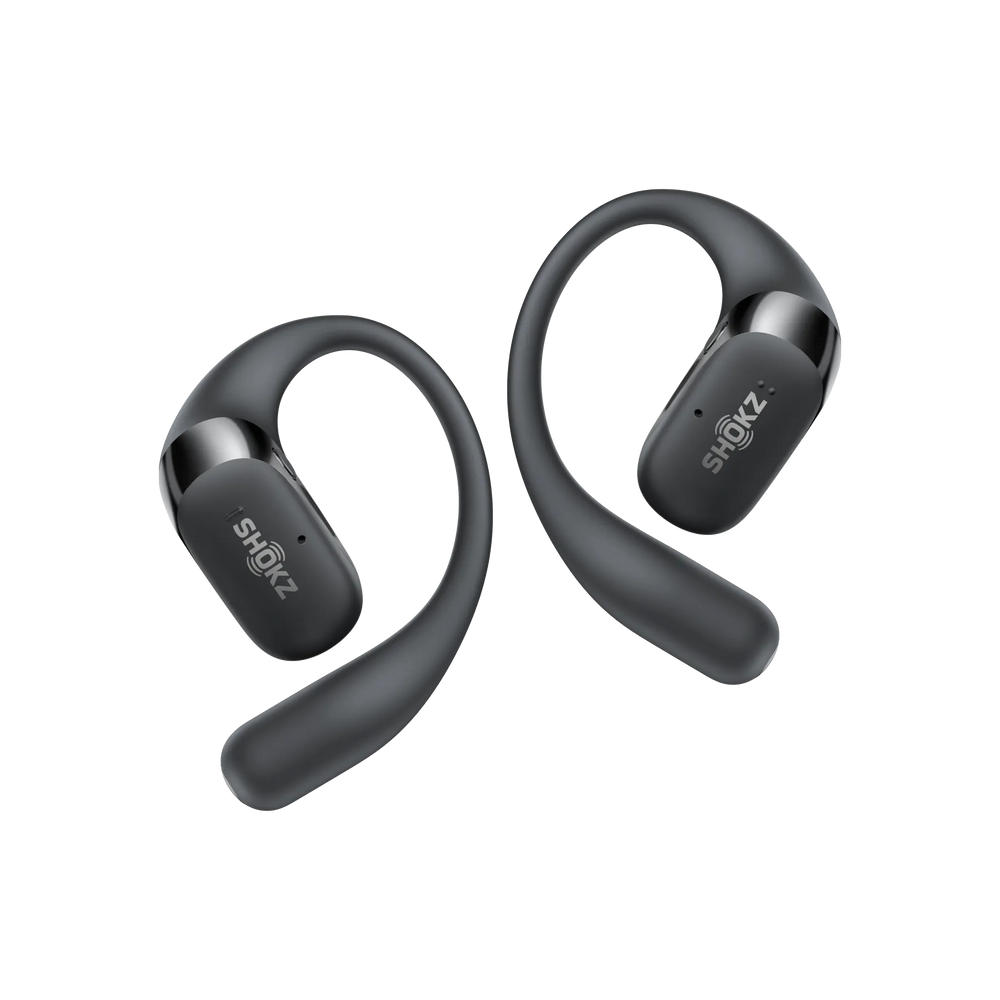
OpenDots ONE (22Ω)
OpenDots ONE features a lightweight clip-on design and a moderate 22Ω impedance that balances efficiency with stable playback. It is easy for everyday devices to drive and works well for calls, podcasts, and casual listening, especially for users who prefer an open, pressure-free fit.

|
Model |
Impedance |
Best For |
|
OpenRun Pro 2 |
8.5 Ω (Low Impedance) |
Outdoor training, running, and cycling. |
|
OpenFit 2 |
19 Ω (Low-to-Mid Impedance) |
All-day scenarios, remote work, commuting. |
|
OpenDots ONE |
22 Ω (Moderate Impedance) |
Everyday comfort and multitasking. |
How to Choose the Right Headphone Impedance
Rather than chasing numbers, the right impedance comes from matching your headphones to your devices, habits, and listening environment. Use the steps below to narrow down a practical, mistake-free choice.
1. Match Impedance with Your Audio Source Power
Start with the device you use most often, not the headphones you want in theory.
-
Smartphones, tablets, laptops: These devices deliver limited output voltage. Headphones under 32Ω are the safest match, ensuring adequate volume and balanced sound without distortion.
-
Desktop PCs, audio interfaces, DACs, headphone amps: These sources can supply more voltage and current, making 80Ω–300Ω headphones viable options with better control and consistency.
Practical rule: If more than 70% of your listening happens on a phone or laptop, low-impedance headphones will perform more reliably across all situations.
2. Determine Your Listening Volume and Sound Preferences
Impedance affects not just loudness, but how easily you reach your preferred listening level.
-
If you listen at moderate-to-high volumes (commuting, workouts, noisy environments): Low impedance headphones reach usable volume quickly without pushing your device to its limits.
-
If you prefer detailed, relaxed listening at home: Higher impedance headphones paired with proper amplification offer smoother volume scaling and more controlled dynamics.
Key insight: High impedance doesn’t automatically mean “better sound.” It means better sound only when driven correctly.
3. Decide if You Need a Headphone Amplifier
This is often where users misjudge impedance.
-
No external amp, no audio interface: Stick with low impedance. High impedance headphones will likely sound quiet, flat, or lacking bass.
-
Dedicated amp or interface already in use: Higher impedance models become a realistic option, especially for long listening sessions or critical monitoring.
Quick check: If you don’t plan to carry extra hardware or sit at a desk most of the time, low impedance is the more practical choice.
4. Consider Usage Scenarios and Mobility Needs
Impedance should support how and where you listen, not restrict it.
-
On-the-go listening (phones, wearables, commuting, workouts): Low impedance headphones provide consistent volume, stable tuning, and better battery efficiency.
-
Desk-based or studio environments: High impedance headphones excel when power is stable and listening sessions are longer.
Real-world takeaway: For everyday flexibility, low impedance offers fewer compromises. High impedance shines in controlled environments but loses value outside them.
FAQ About Headphone Impedance
1. What is a Good Impedance for Earbuds?
Anything below 32Ω works best for phones and everyday listening. Most true wireless headphones and in-ear headphones sit in the 16–32Ω range because they’re easy to drive and don’t need extra hardware.
2. Is Higher Impedance Better for Headphones?
Not automatically. Higher impedance can offer advantages with proper amplification but performs poorly without it.
3. Which Headphone Impedance is Best for Sound Quality?
Sound quality depends on matching headphones with the right power. For mobile use, 16–32Ω headphones usually perform better. Higher impedance offers smoother response with a desktop amp. Pairing matters more than the number.
4. Is 100Ω Impedance Good for Earphones?
It depends on how you use them. At 100Ω, earphones are high impedance. They work well with a headphone amplifier, but not with phones or laptops, as they can't provide enough power, leading to low volume and weak bass.
Conclusion
Understanding headphone impedance helps in choosing the right headphones. Impedance affects volume, bass, clarity, and compatibility with devices. Low impedance is ideal for mobile use, while high impedance works best with proper amplification. Matching impedance with your needs ensures consistent sound for music, podcasts, or ASMR.