Headphone Leakage Suppression Technology: Phase Cancellation & Vibration Control

Ever been on a quiet train when someone’s headphones are blasting their playlist for the whole carriage to hear? That’s headphone sound leakage in action. For listeners, it can mean less privacy. For everyone nearby, it is an unexpected soundtrack they didn’t ask for. To keep sound where it belongs, headphone manufacturers have developed smarter technologies that limit how much audio escapes.
In this guide, we’ll dive into the science behind these methods, including phase cancellation and vibration control, and explore how they help improve sound isolation.
What Causes Sound Leakage in Headphone Acoustic Systems?
Sound leakage is audio energy escaping the intended listening path instead of being directed into the ears. It’s not just about volume, but how sound is distributed and contained within the headphone system.
Across headphone types, especially open-ear and traditional closed-back or in-ear designs, leakage results from design limitations and structural vibrations. Understanding these causes explains the need for advanced suppression technologies.
1. Airborne Sound Transmission from The Driver
Drivers produce sound waves that travel through the air, like a small speaker near the ear.
In closed-back or well-sealed in-ear headphones, most sound is directed into the ear canal, but some can escape. In open-ear headphones, the absence of a full enclosure allows airborne sound to spread into the surrounding environment more easily.
2. Structure-Borne Vibrations in Headphone Components
Drivers generate physical vibrations as they produce sound. These vibrations travel through the headphone frame and housing, causing the structure itself to act as a secondary sound source.
In traditional closed-back or well-sealed in-ear headphones, these vibrations are mostly contained, but some energy can still escape through the frame, contributing to minor sound leakage. In open-ear headphones, the lack of a fully enclosed structure allows vibrations transmitted through the frame to more easily escape into the surrounding environment.
3. Internal Sound Resonance within The Headphone Structure
Sometimes sound waves bounce around inside the headphone housing before finding a way out. This internal resonance can increase sound energy inside the housing, which may lead to more noticeable leakage if not properly controlled. It’s especially noticeable in open ear headphones or semi-open headphone designs, where sound has more opportunities to escape.
How Does Phase Cancellation Reduce Headphone Sound Leakage?
Phase cancellation works by controlling how sound waves interact within the headphone structure, helping reduce the amount of sound that escapes into the environment.
1. Generating Opposite-Phase Sound Waves to Cancel Leakage
When leakage occurs, the headphones can generate sound waves that are the mirror opposite of those leaking waves. When the two waves meet, they interfere with each other and partially cancel out.
2. Managing Sound Wave Interference around The Headphone Structure
For the technology to work properly, engineers carefully manage how sound waves interact around the headphone structure. That can involve adjusting driver positioning, shaping internal chambers, or using sound-absorbing materials that guide sound toward your ear instead of outward.
3. Using Acoustic Channels to Stabilize Phase Alignment
Many designs also include acoustic channels inside the headphone housing. These tiny pathways guide sound waves so they stay properly aligned, which keeps the phase-cancellation effect stable. When everything lines up correctly, leakage drops without sacrificing the listening experience.
How Does Vibration Control Prevent Structural Sound Leakage?
Another big piece of the puzzle is managing physical vibrations inside the headphones. Even small vibrations can carry sound energy outward if they’re not controlled.
1. Damping Materials for Reducing Mechanical Vibrations
To reduce vibration, many headphones include damping materials inside the housing. These materials absorb excess vibration energy before it spreads through the headphone shell. Think of it as shock absorbers for sound.
2. Isolation Structures That Limit Vibration Transfer
Some headphones also physically separate internal components using isolation structures. By isolating the driver from the outer frame, vibrations are less likely to travel through the housing and radiate outward.
3. Flexible Structures to Minimize Vibration Conduction
Flexible frames or mounts allow small movements to dissipate instead of traveling through the headphone body. This design reduces vibration propagation, further limiting structural sound leakage without affecting listening comfort.
Comparing Leakage Suppression Methods across Headphone Types
Different headphone styles tackle sound leakage in different ways. Let’s see how they approach the problem.
1. Acoustic Control in Open Headphones
Open-ear headphones leave the ears open, which can slightly affect leakage. Modern designs often apply directional acoustic technology to manage sound waves and their phase alignment, focusing audio toward the ear and reducing outward radiation.
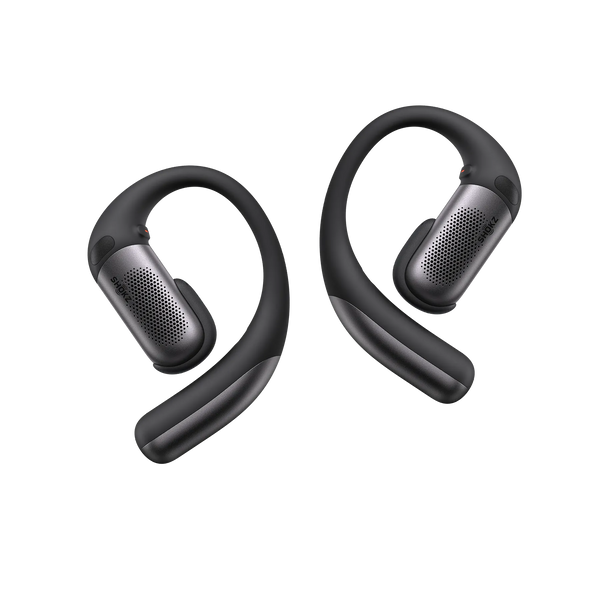
Shokz OpenFit Pro uses Dual-Diaphragm Drivers and DirectPitch™ 3.0 to optimize the distance, angle, and phase of sound waves, directing more audio to the listener while minimizing leakage. This preserves audio privacy without compromising the open-ear listening experience.
2. Vibration Reduction in Bone Conduction Headphones
Bone conduction headsets work a little differently. Instead of sending sound through the ear canal, they deliver vibrations directly through the cheekbones. Since vibration is the core of the system, controlling it becomes critical for limiting leakage.
Shokz OpenRun Pro 2 addresses this through DualPitch™ Technology, which assigns low frequencies to the air conduction driver to generate minimal vibrations. By reducing the high-amplitude tactile feedback typically required for bass, this dual-driver system minimizes structural resonance and prevents sound from escaping into the environment.

3. Passive Isolation in Closed-Back Headphones
Closed-back headphones seal the ears completely. The enclosed ear cups act as a physical barrier that prevents most sound from escaping. Because the physical design already blocks leakage, phase cancellation and vibration control play a minimal role here.
4. Acoustic Sealing in In-Ear Headphones
In-ear earbuds create a tight seal inside the ear canal, containing most sound and blocking external noise. In this compact, sealed design, leakage is mainly prevented by acoustic isolation, with little dependence on phase or vibration control technologies.
FAQ
1. Can Adjusting EQ Settings Reduce Headphone Sound Leakage?
A little, but not dramatically. Adjusting EQ in audio, especially lowering bass frequencies, can reduce vibration slightly and may decrease leakage. Still, the physical design of the headphones has a much bigger impact than EQ adjustments.
2. What Is Considered Normal Sound Leakage for Headphones?
Some leakage is completely normal, especially with open-ear and bone conduction headphones. If people nearby can clearly hear your music at moderate volume, that counts as noticeable leakage. In-ear and closed-back headphones tend to leak less thanks to their sealed designs.
3. Can Sound Leakage Affect Battery Efficiency in Headphones?
Not directly. However, good leakage control usually reflects thoughtful engineering, which often goes hand-in-hand with efficient overall performance.
4. Do Headphones Leak More Sound during Bass-Heavy Music?
They do. Bass frequencies produce stronger vibrations, which makes them more likely to escape the headphone housing. That’s why bass-heavy tracks sometimes travel farther than softer audio.
5. Can Headphone Leakage Impact Microphone Quality during Calls?
It can. If sound escapes from the headphones, it may get picked up by the microphone during calls. Good leakage control helps prevent this and keeps conversations clearer.
Conclusion
Sound leakage is largely shaped by headphone design and the technologies used to manage it. Features like phase cancellation and vibration control help keep your playlist private, and different headphone types each bring their own solutions to the table. Understanding these technologies can help you pick wireless headphones that balance audio quality, comfort, and privacy, so your playlist stays exactly where it belongs.