Over-Ear Headphones vs Open Ear Headphones: Which Is Better for Deadlifts?

Deadlifts put a different kind of demand on headphones. You move from standing into a hip hinge, brace before the pull, return the bar to the floor, reset, and repeat. Between sets, you may load plates, walk around the platform, or listen for a cue from a coach or training partner.
Those repeated changes in position can make a headphone's physical presence more noticeable than it is during simpler gym exercises. Over-ear and open-ear headphones manage that physical footprint differently: one relies on a full, enclosed grip around the head, while the other minimizes contact points to feel less intrusive.
The better choice is not simply about which design sounds better. It comes down to what you want your headphones to do during the entire deadlift session, from setup to lockout and back to the next set.
Why Deadlifts Can Change How Headphones Feel
How the hip hinge changes fit, pressure, and clearance
A deadlift moves your body through several positions within a single repetition. You start upright, hinge forward to set up, brace, pull, reach lockout, and return to the floor.
That change in position can affect how headphones sit around your head and ears. Over-ear headphones rely on the headband and ear cups to stay in place, while some open-ear designs use earclips or earhooks for retention.
The difference can become more noticeable over repeated sets. Headbands and ear cups may add pressure or warmth, while open-ear designs leave more of the ear uncovered. Neither is automatically better. The better fit depends on what feels comfortable and secure through your full range of movement.
What happens when head position drops before the pull
The setup position for a deadlift usually brings your head lower than it is between sets. Your neck position changes as you prepare to brace, and that position is repeated every time you return to the bar.
For some lifters, the change is barely noticeable. For others, repeated movement can make pressure, contact points, or headphone positioning more apparent over time.
That difference can become especially noticeable across a longer session. What feels comfortable for the first few sets may not feel exactly the same after repeated hinges, sweat, and resets.
Why the reset rhythm matters between sets
A deadlift session is more than a few seconds spent pulling the bar.
The rhythm often looks like:
Setup → Brace → Pull → Lockout → Reset → Rest → Load Plates → Repeat
During those transitions, your headphones still have to work. You may want to adjust your music, hear a training partner, add weight to the bar, or simply walk around before the next set.
That is why deadlift headphone comfort is partly about what happens between repetitions. A design can feel fine during the pull but become more noticeable during a long rest period or a full lifting session.
When Over-Ear Headphones Make Sense for Deadlifts
When isolation is the priority
Over-ear headphones make a strong case when isolation and immersive sound matter most.
Their enclosed ear cups can reduce more of the surrounding gym noise than an open-ear design, which can help lifters who prefer to focus on their music during heavy sets. The enclosed fit can also feel familiar and secure for people who already prefer over-ear headphones in other settings.
For a controlled lifting session in a predictable environment, these benefits can be more important than having the least noticeable physical design.
When you prefer an enclosed, immersive listening experience
Some lifters simply prefer the way over-ear headphones sound and feel. The larger ear cups can create a more immersive listening experience, particularly for people who value stronger bass or a more enclosed presentation.
That preference does not disappear because the workout involves deadlifts.
If the headphone fit feels secure and the physical presence of the cups and headband does not bother you, there is no inherent reason to stop using over-ear headphones for deadlifting.
When the trade-offs are acceptable to you
The main question is whether the physical design remains comfortable throughout your session. Because padded cups surround the ears, some users may notice more warmth or pressure as the workout gets longer. The headband and overall size can also feel more noticeable during repeated setup and resets.
Strong isolation can help with focus, but it also reduces awareness of the gym around you. That may make it harder to hear a coach, training partner, or nearby activity on the platform.
These trade-offs vary by headphone design and personal preference. Over-ear headphones are not inherently a poor choice for deadlifts—they simply prioritize isolation and an enclosed listening experience.
When Open-Ear Headphones Make More Sense
When you want a less enclosed feel
Open-ear headphones take a different approach. Instead of surrounding the ear with a padded cup or sealing the ear canal, they keep the listening hardware outside the ear canal.
That can create a less enclosed feeling throughout a long workout. For lifters who dislike the warmth or pressure of fully enclosed headphones, the difference may become especially noticeable after several sets.
It can also make the headphone feel less physically present during the transitions between setup, pulling, and resting.
When hearing more of the gym matters
Deadlift sessions often involve more interaction with the surrounding environment than a simple cardio session.
You may need to hear a coach's cue, communicate with a training partner, or notice what is happening around the platform while loading plates. Open-ear headphones allow more ambient sound through, which can make those nearby sounds easier to notice.
That does not mean complete awareness of everything around you. It simply provides a different balance between personal audio and the surrounding gym.
When long-session comfort matters more than maximum isolation
Open-ear headphones can also make sense for lifters who wear headphones throughout the workout rather than only during heavy sets.
Without large ear cups trapping heat and sweat, the design avoids the clamping pressure and physical fatigue that often build up over a long workout.
That breathable, unburdened feel becomes especially valuable when you move between lifting, loading plates, resting, and talking with others.
The trade-off is lower isolation. In a loud gym, more environmental noise will remain audible, and that may not suit someone who wants to create a highly isolated listening environment.
How Open-Ear Headphones Perform During Deadlift Training
Stability during repeated hinges and resets
Once an open-ear design becomes part of the workout, retention becomes the key question.
Deadlifts repeat the same movement pattern many times, so a headphone needs to remain comfortable and reasonably secure through repeated hinges, pulls, lockouts, and resets.
A well-fitting design can handle that pattern without requiring constant adjustment. But open-ear does not automatically mean stable. Ear shape, product geometry, and retention style all affect the result.
Earclip and earhook designs, for example, use the outer ear to help hold the product in place. Other open-ear designs may use different contact points.
The important test is simple: does the specific design stay comfortable and secure through the movements you actually perform?
Models like the Shokz OpenRun Pro 2 open-ear bone conduction headphones are built to pass this exact test. By bypassing the ear entirely, their 30.3g flexible nickel-titanium frame stays securely locked behind the neck during deep hinges. Meanwhile, DualPitch™ technology delivers punchy bass while leaving you fully aware of coaching cues. Backed by IP55 sweat resistance and a 12-hour battery, they comfortably outlast the longest lifting sessions.

Awareness when loading plates and listening for cues
Open-ear designs can also be useful during the parts of a deadlift session that happen outside the pull itself.
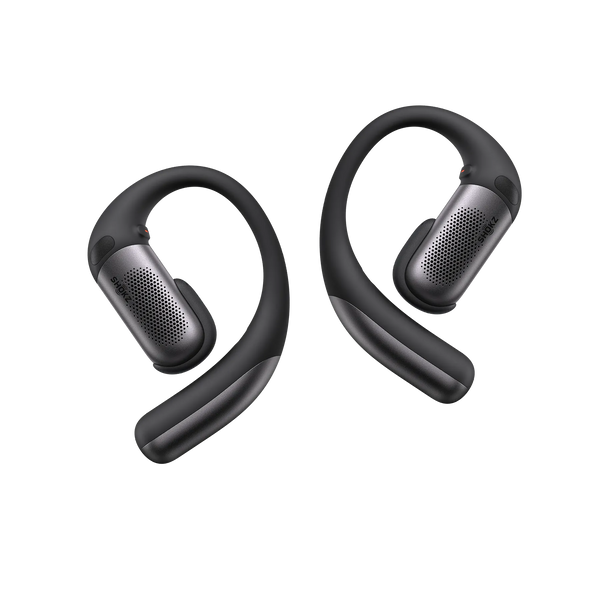
When you are loading plates, talking with a training partner, walking around the platform, or listening for a coaching cue, keeping more ambient sound available can make those transitions easier. Options like the Shokz OpenFit Pro enhance this balance by utilizing open-ear noise reduction technology, which keeps your audio clear while naturally allowing in essential sounds over the gym clatter.
Instead of forcing you to remove an ear cup or pause your music between heavy sets, this approach keeps you seamlessly connected to both your workout and your environment.
The trade-off in a loud gym
The same design choice that allows more ambient sound also reduces isolation.
A busy weight room can remain clearly audible, especially when plates are being loaded or several people are training nearby. If the music becomes difficult to hear, raising the volume too much can undermine some of the benefits of choosing an open design in the first place.
For lifters who value awareness and a less enclosed fit, that may be a reasonable compromise. For those who want the gym to fade into the background, stronger isolation may still be preferable.
Choosing Between Over-Ear and Open-Ear Headphones for Deadlifts
At this point, the choice comes down to which trade-offs matter most during your own lifting sessions.
|
Factor |
Over-Ear |
Open-Ear |
|
Isolation |
Stronger |
Lower |
|
Ear coverage |
Fully enclosed |
Ears remain open |
|
Long-session feel |
Can feel warmer or more enclosed |
Less enclosed |
|
Gym awareness |
More limited |
More ambient sound |
|
Fit during hinging |
Depends on headband and ear-cup fit |
Depends on retention design |
|
Best for |
Focus and isolation |
Comfort, movement, and awareness |
Pick over-ear headphones for focus and isolation
Over-ear headphones are a logical choice when your priority is reducing gym noise and creating a more immersive listening environment.
They can work particularly well for lifters who stay focused on their platform, move relatively little between sets, and prefer the feel of an enclosed headphone.
A secure fit is still important. The best pair is one that remains comfortable through repeated setup and resets without making heat, pressure, or physical bulk a distraction.
Pick open-ear headphones for a less enclosed experience
Open-ear headphones make more sense when you want your ears to feel less covered and prefer to keep more of the gym audible.
They can suit lifters who spend more time moving between sets, communicating with others, or who simply find enclosed headphones distracting during longer workouts.
Retention becomes the main consideration. A good open-ear design should feel secure through repeated hinges without requiring constant adjustment.
What Confirms the Right Choice After a Full Lifting Session
The right headphones should become less noticeable as your workout progresses. If you can finish your sets without repeatedly adjusting the fit or thinking about ear pressure, you have likely found a good match.
Pay attention to recurring distractions. Repeatedly adjusting warm over-ear cups may suggest an enclosed fit is breaking your focus. Conversely, if standard earbuds or loose clips shift during a deep hinge, it indicates a need for a different retention style. This is where purpose-built designs like Shokz open-ear headphones can provide a practical alternative, utilizing a continuous frame to maintain stability through repeated movements without blocking the ear.
Which format is right for your deadlifts?
There is no single winner for every lifter.
-
Choose over-ear headphones when stronger isolation and an enclosed listening environment are your main priorities.
-
Choose open-ear headphones when a less enclosed feel, greater environmental awareness, and freedom from ear cups matter more.
Ultimately, the best choice simply stays out of your way while you focus on the lift. During deadlifts, that practical comfort often matters more than any specification on the box.


