Running Headphones vs. Workout Earbuds: What’s The Difference?

Have you ever dealt with earbuds slipping out mid-run, or blaring gym music ruining your heavy deadlift? Because outdoor and indoor workouts present entirely different challenges, everyday earbuds rarely cut it. Let's break down the key differences between running headphones and workout headphones to help you find your perfect match.
Key Differences Between Running Headphones and Workout Earbuds
While both types are designed to handle sweat and movement, their core designs prioritize entirely different environmental needs. Here is a quick breakdown to help you spot the differences at a glance:
|
Feature |
Running Headphones |
Workout Earbuds (Gym) |
|
Best For |
Outdoor running, trail runs, marathons |
Weightlifting, HIIT classes, gym machines |
|
Fit & Stability |
Ear hooks or neckbands to handle constant up-and-down bouncing |
Secure hooks or snug fits to stay put while lifting, bending, or lying flat |
|
Noise Isolation |
Low. Lets you hear traffic and street sounds for outdoor safety |
Balanced. Blocks distractions but must retain situational awareness for safety |
|
Water/Sweat Resistance |
High (IP55+). Survives heavy rain, dirt, and outdoor sweat |
Medium (IPX4+). Primarily built to handle heavy indoor sweat |
|
Comfort Level |
Light and breathable. Won't hurt your ears during long miles |
Secure and breathable. Stays locked in during intense movements. |
|
Sound Quality |
Clear vocals for podcasts; balanced bass that doesn't mask your surroundings |
Deep, heavy bass to hype you up for tough sets |
|
Battery Life |
8-12+ hours on a single charge to outlast your longest runs |
6-8 hours per charge; uses the case for quick top-ups between gym days |
The biggest difference between running and workout earbuds comes down to how they handle your surroundings. Since running mostly happens outdoors, staying aware of your environment is crucial. On the flip side, gym earbuds are meant for indoor use. When you're doing HIIT or heavy lifting, you need to block out background noise so you can lock in your focus and maintain a stable core.
Tip: The Safety Trade-off of ANC
While ANC is great for locking in focus and core stability, total noise isolation is a safety hazard. If you completely tune out the gym, you could easily miss a dropped weight, approaching gym-goers, or vital cues from your spotter.
Which Types Should You Choose: Running Headphones vs. Workout Earbuds
Since the biggest difference lies in how these headphones adapt to your sports environment, you can choose sports earbuds based on your scenario and core needs:
-
Evaluate Your Primary Environment: If you mostly run outdoors where traffic and pedestrians are factors, prioritize the situational awareness of running headphones. If your routine heavily involves busy gyms, the noise isolation of workout headphones is essential to lock in your focus.
-
Match the Fit to Your Movements: Running involves constant vertical bouncing. Open-ear or ear-hook designs offer stability while preventing the annoying "thumping" footstep sound of tight earbuds. For gym workouts involving bench presses or burpees, snug in-ear or over-ear designs stay put during complex, multi-angle postures.
-
Consider the Controls for Your Scenario: When you are mid-run, physical buttons are much easier to press accurately with sweaty, moving hands. In the gym, however, static rest periods between sets offer a more forgiving environment, making both touch sensors and physical buttons equally convenient for managing your playlist.
-
Prioritize Core Features: Outdoor runners need high IP ratings to survive unpredictable weather and long battery life for extended miles. Gym enthusiasts should look for punchy bass to drive heavy lifts and secure, breathable designs that prevent ear fatigue while keeping them aware of their immediate surroundings.
Popular Choices: Running and Workout Earbuds
To illustrate how these design concepts work in practice, here is a breakdown of a few reliable models and how their specific specs align with the unique demands of outdoor runs and indoor workouts.
Running Headphones with Open Ear Design:
Shokz OpenRun Pro 2 : Best for professional or experienced runners
Why it fits the scenario: Its DualPitch technology (combining bone and air conduction) leaves the ear canal entirely open. This eliminates the annoying "thumping" sound of footsteps and ensures you hear approaching traffic for safety.
Key Specs: Built for endurance and weather, it features an IP55 sweatproof rating and 12 hours of battery life. A quick 5-minute USB-C charge yields 2.5 hours of playback for last-minute runs.

Shokz OpenMove : Best for entry-level or casual joggers
Why it fits the scenario: It provides a secure, bounce-free fit and outdoor situational awareness through reliable 7th-generation bone conduction, serving as a highly cost-effective option for casual runners.
Key Specs: Offers a solid 6 hours of battery life and an IP55 rating, easily handling daily neighborhood 5K jogs and light rain.

Workout Earbuds for the Gym:
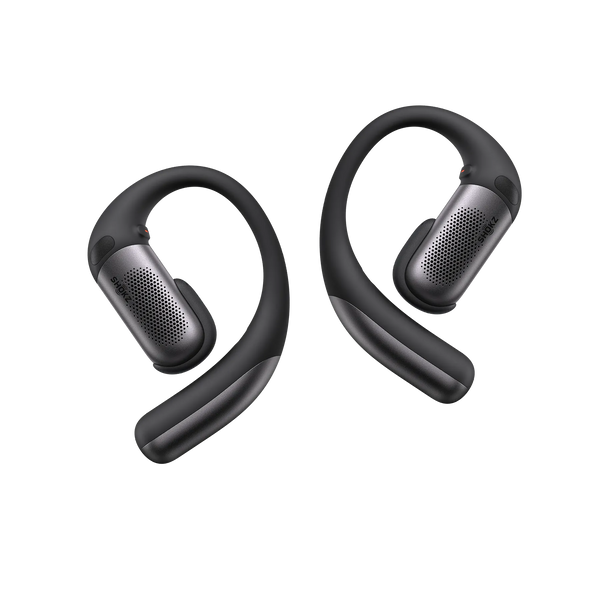
Shokz OpenFit Pro: Best for intense gym sessions and heavy lifting
Why it fits the scenario: The open-ear noise reduction balances focus with safety by filtering gym noise while keeping you aware of your surroundings. Its ear-hook design remains stable during complex movements like bench presses or burpees, helping to prevent the sports earbuds from slipping mid-set.
Key Specs: Shokz SuperBoost™ deep bass technology, IP55 sweatproof, Bluetooth 6.1, and 12 hours of battery (50 hours total with charging case).
Shokz OpenDots ONE: Best sports earbuds for versatile fitness enthusiasts and HIIT classes
Why it fits the scenario: If you are wondering what are clip-on earbuds best suited for, this ear-clip design provides a secure fit for high-impact jumps, while the ultra-lightweight build helps ensure long-term comfort.
When considering how to choose clip-on earbuds for fitness, this open style is ideal as it reduces sweat buildup and allows you to hear instructor cues or gym movement during dynamic workouts.
Key Specs: BassSphere™ technology for powerful sound, 40 hours of total battery, and IP54 sweatproof rating.

FAQ
Q1: Will the deep bass of workout headphones throw off my running cadence?
Yes, it can. Workout headphones are often tuned with heavy bass to boost motivation during stationary lifts. However, when running outdoors, overwhelmingly heavy bass can obscure the natural rhythm of your footsteps and breathing, making it harder to maintain a consistent pacing cadence.
Q2: Are running headphones more prone to breaking in the gym?
Not necessarily breaking, but they can be more easily damaged or misplaced. Open-ear running headphones with neckbands cannot be neatly packed into small charging cases like true wireless workout earbuds. Leaving a neckband lying on a bench or gym floor between sets significantly increases the risk of it being stepped on or crushed by weights.
Q3: If I do a mix of treadmill running and weightlifting indoors, which type should I choose?
If your top priority is avoiding the plugged-in feeling, ear-canal sweat, or the thumping footstep sound on the treadmill, open-ear headphones are the ultimate crossover choice. They provide supreme stability during dynamic lifts and eliminate the safety risks of being totally deaf to your surroundings. You get the best of both worlds: motivation from your music and a safe connection to your environment.
Conclusion
Ultimately, the choice comes down to your movement: running headphones prioritize rhythmic stability and road safety, while workout earbuds emphasize multi-angle security and situational balance. By maintaining environmental awareness, Shokz open ear headphones offer a versatile solution that bridges these needs, ensuring you stay comfortable and safe regardless of how you train.
For runners who prefer a lightweight, comfortable bone conduction design, the newly launched OpenRun Air 2 comfortable bone conduction running headphone is also worth a look.