What Extra Features Cycling Headphones Need

Cycling changes what matters in a pair of headphones. On a bike, audio has to compete with traffic noise, wind, helmet straps, trail chatter, and navigation prompts. A pair that works well at a desk or on a walk may feel very different once you are moving, wearing a helmet, and paying attention to the road.
That is why the feature list for cycling headphones looks different. Sound quality still matters, but so do fit, controls, battery life, weather resistance, and how easily you can hear what is happening around you.
The goal is not to find a headphone with the longest feature list. It is to work out which features you are actually likely to notice during a ride.
Which Cycling Headphone Features Matter Most?
The first consideration is often not bass, codec support, or noise cancellation. It is whether the headphones work well with the environment around you.
For cycling, the features that matter most are fairly easy to picture:
-
a design that leaves the ears open or otherwise avoids sealing the ear canal
-
a stable fit that does not need constant readjustment
-
controls that are easy to use without looking down
-
a reliable connection for music, calls, and navigation prompts
-
weather resistance for sweat, road spray, and changing conditions
These features can make a difference at intersections, on shared paths, in traffic, or during faster sections of a ride.
Why Situational Awareness Matters
Many riders do not start by looking for better sound. The question may come after a specific experience: missing a warning on a trail, noticing a car approaching from behind, or finding that sealed earbuds make it harder to hear what is happening nearby.
That can change what they want from a pair of headphones. Instead of focusing only on sound quality, they may start looking for a design that lets outside sounds remain audible while they listen.
Situational awareness is not the same as safety, and headphones cannot guarantee that a rider will notice every sound around them. Still, being able to hear traffic, trail activity, conversation, or other environmental cues can be important to riders who want audio to fit into the ride rather than shut it out.
Why Riders Often Compare Open-Ear and Bone Conduction Models
When riders want to listen to audio without completely blocking out outside sounds, open-ear and bone conduction headphones often come into the picture.
The more useful question is which design better fits their listening habits and wearing preferences.
How These Designs Handle Outside Sound
The two use different ways of delivering sound. Open-ear air-conduction headphones use speakers positioned near the ears rather than inside the ear canal, while bone conduction headphones use vibrations around the cheekbones to send sound to the inner ear.
Neither relies on a conventional earbud sealing the ear canal, so outside sound can remain part of the listening environment. How much a rider actually hears still depends on the headphone design, volume, wind, traffic, and riding conditions.
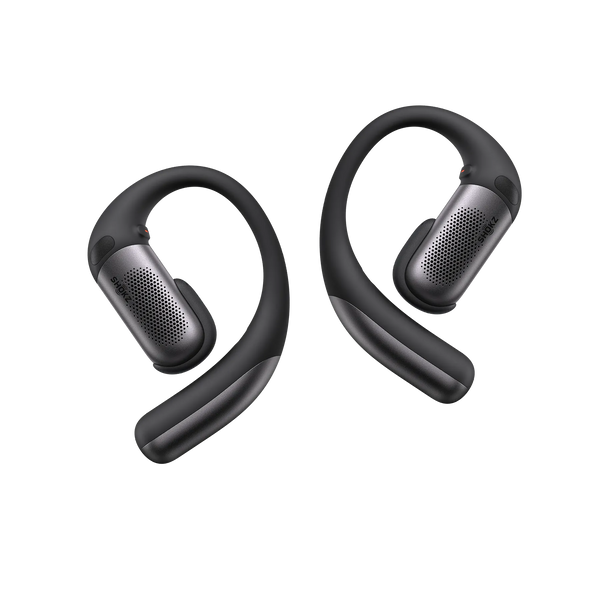
For riders who prefer an open-ear fit, OpenFit Pro is one option to consider. Its earhook design keeps the speakers outside the ear canal. This can suit riders who want to listen to music or podcasts while keeping surrounding sounds noticeable.
The design is only part of the equation. Helmet straps, glasses, head shape, and personal preference can all affect how comfortable a particular headphone feels during a ride.
How Wind Noise Affects Audio
Wind becomes more noticeable as riding speed, headwind, and road exposure increase. On exposed roads or descents, it can compete with music, podcasts, or spoken navigation, with speech often becoming harder to follow.
There is no single speed at which this happens. Helmet and glasses, riding position, and headphone design can all change the experience.
That makes wind handling worth considering alongside the open-ear design itself. OpenFit Pro features Open-Ear Noise Reduction Technology and a three-microphone system designed to help manage wind and background noise during calls. For riders who take calls on the go, this can be useful when riding conditions become noisier.
When Hearing Cars Becomes a Priority
By the time riders are close to buying, the question can become very simple: can I still hear cars and other sounds around me?
At this point, they are thinking less about headphones as entertainment devices and more about how they fit into a moving environment. Open-ear and bone conduction headphones offer an alternative to the sealed-in-ear experience of traditional earbuds, which is why some riders consider them for cycling.
Which Fit Features Matter for Cycling Headphones?
After outside sound, fit becomes another important filter. A pair of headphones can feel fine before a ride and become distracting after a longer stretch under a helmet or on a rougher road.
Earhooks, Wraparound Bands, and Staying Put
Cyclists tend to care less about how a headphone feels in the hand and more about whether it stays in place when the road stops being smooth.
That is why earhooks and wraparound bands can matter. A secure fit may reduce the need to adjust the headphones during a ride. Fewer adjustments also mean fewer interruptions when you are trying to stay focused on the road or trail.
The same idea comes up in other active uses. A design that stays settled during repeated movement may also feel more stable over bumps or during head checks on a ride, although running and cycling create different types of movement.
Helmet and Glasses Compatibility
Helmet compatibility is one of the most practical comparison points, and it is often noticed late.
Riders may want to check whether a rear band sits comfortably behind the head, whether the frame presses against the helmet retention system, and whether earhooks crowd the straps. A model can look compact in photos and still create pressure once the helmet is on.
The same applies to glasses. A helmet, glasses, and headphones all occupy space around the ears and sides of the head, so a comfortable setup depends on how those pieces fit together.
Controls That Work While Riding
Control design matters on a bike because both hands and attention may already be occupied.
Touch panels can be convenient, but accidental touches may be more likely when a helmet strap, ear, or hand brushes the surface. Riders who prefer tactile controls may want to consider physical buttons, such as those on OpenRun Pro 2, which allow playback adjustments without relying on touch gestures.
For riders comparing cycling headphones, the key is whether the controls are easy to reach, unlikely to trigger accidentally, and practical to use while riding.

Which Connectivity and Durability Features Matter?
Once fit and outside sound are sorted out, the comparison becomes more technical. This is where riders can look at the features that affect everyday use.
Multipoint Bluetooth for Multiple Devices
Multipoint Bluetooth can be useful for cyclists who regularly connect more than one compatible device.
A common setup might involve a phone for music or calls and a cycling computer or navigation device for prompts. But whether that setup works as expected depends on the devices and how they handle Bluetooth connections and audio routing.
For riders with compatible devices, multipoint can reduce the need to disconnect and reconnect before each ride. For someone who normally uses one audio source, it may not matter as much.
Connection Reliability and Navigation Prompts
Connection quality on a bike is not just about whether Bluetooth works under ideal conditions. Riders may also care about whether audio stays connected, whether calls are understandable, and whether navigation prompts come through as expected.
The headphones are only one part of that process. The phone, navigation app, cycling computer, Bluetooth connection, and audio settings can all affect how prompts are delivered.
A reliable connection can help keep navigation audio available without repeated reconnection. For commuters, call quality may matter too, especially when a quick call is part of the ride.
What IP Ratings Mean for Cycling
IP ratings are useful when comparing cycling headphones for outdoor use. An IP54 or IP55 rating can be a practical baseline for riders who expect regular sweat, road spray, and occasional light rain.
It does not mean the headphones are suitable for every weather condition, especially prolonged or heavy rain. The right rating depends on where and how you ride.
How to Compare Cycling Headphones Before Buying
By this point, the comparison becomes narrower. The rider has already decided the headphones need to work on a bike. Now the question is which combination of design and features fits the way they ride.
Open-Ear vs. Bone Conduction for Podcasts, Music, and Awareness
This comparison is less about which technology is universally better and more about what the rider listens to most.
For podcasts and spoken navigation, pay attention to vocal clarity and how easily speech remains understandable when wind noise increases. For music, the focus may shift toward overall sound, bass response, and how much outside sound remains audible.
Open-ear air-conduction and bone conduction designs deliver sound differently. Rather than choosing one as a universal winner, compare how each type handles the audio you actually listen to and the conditions you expect to ride in.
Battery Life for Different Ride Lengths
Battery life changes meaning depending on the ride. A 25-minute commute asks for something different than a four-hour weekend ride.
Short-trip riders can usually be more flexible. Long-ride riders may want enough battery to cover the full session, while riders doing back-to-back sessions may care just as much about charging speed as total runtime.
That is why battery is best compared against actual riding patterns, not just the biggest number on the box.
Which Extra Features Are Optional?
Some cycling audio products add extras such as lights or other ride-specific functions. Those can be useful, but they may come later in the decision.
For many riders, the features with the most direct impact are still outside sound, stable fit, helmet compatibility, dependable controls, and a reliable connection. Extra functions become more relevant once those basics are covered.
What Changes on Real Rides?
The reason riders ask what extra features cycling headphones need is practical: small design choices become easier to notice once the ride starts.
Fewer Mid-Ride Adjustments
A good cycling fit can mean fewer moments spent reaching up to fix an earbud, reseat a hook, or move a helmet strap. On paper, that can look minor. Over repeated rides, those small interruptions can become part of the overall experience.
Better Awareness Without Giving Up Audio
This is one of the outcomes many riders are looking for. Not complete isolation, and not silence. Just enough audio to make the ride more enjoyable while still allowing outside sounds to remain part of what they hear.
A Short Checklist
When riders are close to buying, the checklist can stay fairly short:
-
open-ear or bone conduction design
-
an outside-sound experience that suits the riding environment
-
stable fit over bumps
-
helmet-friendly shape
-
controls that are easy to use without looking down
-
multipoint pairing when multiple compatible devices are part of the setup
-
water resistance suited to expected sweat and weather exposure
-
battery life that matches ride length
So, what extra features cycling headphones need comes down to a few practical considerations.