Choosing Sports Earbuds: Wireless Loss Risk vs. Wired Stethoscope Effect

Running is all about finding your rhythm, but the wrong gear can easily break your stride. When it comes to earbuds, runners usually face two main frustrations: the distracting cable friction of wired earbuds (the stethoscope effect), or the constant drop anxiety of wireless ones.
If you find yourself torn between the two, you are not alone. Let's break down both options to help you find the most reliable fit.
Wired vs Wireless Earbuds: The Core Design Trade-off
At its core, choosing between wired and wireless is a classic tug-of-war between absolute stability and total movement.
-
Wired Earbuds: Reliable audio and endless battery, but the bouncing cable creates distracting friction noise.
-
Wireless Earbuds: Unrestricted movement, but without a physical tether, you risk dropping them during sprints.
How Wireless vs Wired Earbuds Perform on the Run
How do these foundational design differences actually play out when your feet hit the pavement? Here is a breakdown of their performance in active running scenarios.
|
Feature |
Wired Earbuds |
Wireless Earbuds |
|
Audio Experience |
Prone to noticeable cable friction noise (stethoscope effect) with every step. |
Clean audio experience, free from physical cord interference. |
|
Security & Loss Risk |
Excellent. Even if they fall out of your ear, they stay attached to the cord. |
Moderate to High. If the fit is slightly off, heavy vibrations can cause them to drop and be lost. |
|
Freedom of Movement |
Restricted. The cable can bounce, snag on clothing, or get in the way of arm swings. |
Complete freedom. Does not interfere with running form or posture. |
|
Power Dependency |
Always ready; no charging required. |
Requires routine battery management; might die mid-run if forgotten. |
While the table covers the basics, two real-world factors often tip the scale for runners:
Situational Awareness:
Safety is non-negotiable on the road. Traditional wired buds often seal the ear canal, blocking out traffic noise. Modern wireless sports models solve this with "transparency modes" or open-ear designs, letting you stay aware of your surroundings without hitting pause.
Sweat & Longevity:
Wired earbuds are physically tougher because they lack complex internal batteries, but their cables and jacks often corrode over time. Wireless sports earbuds are more high-tech; they rely on sensitive circuitry but compensate with official IP water-resistance ratings to survive heavy sweat and rain.
There is no "perfect" universal choice. Wired earbuds offer total peace of mind against loss, while wireless earbud prioritize a noise-free, unrestricted experience. Your best bet depends on which of these two "annoyances" you find more tolerable during your specific routine.
Choosing Wireless vs Wired Earbuds for Your Routine
Based on the takeaways above, your choice should match your specific activity level and environment:
For Low-Impact or Stationary Workouts:
If your routine mostly consists of treadmill walking, light stretching, or stationary weightlifting, the reduced vertical movement significantly minimizes the "stethoscope effect." With the cable less likely to bounce heavily against your chest, you can enjoy the primary benefits of wired gear—like constant power and a highly secure fit—while keeping friction noise to a minimum.
Top Choice: Shure SE215 Sound Isolating™ Earphones
The SE215 is a favorite for those who prefer a wired connection but hate the stethoscope effect. Its over-the-ear cable design keeps the cord secure and out of the way, significantly reducing friction noise while providing a secure, "stage-monitored" fit that won't budge during a workout.
For High-Impact Running & Outdoor Workouts:
In high-intensity activities like road running or HIIT, heavy vibrations make cable noise highly distracting. While wireless models offer freedom, sweat and jarring impacts can cause standard buds to slip out. To bridge this gap, look for wireless designs with secure ear hooks. They provide a physical anchor against intense movement, largely reducing "drop anxiety" without the restriction of cables.
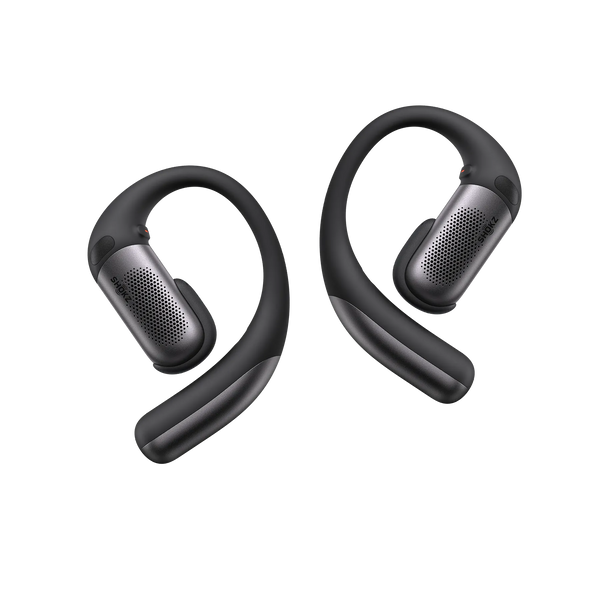
Expert Pick: Shokz OpenFit Pro
If you want the freedom of wireless sports earbuds without the "drop anxiety," the OpenFit Pro is a standout solution. It features a Ni-Ti memory wire ear hook that provides a secure, ergonomic fit that won't budge during intense sprints. Utilizing DirectPitch™ technology, it delivers premium audio without plugging your ears, ensuring you remain fully aware of your surroundings while staying comfortable and wire-free.
FAQ:
Q1: How can I reduce the "stethoscope effect" if I prefer using wired earbuds?
A: The key is cable management. Look for earbuds with an over-the-ear cable design, like the Shure SE215, which stabilizes the wire against your head. You can also use a small shirt clip to fix the cable to your collar, preventing it from bouncing against your chest—the primary cause of friction noise.
Q2: Are wireless earbuds significantly more prone to falling out during high-intensity sprints?
A: While the absence of a cable removes the "safety net," wireless earbuds are not inherently less secure. In fact, for explosive movements like sprinting, a dedicated sports model with an integrated ear hook often provides better stability than a standard wired earbud. Without a heavy cable pulling the buds downward with every stride, the ear hooks act as a reliable anchor, effectively neutralizing the risk of them bouncing out or getting lost.
Q3: Is the sound quality of wireless sports earbuds comparable to wired ones?
A: While audiophiles often prefer wired connections for lossless audio, modern wireless sports earbuds use advanced Bluetooth codecs that provide more than enough clarity for a workout. In a running environment, the lack of "thumping" cable noise in wireless models often results in a much cleaner, more enjoyable listening experience than a wired set.
Conclusion
Choosing between wired and wireless sports earbuds isn't about finding a "superior" technology; it’s about deciding which trade-offs best fit your lifestyle. If you value a "plug-and-play" experience and zero battery anxiety, a high-quality wired set with a secure fit is unbeatable. However, if your priority is total movement and a noise-free run, moving toward a secure wireless design is the way to go. By selecting specialized Shokz sports earbuds or professional wired monitors, you can finally stop fighting your gear and start enjoying your stride.


