Are Earbuds Comfortable From First Wear — or Do Your Ears Need an Adjustment Period?

You buy earbuds marketed as “comfortable from first wear,” and for the first ten minutes, they usually are. But an hour into a commute or a long work call, that barely-there feel often turns into a dull, persistent ache.
The issue is that first-impression marketing rarely accounts for how your ears react to sustained pressure over time. To figure out why this drop-off happens, we need to look at what that “first wear” promise actually covers in daily use.
Decoding “Comfortable Earbuds”: What First-Wear Claims Actually Mean
Product listings often throw around phrases that sound specific but actually blend several different concepts together. That ambiguity is usually where buying mistakes happen.
Why the First 5 Minutes Rarely Predict the Next 30
When a brand highlights first-wear comfort, they are generally talking about low entry friction. The earbuds likely feel smooth, insert easily, and don't immediately irritate the skin. But sustained wear depends heavily on how your ear tissue handles pressure once the bud settles in.
If you browse community forums, a very common pattern emerges: users often make a glowing first judgment, only to revise it an hour later.
As one user aptly put it, “Does anyone else get a mild headache or pressure buildup after 30 minutes, or is it just me?”
The initial marketing claim wasn't necessarily false—it was just incomplete.
Instant Fit, Secure Fit, and Long-Wear Comfort Are Not the Same
To find a genuinely comfortable setup, it helps to separate the fit into three distinct experiences:
-
Instant fit: How effortlessly they go in and how they feel during those first few minutes.
-
Secure fit: How well they stay anchored while you are chewing, talking, or walking.
-
Long-wear comfort: Whether heat, physical fatigue, or a pressurized feeling builds up over time.
A single pair of earbuds can excel in one area and fail in another. A highly secure fit might mean they clamp too firmly. A lightweight bud might still cause canal fatigue if the angle is slightly off. Conversely, earbuds that feel barely there while sitting at your desk might shift around as soon as you start moving.
Measurable Specs vs. Marketing Copy
When evaluating product pages, it is useful to filter out the fluff. Here is how those common terms usually translate:
-
Lightweight: Measurable, provided the per-bud weight is actually listed.
-
Secure fit: Partly measurable, though it still relies heavily on your unique ear anatomy.
-
Ergonomic: Often too broad to be actionable on its own.
-
Comfortable from first wear: Best treated as a first-impression guarantee, not a promise of all-day endurance.
If you are hunting for truly comfortable earbuds, try to look past the adjectives. Focus on the specifics: per-earbud weight, fit style, eartip options, housing size, and whether the design relies on sealing the ear canal.
Behind the Ache: Why Even “Comfortable Earbuds” Start Hurting Later
You checked the specs, found a lightweight pair, and nailed the initial fit. So why do your ears still ache by lunchtime? The answer lies in how our bodies react to sustained contact.
Ears are not rigid plastic mannequins; they are highly sensitive structures. Over time, soft tissue compresses, pressure points accumulate, and tiny design flaws in even the most comfortable earbuds become glaringly obvious.
(A quick, responsible note: If you experience persistent, sharp pain, recurring headaches, or ringing, it is usually wise to take a break and consult a medical professional. Sometimes, severe discomfort is tied to underlying jaw or canal sensitivities rather than the tech itself.)
The Occlusion Effect: When the Seal Becomes a Trap
One major reason in-ear models become unwearable after an hour is the seal. When you completely plug the ear canal, you often trap air, creating a subtle but persistent internal pressure. You might also start noticing the amplified, thudding sound of your own chewing, breathing, or footsteps—a phenomenon known as the occlusion effect.
When your earbuds feel "fine" at first but gradually feel exhausting and intrusive, the physical weight often isn't the culprit. In many cases, it is simply the fatiguing sensation of your ear being closed off for hours.
Cartilage Hotspots and the “Small Ear” Dilemma
Comfort heavily depends on load distribution. If a bulky housing rests heavily on the tragus (the little flap at the front of your ear) or wedges tight against the outer ridges, smaller ears will feel the pinch much faster. There simply isn’t enough room in the ear bowl for the plastic shell to settle naturally.
Veteran audio shoppers—especially those hunting for earbuds for small ears —are increasingly looking past generic "ergonomic" claims. They want to know if a design distributes its weight evenly. Even a fraction of a millimeter of extra bulk or a slightly aggressive nozzle angle can concentrate the earbud's weight into a single, painful "hotspot" on your ear, accelerating fatigue.
Why Does Only My Right Ear Hurt?
Perfect symmetry is incredibly rare. Your left ear canal might angle slightly upward, while your right is straighter. Even normal jaw movement can change the shape of your ear canals asymmetrically.
Because of this, one-sided discomfort is a frequent topic in gear discussions. It typically reflects your natural physical variation rather than a defective unit. For buyers, this is a vital clue: if you see multiple reviews complaining that "only the left bud hurts", it often indicates a rigid, highly shape-dependent design that lacks the flexibility to accommodate natural human asymmetry.
The Break-In Period: When to Stop Trying
How long should you try to "tough it out"? Differentiating a normal break-in from a bad fit comes down to the specific pain type and a strict timeline.
-
Normal Adaptation: Switching to a new fit style often brings a sense of fullness or an unfamiliar "presence." If this sensation gradually fades within a week or two of short-stint wear, your ears are simply adjusting.
-
The Incompatible Fit: Sharp cartilage pain is not something you simply get used to. If persistent soreness or active pressure lasts beyond a two-week trial, or if taking the buds out brings an immediate rush of physical relief, you are dealing with a structural mismatch. You generally cannot "break in" hard plastic.
What Actually Determines Comfortable Earbuds Before You Buy
How to Spot Truly Comfortable Earbuds Before Buying
The smartest pre-buy filter is to shift your mindset. Stop asking the generic question, “Are these marketed as comfortable?” and start asking, “Where exactly will these apply pressure?”
Identify Your Comfort Failure Mode
Most fit issues fall into two categories. There is ear canal pressure, which feels like a deep, plugged, or pressurized sensation. Then there is outer-ear pressure, which is that dull soreness where the hard plastic housing rests against your cartilage.
Knowing your typical "failure mode" saves time. If you often experience canal fatigue, swapping between silicone and foam tips might help a bit, but moving to a shallower fit or a non-sealing design is usually more effective. If outer-ear pressure is your issue, tip changes generally do nothing—the housing itself is simply too bulky.
Read the Specs, Not the Adjectives
When evaluating a product page, look past the word “ergonomic” and focus on the physical realities. Check the per-earbud weight, not just the case weight. Look for side-profile photos to see how far the bud protrudes—designs that stick out further shift their center of gravity away from your head, which often means they have to wedge tighter into your ear to stay secure. Remember, the goal isn't always the tightest seal possible; for everyday use, it’s often about finding a stable fit with minimal internal force.
Finding Real Clues in Reviews
When checking community feedback, the most reliable evidence is detailed context. Look for "time-based" reviews—comments mentioning how the buds feel after an hour or a full workday are far more valuable than "felt great out of the box." Also, pay attention to reviews from users who mention wearing glasses or having smaller ears, as these provide much stronger fit signals.
The Open-Ear Pivot: When In-Ear Just Doesn't Work
Sometimes, despite careful research and endless tip-swapping, traditional in-ear designs remain a poor match for your anatomy. If you consistently struggle with that plugged-up, pressurized feeling, shifting to an open-ear design can often be the best workaround.
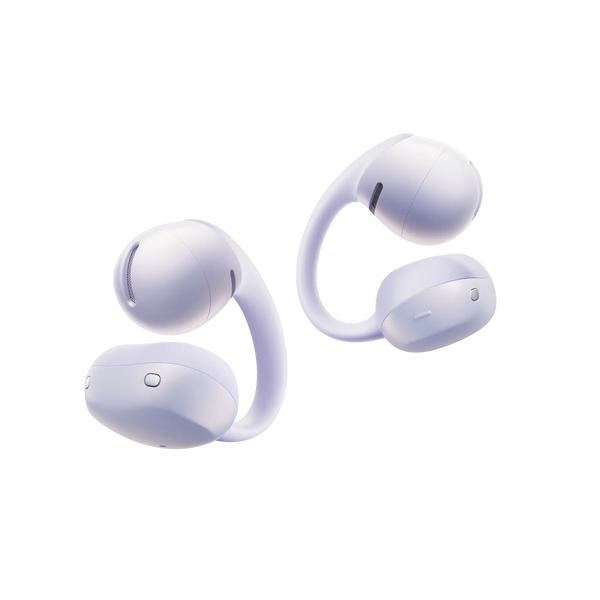
Since these models move the resting point entirely to your outer ear, finding a balanced, lightweight option becomes crucial. The Shokz OpenDots Air is a helpful example of this approach. At roughly 6.3g per earbud, the clip-on design comfortably accommodates various ear shapes and generally avoids interfering with glasses or piercings. It serves as a practical alternative for those seeking sustained wearability without the canal intrusion.
If Your Earbuds Are Uncomfortable, What Can You Actually Fix?
Before tossing a disappointing pair of earbuds into a drawer, it is usually worth playing with a few controllable variables.
Rethink Your Tips and Internal Force
Start with the simplest fix: your eartips. A lot of users instinctively size up to get a tighter grip, but a genuinely comfortable fit often comes from reducing internal force. If pressure builds up quickly, try stepping down a size. If standard silicone feels too rigid, foam tips can sometimes offer a softer, more adaptive seal. And since human ears are rarely perfectly symmetrical, do not hesitate to use a medium tip on the left and a small tip on the right.
Ease Up on the Insertion Depth
Next, reconsider your wearing angle. Many of us over-insert earbuds in a quest for security, wedging them in as far as they will go. This simply creates unnecessary pressure. Instead, try a shallower placement. Let the earbud rest naturally just inside the canal, and give it a slight twist to distribute the contact more evenly. A helpful rule of thumb for daily wear: a secure fit and a deep insertion are not the same thing.
Knowing When to Walk Away
Not every fit issue can be tweaked. If sharp pain appears almost immediately, or if the hard plastic is clearly digging into your cartilage, changing tips will not change the outcome. When the fundamental housing shape is a mismatch for your anatomy, that is typically the clearest sign to stop fighting the design and start exploring open-ear alternatives that bypass the canal entirely.
Conclusion
Finding truly comfortable earbuds means looking past that first-impression honeymoon. If you are experiencing fatigue, start by identifying your specific pressure points. Often, stepping down a tip size or using a shallower insertion can noticeably reduce internal strain. However, if you have tweaked those variables and still feel a persistent ache, the core design likely mismatches your anatomy. Rather than forcing a bad fit, exploring alternatives like Shokz open ear headphones can be a practical next step to bypass canal pressure and enjoy sustained daily listening.