What Is Bone Conduction and Air Conduction Hybrid Technology?

Bone conduction and air conduction hybrid technology combines two ways of delivering sound in an open-ear headphone design. Bone conduction uses vibrations transmitted through the bones of the head to reach the inner ear, while air conduction uses sound waves traveling through the air toward the ear. Combining these pathways allows a headphone to use different drivers for different parts of the audio spectrum, depending on its design.
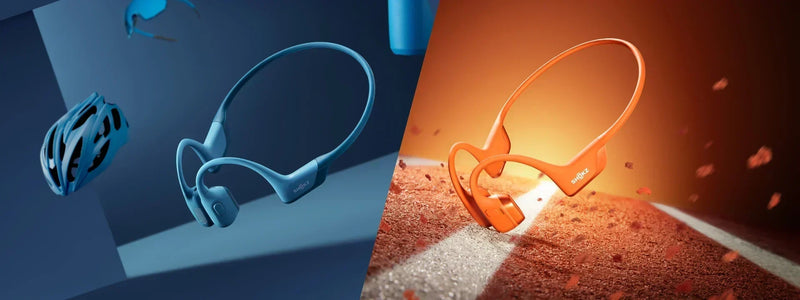
Shokz DualPitch™ technology, featured in the OpenRun Pro 2, is one example. It combines a bone-conduction driver for mids and highs with a dedicated air-conduction driver that supports low-frequency sound. Understanding how this arrangement works—and what it does not guarantee—can help you decide whether hybrid bone conduction headphones suit your listening habits.
What Is Hybrid Bone + Air Conduction, and How Does It Work?
The two systems transmit sound through different physical pathways. Bone conduction uses a transducer that contacts the cheekbone area to generate mechanical vibrations. These vibrations travel through the skull and stimulate the inner ear, bypassing the usual eardrum pathway to a large extent. Air conduction uses a speaker to produce sound waves that travel through the air toward the ear.
The way these systems work together depends on the headphone’s design. A hybrid model does not necessarily divide the entire audio spectrum in the same way as another hybrid model. The number of drivers alone does not tell you which frequencies each one reproduces or how the signals are processed.
Shokz DualPitch™ technology uses a specific arrangement: according to Shokz, the OpenRun Pro 2’s bone-conduction driver handles mids and highs, while its dedicated air-conduction driver supports bass. This is a product-specific implementation, not a universal rule for all bone conduction and air conduction hybrid technology.
The two drivers contribute to one listening experience rather than functioning as two separate soundtracks. The final result depends on factors such as driver design, tuning, fit, playback volume, and the listening environment. The presence of two transmission pathways does not, by itself, guarantee a particular sound quality.
You may still feel vibrations where the bone-conduction transducer touches your face. How noticeable they are depends on the headphone’s design, the selected listening mode, the volume, and individual sensitivity.
How Is This Different From Pure Bone Conduction Headphones?
Pure bone conduction headphones rely on bone-conduction transducers to deliver audio without using an air-conduction driver as part of the playback system. Hybrid models add an air-conduction driver, allowing the two systems to contribute to sound reproduction.
That difference can affect how a headphone reproduces different frequencies, but it does not establish that one type always sounds better. Audio performance varies with driver design, acoustic structure, tuning, fit, and personal listening preferences. Some listeners may prefer a traditional bone-conduction presentation, while others may prefer the sound of a hybrid design.
Listening modes allow people to tailor the sound to their preferences. For example, on the Shokz OpenRun Pro 2, Classic EQ turns off the air-conduction driver, allowing audio to be delivered through bone conduction alone. For details on how other EQ modes affect playback, refer to the product’s listening mode guide.
If using only bone conduction is important to you, check the manufacturer’s documentation to confirm whether the product offers that option. The term “hybrid” alone does not tell you whether its drivers can be switched on or off independently.
Does It Actually Fix the Bass Problem?
Hybrid technology can change how low frequencies are reproduced, but it does not guarantee the same bass response across all products or listening conditions.
Bass performance depends on several factors, including the driver, acoustic design, tuning, fit, and listening environment. Bone conduction transmits sound through mechanical vibration, while an air-conduction driver generates sound waves in the air. In Shokz DualPitch™ technology, the dedicated air-conduction driver supports low-frequency reproduction, while the bone-conduction driver handles mids and highs.
An open-ear design still has different acoustic conditions from a sealed in-ear headphone. Without an ear-tip seal, the system cannot rely on the same sealed-cavity effects that can influence bass perception in in-ear models. However, this does not mean every open-ear headphone has weak bass or that every hybrid model will sound fuller to every listener.
If you are comparing models, listen to familiar music at a comfortable volume and pay attention to bass balance, vocals, and how the sound changes in your usual environment. A hybrid model such as the Shokz OpenRun Pro 2 may be worth considering if you want an open-ear design with a dedicated driver for low frequencies.
Real-World Scenarios Where Hybrid Makes Sense
The right headphone depends on what you listen to, where you use it, and how you prefer it to fit. Hybrid technology is one design consideration rather than a guarantee of a better experience.
Running and cycling: Music, podcasts, and navigation prompts can be useful during outdoor activities, but traffic noise and wind can affect what you hear. An open-ear design leaves the ear canal unsealed, so some surrounding sounds may remain audible. That does not guarantee that you will hear every vehicle, cyclist, pedestrian, or signal. Keep the volume appropriate for your surroundings, observe traffic visually, and follow local laws when cycling.
Office work and calls: Some people prefer not to place ear tips inside the ear canal, especially when alternating between audio and conversations with colleagues. A hybrid model may be worth trying if you want an open-ear fit, but call clarity depends on the microphones, audio processing, fit, background noise, and the device at the other end of the call. If privacy is important, remember that open-ear headphones can leak sound to nearby people.
Gym and workouts: Fit, stability, sweat resistance, and sound preference are practical considerations during exercise. The frame should remain comfortable and stable during your intended movements. A hybrid design offers a different way to reproduce audio, but it does not guarantee reduced vibration, greater comfort, or better workout performance for every wearer.
Water resistance is a separate product feature. An open-ear design or a hybrid driver system does not automatically make headphones suitable for swimming. Check the specific model’s official rating and instructions before using it around water.
Limits and Trade-Offs of Bone and Air Conduction Hybrid Headphones
Sound leakage is a consideration with open-ear headphones. Since the ear canal remains unsealed, some sound may be audible to people nearby. The amount of leakage depends on factors such as product design, volume, fit, distance, and ambient noise. Shokz incorporates sound leakage control into the OpenRun Pro 2’s design, though results vary with listening conditions.
Open-ear headphones offer a different listening experience, but their open design also comes with a few considerations. Because they provide limited passive isolation, external noise may compete with audio in busy environments. Raising the volume to compensate can affect listening comfort and increase sound exposure. For stronger isolation or more private listening, other headphone designs may be worth considering.
Fit and comfort vary by person and design. Bone-conduction headphones rely on contact near the cheekbones, while a hybrid model’s frame and air-conduction driver placement also affect fit. A dual-driver system does not automatically mean greater comfort.
Price is another factor. Consider the features you need and compare the overall performance and cost of different options.
Finally, terms such as “hybrid,” “dual conduction,” and “open-ear” do not fully explain how a headphone delivers sound. Check the manufacturer’s documentation for driver types and how listening modes affect playback to make a more informed comparison.
How to Choose Hybrid Conduction Headphones
1. Identify your listening priorities. Consider whether you prefer an open-ear fit and want a hybrid design that combines bone conduction with air conduction, or whether stronger isolation and more private listening matter more to you.
2. Check the driver setup and EQ options. Look for manufacturer information explaining each driver’s role and how listening modes affect playback. For example, Shokz confirms that Classic EQ on the OpenRun Pro 2 disables the air-conduction driver, allowing bone-conduction-only playback.
3. Consider your listening environment. Outdoor wind, traffic, gym noise, and office conversations can affect what you hear. Choose a comfortable volume rather than trying to overpower surrounding noise.
4. Compare practical features. Check fit, controls, battery life, water-resistance ratings, sound leakage information, and price against your needs. Use manufacturer specifications and credible reviews to understand how each model performs under realistic conditions.