Choosing Earhook Earbuds for Work: What to Consider in 2026

Choosing earhook earbuds for work isn't just about sound quality. The right pair should stay comfortable through long meetings, deliver reliable call quality, and let you hear what's happening around you when your job calls for it.
That's why more professionals are considering open-ear earhook earbuds instead of traditional in-ear models. They're not the right choice for every workplace. But for offices, hybrid work, retail, and other roles where staying aware matters, they can be a practical fit.
Before buying, focus on the features that make the biggest difference day to day: comfort, microphone performance, controls, battery life, and overall fit.
Choosing Earhook Earbuds for Different Work Environments
Open-ear earhook earbuds solve a different problem than traditional earbuds.
Instead of blocking the world out, they let you listen while staying connected to what's happening around you. That can make a real difference when your workday includes conversations, announcements, customers, or coworkers stopping by your desk.
Some workplaces naturally benefit more than others.
|
Work Environment |
Why Earhook Earbuds May Work Well |
|
Shared office |
Stay aware of coworkers while listening to meetings or music. |
|
Home office |
Hear family members, the doorbell, or deliveries between calls. |
|
Retail or front desk |
Listen to audio without losing touch with customers nearby. |
|
Active workplaces |
Stay more aware of voices or movement where workplace policies allow. |
|
Loud industrial settings |
Less suitable if strong noise isolation is essential. |
For many people, that's the appeal.
Not because open-ear earbuds are perfect.
Because they fit the way work often happens.
The tradeoff is still real. Open-ear earbuds usually provide less bass and less privacy than sealed models. If your priority is blocking out a noisy environment, another type of earbud will probably serve you better.
It's also worth remembering that not every open-ear earhook earbud works the same way. Some use bone conduction, while others use small directional speakers near the ear.
Both keep your ears open, but they create different listening experiences. Many users find air-conduction models sound more natural for meetings, while bone-conduction designs remain a popular choice when environmental awareness is the highest priority.
Knowing where you'll use your earbuds first makes the rest of the buying decision much easier.
Choosing Comfortable Earhook Earbuds
Fit Matters More Than Specifications
If long-term comfort is a priority, focus on the details that affect daily wear:
-
Weight: Lighter designs may feel less fatiguing over time.
-
Hook design: Flexible hooks often adapt better to different ear shapes.
-
Profile: A lower-profile fit may reduce pressure behind the ear.
-
Glasses compatibility: Make sure the design works comfortably with your frames.
Those factors often matter more than a spec sheet.
Open-ear earbuds can reduce the ear-canal pressure some users experience with traditional earbuds, but comfort still depends on fit.
Ear shape, wearing time, and how the earbuds sit around your ears all influence the experience.
Long-term user feedback shows a similar pattern: many people wear open-ear earbuds comfortably for hours, while others notice pressure or fatigue over longer sessions.
If one design hasn't worked for you before, another shape may feel completely different.
Choosing Earhook Earbuds with Better Call Quality
Compare Microphones Before Sound Quality
If your workday includes frequent Teams, Zoom, or phone calls, microphone performance matters more than audio quality.
When comparing earhook earbuds, look beyond claims like "clear calls." Pay attention to microphone systems, noise reduction features, and real user feedback from different environments.
A model that works well in a quiet home office may perform differently in a café or open-plan workplace.
For most people, the question isn't whether an earbud supports the latest codec. It's whether coworkers can hear you clearly without asking you to repeat yourself.
Stable Bluetooth performance and reliable switching between devices often matter more during the workday.
Open-ear earbuds won't replace a dedicated headset in every noisy environment. But models with stronger voice processing can make everyday meetings and hybrid work much easier.
Before buying, check for:
-
Multiple microphones and noise reduction
-
Call feedback from real work environments
-
Stable Bluetooth connection
-
Reliable multipoint pairing
Choosing Earhook Earbuds with Better Controls
Touch or Buttons?
Many earhook earbuds rely on touch controls, while others use physical buttons or a combination of both. There's no universal "better" option—it depends on how you use them.
Touch controls help keep the design clean and are easy to use once you're familiar with the gestures.
Physical buttons are less likely to trigger accidentally, which some people prefer if they frequently adjust their earbuds or wear glasses. Hybrid designs aim to balance both approaches.
Rather than focusing on the control method alone, check how well it works in everyday use. Long-term user reviews often reveal whether accidental touches, missed inputs, or awkward button placement become recurring frustrations.
Before buying, consider:
-
Touch, buttons, or a hybrid design
-
Reports of accidental or missed inputs
-
Whether controls are easy to use during calls
Putting Those Priorities Into Practice
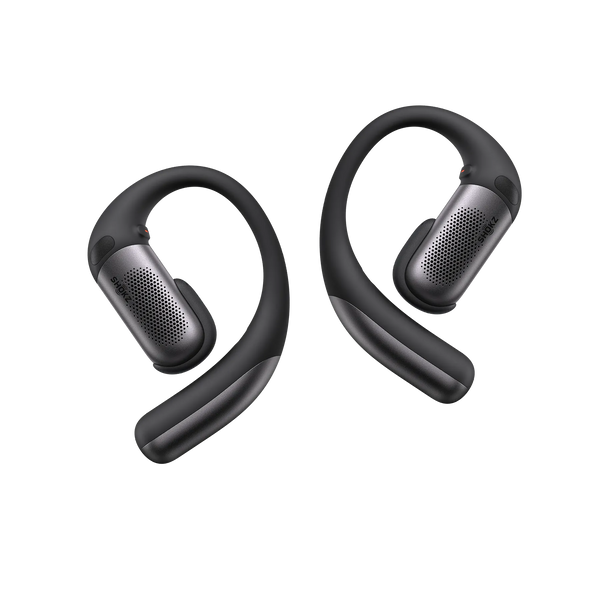
Those priorities don't always have to be a tradeoff. Shokz OpenFit Pro combines a lightweight open-ear design with open-ear noise reduction technology, helping reduce surrounding distractions while keeping your ears open to the environment.
Its three AI-powered microphones are designed to improve voice pickup during calls, while multipoint pairing makes it easier to switch between devices throughout the workday.
For people who move between meetings, calls, and focused tasks, these small improvements can make open-ear earbuds easier to use from morning to afternoon.
Buying Earhook Earbuds for Work
Focus on the Features You'll Actually Use
It's easy to compare long spec sheets. The features that affect your workday are usually much simpler.
Before buying, check:
-
Battery life: Around 8 hours or more if you wear earbuds through most of the workday.
-
Call quality: Multiple microphones and reliable voice processing are worth prioritizing if meetings are part of your routine.
-
Fit: Look for a lightweight design that sits securely without creating unnecessary pressure.
-
Controls: Choose touch controls, physical buttons, or a hybrid design based on your preference.
-
Durability: An IP54 rating or similar can provide extra peace of mind for commuting, light rain, or occasional outdoor use.
-
Multipoint pairing: Helpful if you regularly switch between a laptop and phone.
One final question matters just as much: Does an open-ear design fit the way you work?
If staying aware of coworkers, customers, family members, or workplace announcements is part of your day, earhook earbuds can be a practical choice.
If your priority is blocking out a noisy office or your daily commute, a sealed in-ear design may be the better fit.
There's a middle ground, too. Models like Shokz OpenFit Pro use open-ear noise reduction technology to help reduce distractions while keeping the open-ear experience intact.
Start with how you work. The right features usually become much easier to identify from there.
FAQ
Can earhook earbuds handle calls in noisy environments?
It depends on the model and the environment. Since open-ear earbuds don't seal the ear canal, microphone performance becomes especially important for calls.
Models with multiple microphones and voice processing can help reduce background noise, but they may still struggle in very loud places compared with closed-back headsets or noise-isolating earbuds.
Are earhook earbuds comfortable for all-day work?
Many people find earhook earbuds comfortable for longer periods because they avoid pressure inside the ear canal. However, comfort still depends on the fit, ear shape, hook design, and whether you wear glasses.
For all-day use, lightweight materials, flexible hooks, and a low-profile design usually matter more than a single comfort specification.
Conclusion
No single pair of earhook earbuds works for everyone. The right choice depends on how you spend your workday.
If calls dominate your schedule, prioritize microphone performance and reliable device switching. If you wear earbuds for hours, focus on fit, weight, and open ear security and comfort.
For mixed routines that include commuting, office work, and outdoor use, battery life and durability may matter more than chasing the highest audio specs. An option like OpenFit Air 2 lightweight open earhook earbuds can also suit users looking for a lightweight design for everyday use.
The best earhook earbuds for work are the ones that fit naturally into your routine—comfortable enough for long wear, reliable enough for meetings, and suited to the way you work.