How to Know If Earhook Earbuds Will Fit Your Ears Before Buying

The struggle with standard earbuds is exhausting. You try a different tip, push them in deeper, and readjust constantly.
Earhook earbuds offer a refreshing alternative, but before making the switch, you probably want to know if they will actually fit your specific ear shape.
This guide explores how earhook designs work, how to assess your ears at home, and what to look for when buying.
Why Do Earhook Earbuds Feel So Different?
The hook does the work, not the tip. Traditional earbuds rely on friction and pressure deep inside your ear canal. Earhooks change the equation by curving over the ear to support the device's weight, allowing the speaker to rest shallowly outside.
This requires an adjustment in expectations: a secure fit now comes from balance and positioning rather than a tight seal. As one Reddit user noted, “They are not holding in the earhole, but more like clips, very comfy and very hard to lose.”
This subtle shift from compressive pressure to a gentle resting sensation makes earhooks an ideal alternative if standard earbuds usually cause you discomfort.
How Can You Assess Your Ear Shape at Home?
Exact measurements are rarely necessary. Simply grab a mirror and focus on the top half of each ear. A quick visual check often tells you everything you need to know:
-
Trace the curve: Run your finger along the top outer curve of your ear.
-
Check the ridge: Notice whether the upper ridge feels pronounced (which is great for hooks) or relatively flat.
-
Test the space: If you wear glasses, observe how much space the arms currently occupy behind that ridge.
-
Compare sides: Check both ears, as slight asymmetry is incredibly common.
What Ear Characteristics Usually Make a Good Fit?
A defined upper ear ridge, average ear protrusion, and a clear rear curve generally make positioning straightforward. A flatter ridge or asymmetrical ears might require a bit more adjustment initially, but flexible hooks are designed to accommodate these natural variations.
What Does a Secure Fit with Earhook Earbuds Actually Feel Like?
Security is about geometry, not suction. Once the hook is seated naturally around your ear's contour, the earbud typically has to move up and out to fall off.
In practice, a secure fit means you can walk, bend, or talk without feeling the bud drift. Another Reddit user captured this sensation well: “I don't feel either the pressure or the wiggling... Kinda feel like it’s 'locked in there'.”
For most adults, earhooks tend to stay securely in place. If an earbud feels slightly loose on the first try, it usually points to a need for repositioning rather than an incompatible ear shape.
Will They Feel Perfect Right Out of the Box?
Hook-based fits usually require a brief adjustment period. Because ear geometry varies naturally, one side might feel slightly loose at first—especially if your ears are asymmetrical.
Don't judge the fit on a 30-second try-on. Give yourself a few minutes to slightly rotate the hook, walk around, and move your jaw. It is completely normal for them to feel a bit "wiggly" initially. Once you find the right angle, that awkwardness typically fades into a highly secure, gentle fit.
Who Are Earhook Earbuds Really For?
-
Glasses Wearers: At first glance, glasses and earhooks seem to compete for space. In practice, they are frequently compatible. A well-designed hook typically follows the rear curve of the ear, avoiding the top surface where glasses rest.
-
People Tired of Ear Tip Sizing: If swapping between small, medium, and large ear tips rarely yields a stable seal, earhooks offer a welcome break. By moving the anchor point outward, they significantly reduce the guesswork surrounding canal shape mismatch.
-
Active Movers: Sweat reduces the friction that standard earbuds rely on. Since earhook designs do not rely heavily on canal grip, their stability is largely unaffected by moisture or vigorous movement, making them a smart choice for workouts.
What Should You Check Before Purchasing?
When comparing models, a few fit-related details deserve close attention:
-
Hook Flexibility: Flexible or adjustable hooks provide a much better margin for error if your ears are smaller, flatter, or slightly asymmetrical.
-
Earbud Weight: Lighter designs tend to be better for long listening sessions because they place less leverage on the ear.
-
Wearing Orientation: If you plan to use just one side at a time, verify that the model supports single-ear wear.
-
IP Rating (Sweat and Water Resistance): For active use, an IP54 rating or higher is recommended to handle moisture over time.
-
Return or Trial Policy: Fit is best judged over multiple sessions. Look for retailers that allow returns to fit within a reasonable window.
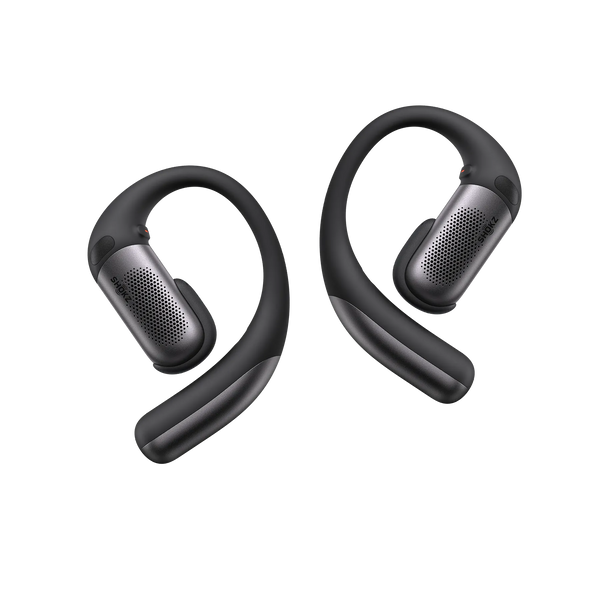
To see these principles in action, consider the Shokz OpenFit Pro. It combines an ultra-lightweight build, flexible Ni-Ti memory alloy hooks, and an IP54 rating. This allows the earbuds to naturally adapt to your ear's curve and resist sweat, providing long-lasting comfort and reliable stability during rigorous workouts or daily commutes.
FAQ
Will earhooks hurt the back of my ears after a few hours?
Pain usually occurs if the earbud is too heavy or the hook is entirely rigid. Choosing lightweight models with soft, flexible silicone hooks minimizes pressure. If you are new to this style, taking short breaks initially helps your cartilage adapt to the new contact point.
Can I wear earhook earbuds with helmets or tight hats?
Standard caps are rarely an issue, but tight cycling or motorcycle helmets can press the hooks painfully against your skin. If you frequently wear helmets, look for models specifically designed with ultra-slim, low-profile hooks to prevent uncomfortable pressure points.
Do earhook designs work well as wireless earbuds for small ears?
Yes, but you must prioritize adjustable designs. A rigid, one-size-fits-all hook might hover above a smaller ear rather than resting securely. Look for earbuds with bendable earhooks or rotating hinges, allowing you to tighten the curve and secure the fit.
Conclusion
Earhook earbuds aren't trying to fight the same fit battle as standard in-ear buds. Instead of wedging tightly into your ear canal, they simply rest gently on the outside, giving you true open ear security and comfort.
For those looking for a lightweight option in this category, OpenFit Air 2 lightweight open earhook earbuds offer another example of this open-ear approach.
By taking a quick look at your ear shape and prioritizing flexible designs, you can figure out if a pair will fit your ears long before you ever click "buy."